
You Are Not Imagining It
You have been trying for a long time. You have sat in waiting rooms. You have paid for tests. Some people cry in cars they never expected to cry in. And somewhere along the way, someone handed your partner a semen analysis and circled a number that changed everything.
Low sperm motility. That is what they said. And now you are both looking at IVF quotes that start at $20,000 and wondering how you got here.
Sperm motility is one of the most responsive parameters in male fertility. It can change. It changes with diet. Specific herbs tested in clinical trials can shift it. It changes when you stop doing the things that are quietly damaging it every day.
This article is about what the research actually says - not what a sales brochure says - about how to improve sperm motility naturally, and when IVF genuinely makes sense.
What Is Sperm Motility and Why Does It Matter
Sperm motility means the ability of sperm to swim. To reach an egg, a sperm must travel roughly 19 centimeters through the female reproductive tract. It needs to move in a straight, forward direction to do that.
The World Health Organization defines poor motility - called asthenozoospermia - as less than 40% total motility or less than 32% progressive motility in a semen sample. Progressive motility means moving forward, not just spinning in place.
Sperm are made in the testes over a 70 to 90 day cycle. The semen analysis you get today reflects the health of sperm that started forming three months ago. Changes you make now will show up in results three months from now - not tomorrow.
Male factor is involved in up to 50% of all infertility cases. In roughly 30% of male infertility cases, no clear medical cause is found. That means lifestyle, environment, and nutrition are the most likely explanation - and those things can be changed.

The Crisis Nobody Is Talking About
Sperm quality is declining globally. A meta-analysis published in Human Reproduction Update, led by Professor Hagai Levine of Hebrew University of Jerusalem, analyzed 223 studies covering 57,168 men across 53 countries. The findings: between 1973 and 2018, average sperm concentration fell by 51.6% and total sperm count fell by 62.3%.
The rate of decline roughly doubled after the year 2000 - from about 1.16% per year to 2.64% per year. Professor Levine identified the likely causes as plasticizers, pesticides, air pollution, smoking, mental stress, and poor nutrition.
What Actually Causes Low Motility
Oxidative stress is the most studied cause. Sperm membranes are rich in fats that are easily damaged by unstable molecules called reactive oxygen species. When that damage accumulates, sperm lose their ability to swim effectively. Stress, pollution, poor diet, and smoking all increase oxidative stress.
Heat is the second big cause. The testes sit outside the body for a reason - they need to stay 2 to 4 degrees cooler than core body temperature. Laptops on the lap, hot tubs, tight underwear, and long hours of sitting all raise scrotal temperature and reduce sperm production and motility.
Chronic stress raises cortisol. High cortisol suppresses testosterone. Low testosterone slows sperm production.
Diet gaps matter more than most men are told. Deficiencies in zinc, selenium, omega-3 fatty acids, vitamin C, vitamin E, and CoQ10 are all directly linked to reduced sperm motility in peer-reviewed research.
What the Research Shows
The Mediterranean Diet and Sperm Motility
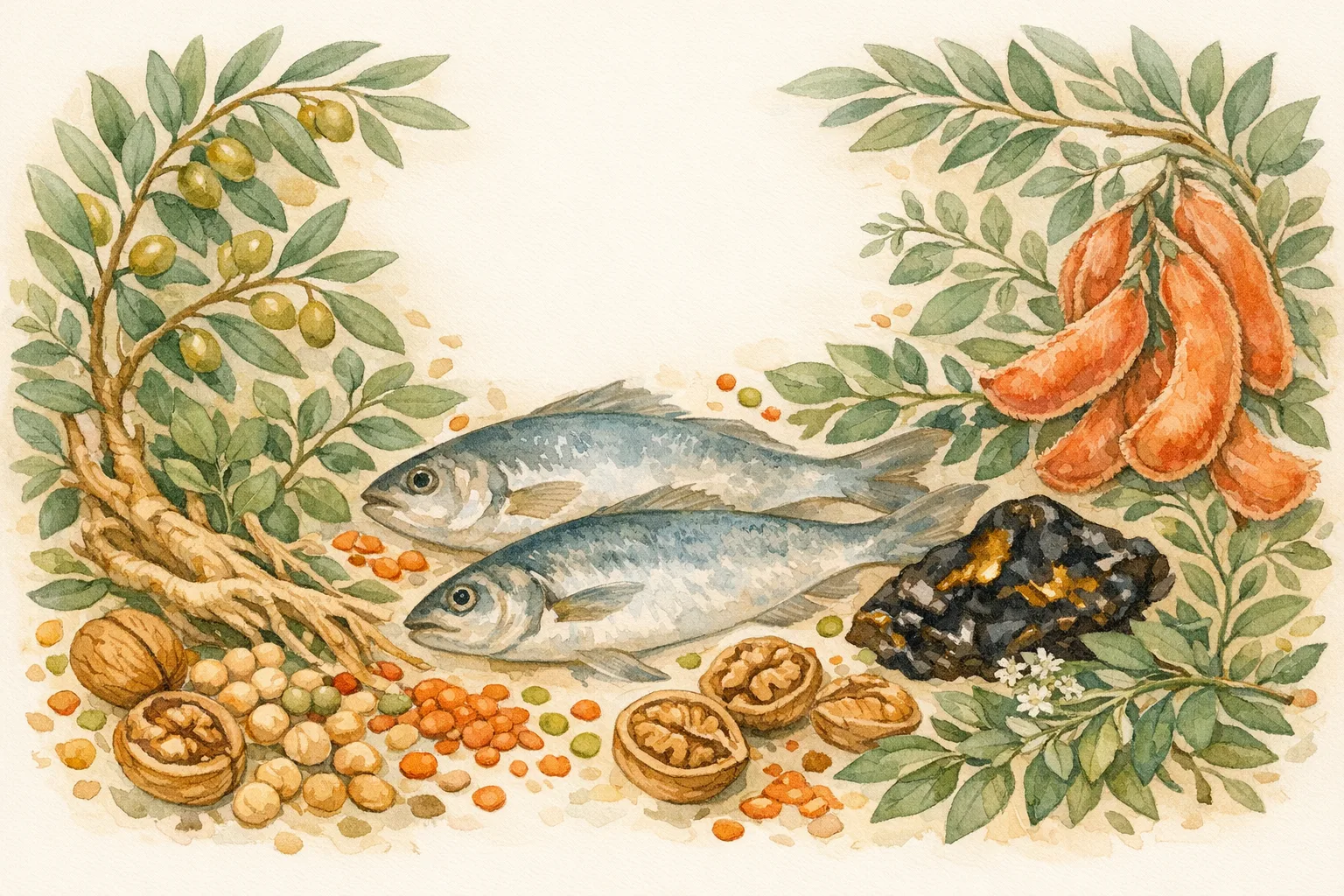
A systematic review and meta-analysis published in a ScienceDirect journal analyzed 8 studies covering 1,835 men. Men who followed a Mediterranean-style diet - rich in vegetables, olive oil, fish, legumes, and whole grains - had significantly better sperm motility across every measure. Total motility was 8.81% higher. Progressive motility was 7.49% higher. Sperm count and morphology also improved.
Food is not a supplement. It is the foundation. The herbs work better when the foundation is right.
Ashwagandha - The Clinical Trial Results
A double-blind, placebo-controlled trial conducted across five infertility centers in India enrolled 46 men with low sperm counts and poor motility. Published in Evidence-Based Complementary and Alternative Medicine (PMC3863556), the trial gave the treatment group 675 mg per day of full-spectrum Ashwagandha root extract for 90 days.
The results at day 90: sperm count increased by 167%. Semen volume increased by 53%. Sperm motility improved by 57%. Testosterone and LH levels also improved significantly. The placebo group showed minimal change.
Ashwagandha works through two pathways. First, it reduces oxidative stress by lowering damage to sperm membranes. Second, it reduces cortisol - which directly raises testosterone and improves sperm production.
A separate triple-blind RCT comparing Ashwagandha to a pharmaceutical drug called pentoxifylline found a 21% improvement in progressive motility in the Ashwagandha group, with significantly fewer side effects than the drug.
Shilajit - The 90-Day Trial
Processed Shilajit was tested in a clinical trial at J.B. Roy State Ayurvedic Medical College in Kolkata, published in Andrologia (PubMed ID 20078516). Thirty-five men with low sperm counts took 100 mg of processed Shilajit twice daily for 90 days.
Results: total sperm count increased by 61.4%. Sperm motility improved by 12.4% to 17.4% across measured time intervals. Testosterone rose by 23.5%. A marker of oxidative stress in the semen dropped by 18.7%. Liver and kidney function were unchanged - confirming safety.
Shilajit works primarily through fulvic acid, which chelates minerals into the cells, reduces oxidative stress, and supports energy production in the mitochondria of the sperm midpiece. Healthy mitochondria means better swimming.
Mucuna Pruriens and the Stress-Fertility Connection
A study published in PMC2816389 by researchers at King George's Medical University, Lucknow enrolled 60 infertile men who were also experiencing psychological stress - confirmed by elevated cortisol levels and a questionnaire. They were given 5 grams per day of Mucuna pruriens seed powder for 3 months.
Treatment significantly improved sperm count and motility. Cortisol levels dropped. Oxidative stress markers in the semen dropped. Antioxidant enzymes including SOD, catalase, and glutathione were restored.
Mucuna pruriens contains L-DOPA, a compound that reduces prolactin and raises testosterone. High prolactin is a known but underdiagnosed cause of male infertility. The herb also contains antioxidants that directly repair the oxidative damage stress causes to sperm.
In a separate study published in Fertility and Sterility, the same herb improved motility significantly across all three groups tested: men with normal counts, men with low counts, and men with poor motility specifically.
The Warning About Antioxidant Supplements
In September, the SUMMER Trial was published in JAMA Network Open. It was the largest randomized controlled trial ever conducted on male fertility supplements - 1,171 men across 21 hospitals in the Netherlands. The supplement tested was Impryl, a combination of betaine, L-cystine, zinc, folic acid, and B vitamins.
The result: the supplement did not improve pregnancy rates. During the critical 4 to 6 month window, the antioxidant group had lower pregnancy rates than the placebo group. Sperm vitality actually decreased in the supplement group.
The SUMMER Trial authors concluded: routine antioxidant supplementation is not recommended. The likely reason is reductive stress - when you flood the body with isolated, high-dose antioxidants, you disrupt the natural balance that healthy cells need.
This is exactly why Ayurveda uses whole-plant preparations rather than isolated compounds. The active ingredients in Ashwagandha, Shilajit, and Mucuna pruriens come inside a complex biological matrix - minerals, co-factors, and buffers that work together. That is different from taking a synthetic antioxidant pill.
The Ayurvedic Approach
Ayurveda has a specific framework for male fertility called Shukra Dhatu - reproductive tissue. In Ayurvedic medicine, reproductive tissue is the final and most refined product of good overall health. If digestion is weak, if stress is high, if toxins are accumulating, Shukra Dhatu suffers first.
The Ayurvedic approach to poor sperm motility has two phases. The first is Shodhana - purification: removing what is blocking the system - poor gut health, accumulated toxins, inflammatory foods. The second is Shamana - rebuilding, where the herbs come in, alongside diet, sleep, and stress management.
I grew up watching this approach work. In my family's village in Himachal Pradesh, there was no fertility clinic within reach. When a couple struggled to conceive, they went to the older women who knew the plants and protocols. Among everyone I grew up with, nobody had problems with pregnancies. The herbs that showed up in clinical trials - Ashwagandha, Shilajit, Mucuna pruriens - are the same herbs in these traditional protocols. Research did not discover them. Research confirmed what practitioners already knew.
Conventional vs Natural - An Honest Comparison
| Factor | IVF with ICSI | Ayurvedic Protocol |
|---|---|---|
| What it does | Bypasses motility problem by injecting one sperm into one egg in a lab | Improves sperm motility so natural conception is possible |
| Cost per attempt | $20,000 to $25,000 per cycle according to Advanced Fertility Center of Chicago; most people need 2 to 3 cycles | Call 972-282-3930 to discuss |
| Timeline | One cycle takes 4 to 6 weeks; results are not guaranteed | 90 days for clinical trial results; full protocol 3 to 6 months |
| Addresses the cause | No - motility problem remains; procedure bypasses it | Yes - targets oxidative stress, hormonal imbalance, stress, and nutrition |
| Side effects | Hormonal stimulation drugs, egg retrieval procedure, emotional strain | Minimal; Shilajit trial confirmed no change to liver or kidney markers |
| Insurance | Only about 25% of Americans have IVF coverage per CNY Fertility data | Not insurance-dependent |
IVF with ICSI is genuinely necessary for some men - those with zero motile sperm, those with azoospermia, those who have exhausted natural approaches. The question is whether your situation requires it before trying a 90-day natural protocol.
The average total cost of IVF is $23,474 per cycle. Most people need two to three cycles, meaning the total cost to achieve a live birth can range from $30,000 to over $60,000. About 75% of Americans pay this entirely out of pocket. That money deserves a 90-day honest attempt first.

What You Can Do Today
These are the first things to change. They cost nothing except attention.
Heat reduction. No laptop on your lap. No hot tubs. Switch to loose-fitting underwear. These changes directly reduce scrotal temperature and can improve sperm production within the 90-day spermatogenesis cycle.
Diet shift. A meta-analysis covering 1,835 men across 8 studies found that Mediterranean diet adherence was significantly associated with higher total motility, progressive motility, and sperm count. More vegetables, olive oil, nuts, legumes, and fish. Less processed meat, full-fat dairy, sugar drinks, and alcohol.
Stress management. Chronic stress raises cortisol, which suppresses testosterone, which slows sperm production. Yoga, fasting, and breath-based practices have documented effects on cortisol reduction.
Sleep. Testosterone is produced during deep sleep. Disrupted sleep directly reduces testosterone and sperm production.
Phone distance. Radiofrequency radiation from phones kept in pants pockets has been studied in relation to sperm quality. Keep your phone out of your pocket as a default habit.
Request a full evaluation. Ask your doctor about sperm DNA fragmentation testing. DNA fragmentation can be high even when count and motility look acceptable - and it directly affects whether a fertilized egg develops properly.
When to Consider Each Path
Ayurvedic protocols make most sense when the cause of low motility is lifestyle-based - oxidative stress, chronic stress, poor diet, heat exposure, or unclear causes.
IVF with ICSI becomes necessary when sperm count is very low, when DNA fragmentation is severe and not responding to treatment, when there is a structural cause like varicocele that has already been treated surgically, or when natural approaches have been followed seriously for six months without improvement.
A 90-day Ayurvedic protocol carries almost no financial or physical risk. IVF carries both. Try the lower-risk option first - with a plan and a timeline - and then make the next decision from a place of information, not desperation.
FAQs
How long does it take to see sperm motility improvement with Ayurvedic treatment?
Sperm take 70 to 90 days to form. In the Ashwagandha trial published in PMC3863556, significant improvement was measured at day 90. In the Shilajit trial published in Andrologia, improvements were measured across time intervals within 90 days. Plan for a minimum of 3 months before retesting.
Can Ashwagandha really improve sperm motility?
Yes, based on clinical trial data. The double-blind, placebo-controlled trial published in PMC3863556 found a 57% increase in sperm motility after 90 days of Ashwagandha root extract at 675 mg per day. A separate triple-blind RCT found a 21% improvement in progressive motility.
Is Shilajit safe for sperm health?
The clinical trial published in Andrologia tested liver and kidney function throughout the 90-day protocol. Both remained unchanged. The study concluded that processed Shilajit at 100 mg twice daily for 90 days is safe and improves sperm count, motility, and testosterone.
Does diet actually affect sperm motility?
Yes. A meta-analysis and systematic review covering 1,835 men found that higher adherence to the Mediterranean diet was significantly associated with better total motility, progressive motility, sperm count, and morphology. Processed meat, alcohol, and full-fat dairy were associated with worse parameters.
What is the difference between sperm count and sperm motility?
Sperm count is how many sperm are present in a semen sample. Motility is how many of them can swim, and how well. You can have a high count with poor motility - meaning most sperm are present but cannot reach the egg. Motility is often the more fixable of the two.
Should I take antioxidant supplements for sperm motility?
The SUMMER Trial published in JAMA Network Open - the largest male fertility supplement RCT ever conducted, with 1,171 men - found that a combined antioxidant supplement did not improve pregnancy rates and actually lowered sperm vitality. Whole-food antioxidants from diet, and complex botanical preparations like Ashwagandha and Mucuna pruriens, are a different category than isolated synthetic supplements.
How does stress affect sperm motility?
Psychological stress raises cortisol. High cortisol suppresses testosterone and luteinizing hormone. Lower testosterone slows spermatogenesis and increases oxidative stress in semen, damaging sperm membranes. The Mucuna pruriens trial published in PMC2816389 specifically studied men with stress-related infertility and reversed all of these markers after 3 months of treatment.
Take the Next Step
omioni.com offers a complete in-home fertility program based in Las Vegas. We come to your home and restructure your entire life around conception - diet, herbs, stress reduction, sleep, environment, digital habits, and everything that affects hormonal health. No procedures. No needles.
People travel to Las Vegas specifically to do this program. If you are ready to try a real, evidence-based natural approach before committing to a $23,000 IVF cycle, call us directly.
Call 972-282-3930.
The conversation is free. The information is real. And three months from now, a new semen analysis might surprise you.
Medical Disclaimer: This article is for informational purposes only and does not constitute medical advice. Individual fertility conditions vary. Always consult a qualified medical professional before starting any supplement or herbal protocol. The research cited reflects findings from specific clinical populations and may not apply to every individual.