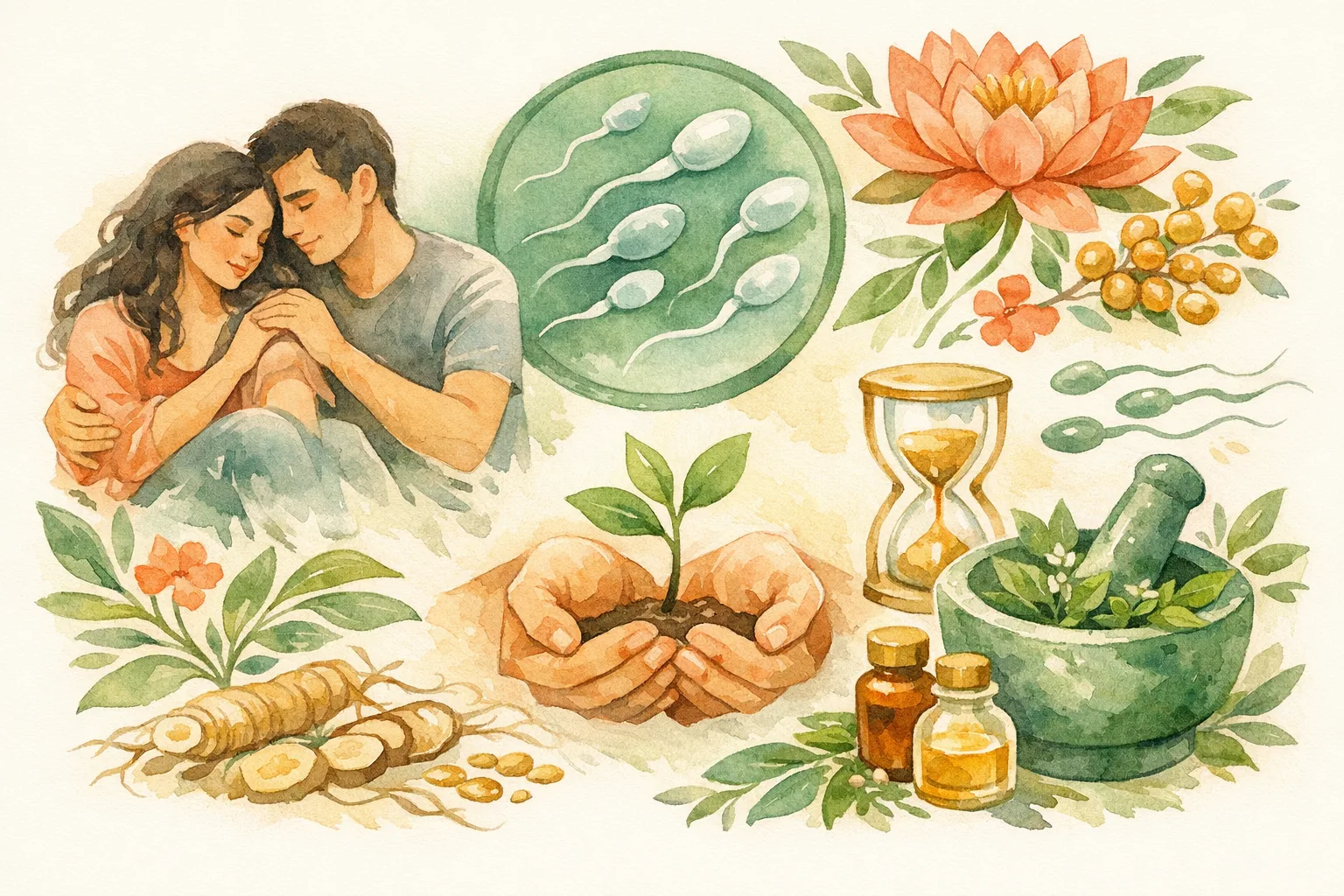
The Number That Should Alarm Every Man
Western men have lost more than half their sperm since the early 1970s. The largest analysis ever done on the subject confirms it.
Dr. Hagai Levine at Hebrew University led a team that reviewed 185 studies covering 42,935 men. Published in Human Reproduction Update, the analysis found a 52.4% drop in sperm concentration and a 59.3% drop in total sperm count among men in North America, Europe, Australia, and New Zealand between 1973 and 2011. The decline was averaging 1.4 to 1.6% per year. And it showed no signs of slowing.
Multiple clinical trials now show that specific interventions - some herbal, some lifestyle, some conventional - can reverse low counts in 90 days. This article breaks down what those trials found and what they did not find.
What Low Sperm Count Actually Means
The World Health Organization defines low sperm count as fewer than 15 million sperm per milliliter of semen. Some labs use 20 million per milliliter as the target for optimal fertility. Below 5 million is classified as severe. Zero sperm is called azoospermia.
Low count is only one part of the picture. Sperm health has three dimensions: quantity, motility (the ability to swim), and morphology (shape). A man can have a normal count but still struggle to conceive if fewer than 32% of his sperm are moving forward, or if more than 96% are abnormally shaped.
Male factor infertility contributes to roughly 50% of all infertility cases. Males are the sole cause in about 20% of cases and a contributing factor in another 30 to 40%, according to StatPearls research from Creighton University.

The 74-Day Rule
Sperm takes 74 days to fully mature. Any change you make today - diet, herbs, lifestyle, or medical treatment - will not show up in a semen analysis for at least 2.5 to 3 months.
This is why the standard protocol in almost every Ayurvedic and clinical trial is 90 days. Shorter than that, and you are not measuring the actual effect.
What Conventional Medicine Offers
Lifestyle Changes - First and Most Evidence-Backed
Obesity raises estrogen and lowers testosterone, directly suppressing sperm production. A Danish study of 1,221 men found that men drinking more than 40 alcohol units per week had a 33% lower sperm concentration than men drinking 1 to 5 units per week.
Smoking damages sperm concentration, motility, and shape. Optimal sperm production requires a temperature of 34 degrees Celsius - about 3 degrees below core body temperature. Laptops can raise scrotal temperature by up to 2.5 degrees, triggering cell death in the testes. The damage is reversible within 74 days of removing the heat source.
Varicocele Surgery
A varicocele is a cluster of enlarged veins in the scrotum that raises testicular temperature and creates oxidative stress, often causing low count, poor motility, and abnormal shape simultaneously.
Surgery eliminates the varicocele in 90 to 99% of cases. Post-surgery improvements in semen take 3 to 6 months to appear. Studies show a 45.8% pregnancy rate in men with normal hormone levels after repair, with mean sperm concentration increasing by about 4.3 million per milliliter.
Hormonal Treatment
Hormonal disorders cause 2 to 5% of male infertility cases. Drugs like clomiphene citrate can stimulate sperm production in men whose hormone signaling has broken down. One critical warning: testosterone supplementation is contraindicated. Taking extra testosterone shuts down the body's own sperm production.
IVF With ICSI
Intracytoplasmic sperm injection - where a single sperm is injected directly into an egg - makes pregnancy possible even with very low counts. Fertilization rates reach 50 to 80% of injected eggs. Live birth rates per cycle are lower: overall IVF success is about 12% per attempt, rising to 40 to 50% after 9 attempts, according to StatPearls.
A single full IVF cycle in the US averages $23,474 when all-in costs are included, according to Carrot Fertility data. Only 15 US states require IVF-specific insurance coverage.
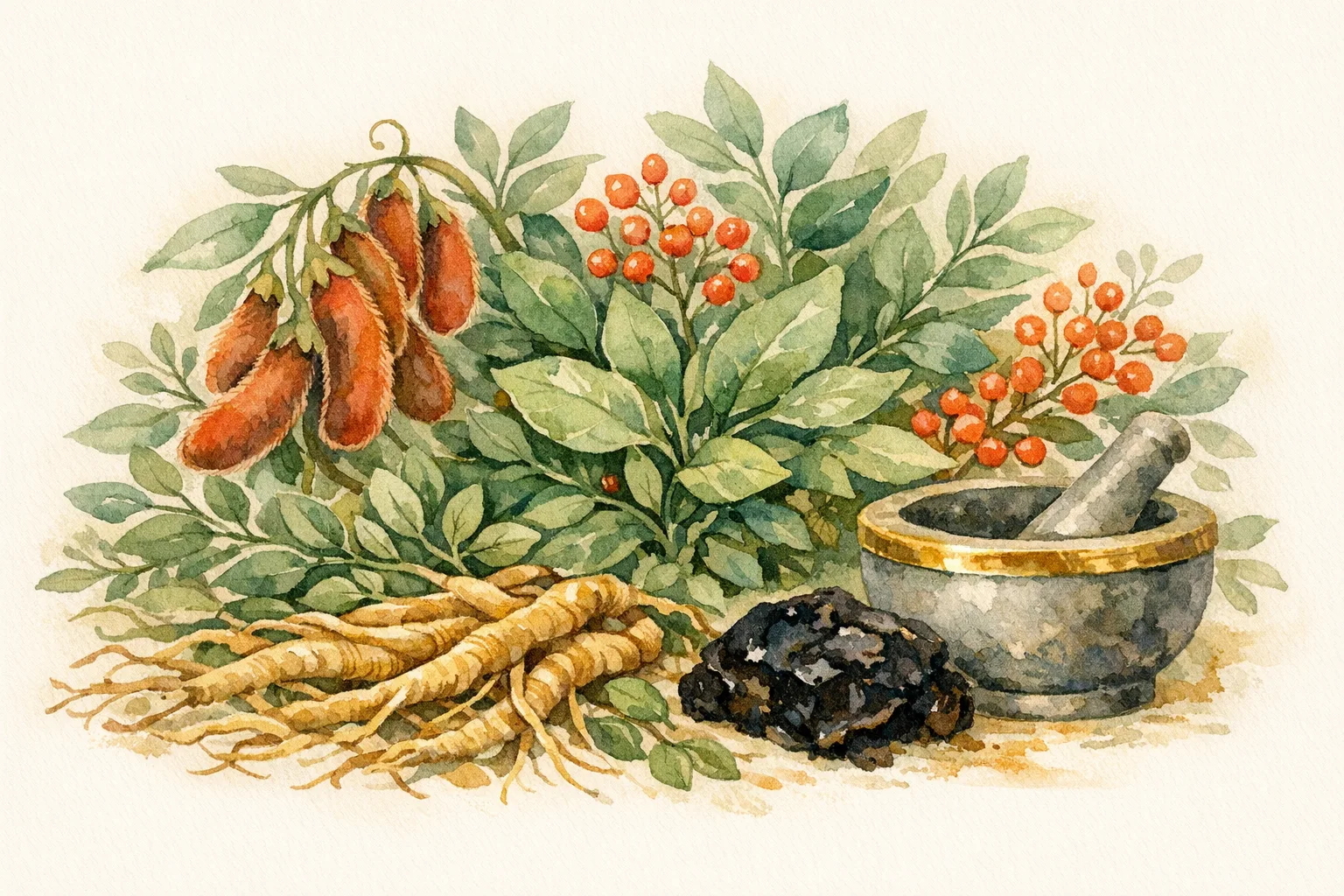
What the Research Shows - Ayurvedic Approaches
Ashwagandha (Withania somnifera) - The Strongest Single-Herb Evidence
A randomized, double-blind, placebo-controlled trial published in Evidence-Based Complementary and Alternative Medicine (PMC ID: PMC3863556) enrolled 46 men with low sperm count at five infertility centers in India. The treatment group received 675 mg per day of KSM-66 ashwagandha root extract - standardized to at least 5% withanolides - for 90 days.
Sperm count rose 167%, climbing from 9.59 million per milliliter to 25.61 million per milliliter. Semen volume increased 53%. Sperm motility improved by 57 percentage points. Hormone levels - including testosterone, luteinizing hormone, and follicle-stimulating hormone - also improved significantly. The placebo group showed minimal change.
Ashwagandha reduces cortisol, which in high amounts suppresses testosterone. It also acts directly on the seminiferous tubules - the structures inside the testes where sperm are made - reducing oxidative damage and supporting cell development.
Shilajit - Strong Evidence From a 90-Day Trial
Researchers at J.B. Roy State Ayurvedic Medical College in Kolkata tested processed Shilajit in 35 oligospermic men. The trial was published in Andrologia (PMID: 20078516). The dose was 100 mg twice daily for 90 days.
Of the 28 men who completed the treatment, total sperm count rose 61.4%. Semen volume increased 37.6%. Sperm motility improved across a range of 12.4 to 17.4%, normal sperm morphology improved 18.9%, and serum testosterone rose 23.5%. A marker of oxidative stress in semen dropped 18.7%. Liver and kidney function were unaltered throughout the trial.
Shilajit is a resinous mineral compound found in Himalayan rock layers. It contains fulvic acid and dibenzo-alpha-pyrones. The Kolkata study confirmed that these compounds actually appear in semen after oral ingestion - meaning Shilajit directly reaches the reproductive system.
Mucuna pruriens (Kapikacchu) - The Stress-Fertility Link
A study at C.S.M. Medical University in Lucknow (PMC ID: PMC2816389) enrolled 60 infertile men under psychological stress, confirmed by elevated cortisol levels. They were given 5 grams of Mucuna pruriens seed powder per day for 3 months.
After treatment, sperm count and motility significantly improved. Cortisol fell. Antioxidant enzymes in semen - including superoxide dismutase, catalase, and glutathione - were restored to near-normal levels. Mucuna pruriens breaks the stress-to-low-testosterone-to-low-sperm-count chain and directly reduces oxidative damage to sperm cells.
A separate study by the same research group (PubMed ID: 18001713) found that Mucuna pruriens also improved sperm concentration in infertile men without identifiable stress - suggesting the mechanism extends beyond cortisol reduction alone. Mucuna pruriens contains L-DOPA, a natural precursor to dopamine.
Polyherbal Ayurvedic Formulations - The Combination Effect
A randomized controlled trial (PMC ID: PMC6083514) tested a polyherbal formulation in 36 oligospermic men. After 90 days, sperm concentration rose 256%. Semen volume rose 154%. Sperm motility rose 215%. Hormone levels improved significantly. The placebo group showed no meaningful change.
The formulation combined Safed Musli (Chlorophytum borivilianum), Mucuna pruriens, Hygrophila spinosa, and several other herbs. These are small trials. Larger replication studies are needed before polyherbal combinations can be recommended as a standard of care.
CoQ10 - Conventional Antioxidant With Solid Evidence
A meta-analysis of 9 randomized trials covering 781 participants, published in the World Journal of Men's Health, found that CoQ10 supplementation significantly improved sperm concentration by an average of 10.22 million per milliliter. Sperm motility improved by 4.95 percentage points. Clinical pregnancy odds increased with a 6.02 odds ratio. Results were strongest when supplementation lasted more than 3 months.
The Comparison - By the Numbers
| Approach | Key Result | Timeline | Cost Range (US) |
|---|---|---|---|
| Ashwagandha (PMC3863556) | +167% sperm count | 90 days | Low (supplement) |
| Shilajit (PMID 20078516) | +61.4% sperm count | 90 days | Low (supplement) |
| Mucuna pruriens (PMC2816389) | Count + motility improved; cortisol reduced | 90 days | Low (supplement) |
| Polyherbal formulation (PMC6083514) | +256% sperm count, +215% motility | 90 days | Low to moderate |
| CoQ10 (WJMH meta-analysis) | +10.22M/mL concentration | 3+ months | Low to moderate |
| Varicocele surgery | 45.8% pregnancy rate post-repair | 3-6 months recovery | $3,000-$10,000 |
| IVF + ICSI | 12% live birth per cycle; 40-50% after 9 cycles | Per cycle: 4-6 weeks | $23,474+ per cycle |
Limitations - What We Do Not Know
Every Ayurvedic trial cited here is small. The Ashwagandha trial had 46 men. The Shilajit trial had 35. The polyherbal trial had 36. These are pilot studies. They give us signal, not certainty.
None of these trials measured live birth rates as the primary outcome. Improved sperm parameters do not automatically mean a pregnancy will happen.
Larger, multi-center, independently funded trials are needed. The evidence we have is real. It is just not complete.

The Ayurvedic Framework for Sperm Health
In Ayurveda, sperm health is governed by a concept called Shukra Dhatu - the seventh and most refined of the body's seven tissue layers. A dedicated branch called Vajikarana Tantra focuses specifically on male reproductive health.
The treatment framework has four layers: purification (removing accumulated metabolic waste that blocks the production chain); rebuilding (using Rasayana herbs like ashwagandha and amalaki to restore foundational energy); direct fertility support (Vajikarana herbs like Mucuna pruriens, Shilajit, and Safed Musli that directly stimulate sperm production); and diet and lifestyle (warm, nourishing foods, stress reduction, and sleep protection).
The lifestyle layer maps almost exactly onto what modern research recommends: reduce alcohol, eliminate heat exposure, improve sleep, lower cortisol. Ayurveda treats all four layers at the same time rather than addressing them one by one.
What You Can Do Today
Get a semen analysis first. Most labs charge $25 to $200 for a home kit or clinic test. Without a number, you cannot track improvement.
Remove the heat sources. Phone in the pocket, laptop on the lap, hot baths. These are reversible within 74 days. Start there before spending anything.
If cortisol is high - and most men under fertility stress have high cortisol - the evidence for Mucuna pruriens as an entry point is solid. It addresses both the stress driver and the sperm parameters directly.
If you want to try Ashwagandha, use a standardized KSM-66 extract at 675 mg per day, divided across three doses. That is the dose used in the clinical trial. Generic powders without standardization may not produce the same result.
Retest at 90 days. Not earlier.
When to Consider Each Path
Herbal and lifestyle interventions make the most sense when: the male partner has mild to moderate oligospermia (5 to 20 million per milliliter), there is no structural cause like varicocele, the couple has not yet spent significant money on IVF, and there is willingness to run a 90-day protocol seriously.
IVF with ICSI makes sense when: counts are extremely low (under 1 million per milliliter), when azoospermia is confirmed, or when natural approaches have been tried for at least one full spermatogenesis cycle with no improvement.
Varicocele surgery makes sense when a varicocele is identified by ultrasound. It is the most common correctable structural cause of low sperm count. It is worth investigating before any other intervention.
If you are in the Las Vegas area and want to explore an intensive, in-home Ayurvedic protocol that combines diet, herbs, stress reduction, and environmental restructuring, call Omioni at 972-282-3930 to learn more. You can also read more on our blog about natural approaches to female fertility markers and what a full Ayurvedic fertility protocol looks like.
Frequently Asked Questions
How long does it take to raise sperm count naturally?
At minimum 74 days. Most clinical trials used 90 days as the measurement period. Plan for 3 months before re-testing.
Does Ashwagandha actually work for sperm count?
A randomized controlled trial (PMC3863556) found a 167% increase in sperm count after 90 days of 675 mg per day. Sample size was 46 men. Results were statistically significant. This is pilot-level evidence - real, but not yet confirmed by large trials.
Is Shilajit safe to take?
The Andrologia trial (PMID 20078516) found no changes in liver or kidney function after 90 days of use. Human trials have not reported significant adverse effects at standard doses. Shilajit should be sourced from a verified, purified supplier. Raw or unprocessed Shilajit can contain heavy metals.
Can you boost sperm count while also preparing for IVF?
Yes. Improving sperm parameters before an IVF cycle can improve fertilization rates. Some studies found that men with better sperm quality at the time of IVF had higher embryo quality outcomes. A 90-day natural protocol before a planned cycle is not a reason to delay IVF - it is a reason to prepare for it better.
Does stress actually lower sperm count?
Yes. The Mucuna pruriens trial at C.S.M. Medical University (PMC2816389) found that infertile men under psychological stress had measurably higher cortisol and lower sperm count and motility than controls. After 3 months of treatment that reduced cortisol, sperm parameters significantly improved. The stress-to-low-sperm pathway is biological, not psychological.
What foods help sperm count?
A systematic review published in PMC found that a Mediterranean-style diet - high in vegetables, fish, olive oil, legumes, and antioxidants - was associated with improved sperm count, motility, and morphology. Specific nutrients with clinical support include zinc, selenium, vitamin C, and folate. Oysters, pumpkin seeds, leafy greens, and walnuts cover most of these.
When is IVF with ICSI the only realistic option?
When sperm count is confirmed below 1 million per milliliter, or when azoospermia is diagnosed and no sperm can be found in the ejaculate. At that level, natural approaches alone are unlikely to be sufficient. Sperm retrieval procedures combined with ICSI offer the most realistic path to conception.
Medical disclaimer: This article is for informational purposes only. It does not constitute medical advice, diagnosis, or treatment. Consult a qualified healthcare provider before starting any supplement, herbal, or fertility protocol.