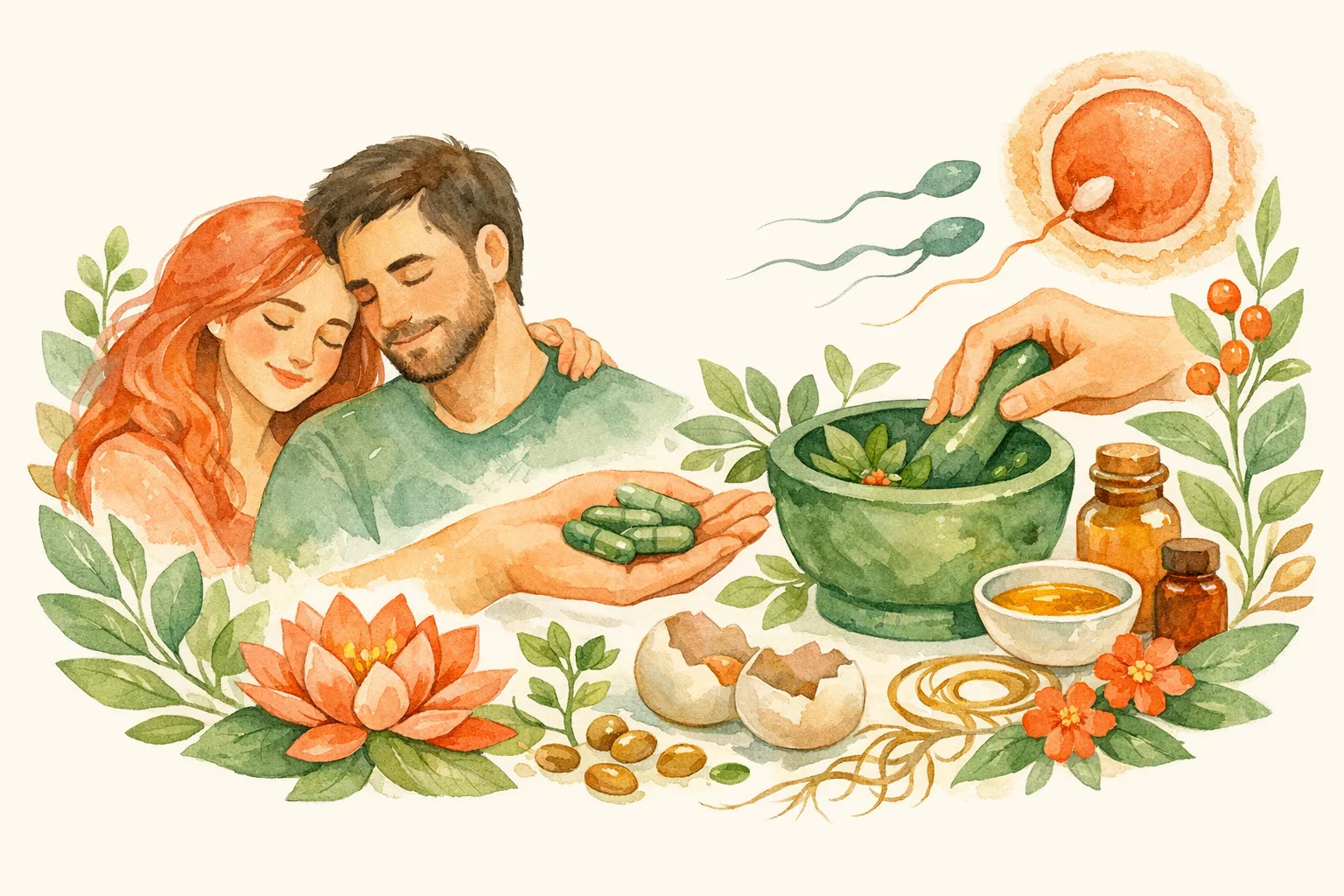
You have been trying for months. Maybe years. You have read every article. You have ordered the supplements. Your husband takes them every morning without fail. And still - nothing.
The male fertility supplement market is worth over one billion dollars. And most of what is being sold inside it does not work. The ingredients have never been tested properly.
This article tells you what the research actually shows - the good, the bad, and what the Ayurvedic tradition has been doing right for five thousand years.
The Problem Nobody Is Talking About
Male factor infertility is involved in about half of all cases where couples cannot conceive. That number comes from Dr. Neel Parekh, a male fertility specialist at the Cleveland Clinic. In up to one in four of those cases, no clear cause is ever found.
So couples turn to supplements. They are accessible. They feel like doing something. And the market has responded - there are hundreds of products, all claiming to be clinically proven.
But Dr. Parekh and colleagues at the University of Miami studied the top 17 male fertility supplements sold on Amazon, Walmart, and other major retailers. They published their findings in the journal Urology.
In the study, Dr. Parekh and colleagues looked at 17 of the most commonly used male fertility supplements from popular online retailers. These supplements contained 90 unique ingredients, which researchers graded by level of published evidence.
Of those 90 ingredients, only 17% showed any positive effect on sperm in a proper clinical trial. The rest had weak, mixed, or no evidence at all.
"We were surprised at the lack of evidence behind the vast majority of ingredients in male fertility supplements," says Dr. Parekh. "Most supplements are unproven and should be taken with caution."

What the Research Shows
The Biggest Antioxidant Trial Ever Done
The SUMMER trial is the largest study ever done on antioxidant supplements for male fertility. Researchers in the Netherlands ran it across 21 hospitals. They enrolled 1,171 men. It ran for six years.
The study collated data from 1,171 adult men randomly assigned to either an antioxidant supplement or a placebo. The supplement tested was Impryl, containing betaine, L-cystine, niacin, zinc, vitamin B6, vitamin B2, folic acid, and vitamin B12.
This randomized clinical trial found that ongoing pregnancy rates did not improve with the antioxidant supplement compared with a placebo. The investigators do not support its use in men seeking fertility care.
It gets worse. After six months, the antioxidant group had a 33.8% pregnancy rate compared to 37.5% in the placebo group. During the 4-6 month sperm production window, pregnancy rates dropped further in the antioxidant group to 15.5% versus 21.5% with placebo.
The men taking the supplement got pregnant less often than the men taking nothing.
Why Too Many Antioxidants Can Backfire
High levels of some ingredients - namely antioxidants - commonly found in male fertility supplements can cause infertility in some men. Reductive stress, a condition detrimental to sperm health and embryogenesis, occurs when antioxidants in the body outnumber reactive oxygen species, unbalancing the body's natural homeostasis.
Your body needs a certain amount of reactive oxygen. Flooding the system with antioxidants can disrupt that balance. The supplement does not know whether your husband actually has too much oxidative stress. It just adds more antioxidants regardless.
Which Ingredients Do Have Evidence
Not everything is useless. A few specific nutrients earned a Grade A in the Cleveland Clinic's evidence review - meaning they showed a positive effect on sperm in more than one proper clinical trial.
Those Grade A ingredients are L-Carnitine, CoQ10, Zinc, Vitamin C, and Vitamin E. Selenium and Folic Acid earned a Grade B - one clinical trial showing benefit. Vitamin D and Omega-3 showed mixed results.
And improving a sperm number on a lab test is not the same as helping a couple get pregnant. The SUMMER trial proved that gap is real.
Conventional vs Natural - An Honest Comparison
| Approach | What It Does | What the Evidence Shows | Key Risk |
|---|---|---|---|
| Standard OTC supplement stack | Adds isolated antioxidants and vitamins | No improvement in pregnancy rates (SUMMER trial, JAMA Network Open) | Reductive stress - may reduce fertility in men without oxidative stress infertility |
| Ashwagandha (properly dosed) | Adaptogenic herb - reduces cortisol, supports hormone balance | +167% sperm count, +57% motility in 90 days (PMC3863556, Evidence-Based Complementary and Alternative Medicine) | Minimal - no adverse events in clinical trials |
| Shilajit (processed) | Himalayan mineral resin - reduces oxidative damage, supports testosterone | +61.4% sperm count, +23.5% testosterone in 90 days (Biswas et al., Andrologia) | Minimal at clinical doses - liver and kidney profiles unaffected |
| IVF/ICSI | Retrieves and fertilizes eggs outside the body | High success in appropriate cases - but invasive, costly, not a first-line option for mild male factor | Physical, emotional, financial cost. No guarantee of success. |
The Ayurvedic Approach
I grew up in a village in Himachal Pradesh. Among every relative I knew, every family around us - nobody had trouble getting pregnant. Not because they were lucky. Because they lived in a way that kept the body able to do what it is designed to do.
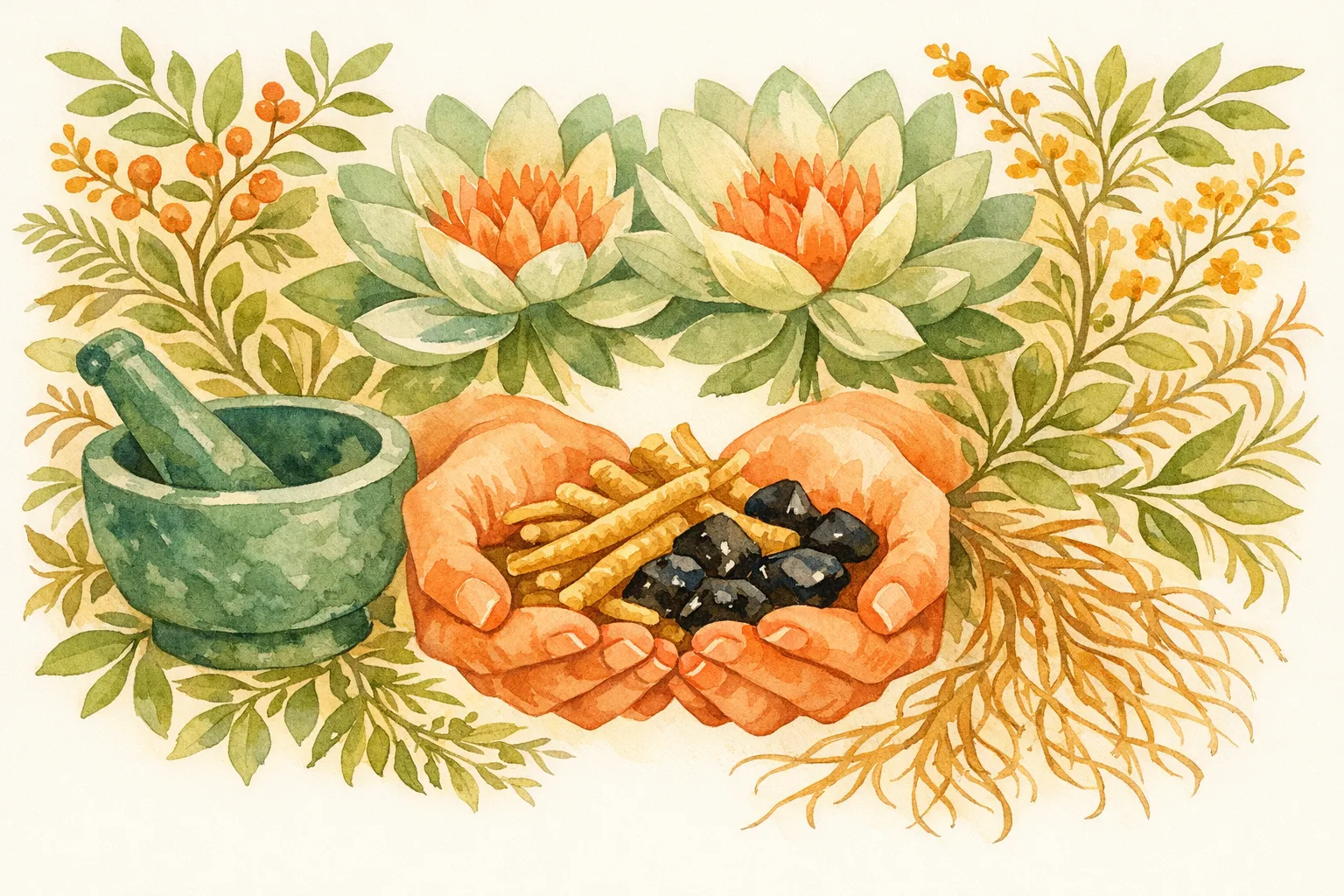
Ayurveda has a whole system for male reproductive health called Vajikarana. Some of these compounds are now among the most studied natural compounds in reproductive medicine.
Ashwagandha - The Most Researched
Ashwagandha is the Sanskrit name for Withania somnifera, a root used in Ayurvedic medicine for thousands of years as a male fertility tonic.
A pilot study was conducted to evaluate the spermatogenic activity of ashwagandha root extract in oligospermic patients. Forty-six male patients with low sperm counts were enrolled and randomized either to treatment with a full-spectrum root extract of ashwagandha at 675mg per day in three doses for 90 days, or to placebo in the same protocol.
Sperm count rose by 167% and motility improved by 57%, while semen volume increased 53% - all measured at day 90 from baseline. All results were statistically significant. No adverse events were reported.
A second trial published in Frontiers in Reproductive Health studied 76 healthy adult men over eight weeks. Semen volume increased by 36.4% and sperm concentration rose by 32.9%. Total sperm count per ejaculation went up 38.1%. Total sperm motility improved by 87.25%. No adverse events or serious adverse events were reported during study.
As a powerful adaptogen, ashwagandha root extract fortifies male sexual health indirectly, via enhancing testosterone production and significantly mitigating stress response. Chronic stress raises cortisol. High cortisol suppresses testosterone. Lower testosterone means poorer sperm. Ashwagandha interrupts that chain.
Shilajit - What the Himalayas Gave Us
Shilajit is a dark resinous substance that forms over centuries in Himalayan rock. In Ayurveda, it is a Rasayana - a rejuvenating medicine. It is rich in fulvic acid and trace minerals.
Researchers at J.B. Roy State Ayurvedic Medical College in Kolkata studied processed Shilajit in 35 oligospermic men over 90 days, published in the journal Andrologia.
Twenty-eight patients who completed the treatment showed significant improvement in spermia (+37.6%), total sperm count (+61.4%), motility (12.4-17.4% after different time intervals), and normal sperm count (+18.9%) compared with baseline value.
Significant decrease of semen oxidative stress marker content (-18.7%) was observed. Moreover, serum testosterone (+23.5%) and FSH (+9.4%) levels significantly increased.
Unaltered hepatic and renal profiles of patients indicated that Shilajit was safe at the given dose. The present findings provide further evidence of the spermatogenic nature of Shilajit, as attributed in Ayurvedic medicine.
Why 90 Days Is Not Optional
Sperm takes 74 days to fully mature. One week of anything will not move the needle. Three months of consistent changes will.
That is exactly what Ayurveda has always said. Rasayana therapy is a 90-day minimum protocol. Sperm produced today started developing about 2.5 to 3 months ago. Any change in diet, herbs, or stress levels takes that long to show up in a semen analysis.
Most over-the-counter supplements are sold as a monthly subscription with no structured protocol, no assessment before, and no adjustment during. The Ayurvedic approach begins with the question - what is this man's body actually missing? Is it high stress? Poor digestion? Nutritional gaps? Environmental toxins? The herbs are chosen accordingly.

What You Can Do Today
1. Remove the obvious threats first. Sperm are sensitive to heat. Tight underwear, laptops on laps, phones in front pockets, and long hot baths all raise scrotal temperature. These are documented in reproductive medicine literature.
2. Stop all supplements for 30 days. The SUMMER trial showed that indiscriminate antioxidant use can make things worse. If your husband is on a supplement stack with no diagnosis guiding it, stopping may actually help.
3. Get a baseline semen analysis. Before any herb, supplement, or program, you need to know the actual numbers. Sperm count. Motility. Morphology. DNA fragmentation if possible. You cannot measure improvement without a starting point.
4. Reduce stress in a measurable way. Cortisol suppresses testosterone. Testosterone drives sperm production. This is endocrinology, not a soft suggestion. Ashwagandha addresses this directly. So do breathwork, fasting, and removing unnecessary digital stimulation.
5. Look at what he eats. Zinc is the most important mineral for sperm production and testosterone. It is found in pumpkin seeds, legumes, and whole grains. A heavily processed diet depletes it. Start there before any supplement.
If you want a structured program - not just a supplement, but a full restructuring of diet, stress, environment, and daily routine - that is what we do at Omioni. Call us at 972-282-3930 to learn more.
When to Consider Each Path
This is not a choice between Ayurveda and medicine. It is a question of sequence and fit.
A structured Ayurvedic approach is a strong first option when sperm counts are low but not zero, when no structural cause has been found, when IVF has not yet been started, or when a previous IVF cycle has failed and you want to improve sperm quality before the next one.
Dr. Parekh says it is important for patients to see a male fertility specialist who can conduct a comprehensive exam and accurately diagnose the causes of infertility so they can be treated appropriately. Diagnosis first. Then treatment.
If there is a structural problem - a varicocele, hormonal disorder, or zero sperm production - that needs a urologist. Ayurveda is not a replacement for that care.
But for men with unexplained low sperm counts, poor motility, and normal anatomy, the evidence for Ayurvedic herbs is stronger than the evidence for most of what is currently on the supplement shelf.
You can also read more about how Ayurvedic fertility herbs work for both partners and about natural approaches to low AMH on the Omioni blog.
Call Omioni Today
Omioni offers a natural, in-home fertility program based in Las Vegas. We restructure your entire life around conception - food, environment, stress, digital habits, sleep, and targeted Ayurvedic support for both partners. No procedures. No needles.
If you are ready to talk, call us. 972-282-3930.
Frequently Asked Questions
Do male fertility supplements actually improve pregnancy rates?
The largest trial ever done on male fertility supplements - the SUMMER trial, published in JAMA Network Open, with 1,171 men across 21 hospitals - found no improvement in pregnancy rates compared to placebo. In fact, during the window when treatment should be most effective, the supplement group had lower pregnancy rates. Improving a number on a sperm test is not the same as improving pregnancy outcomes.
Which supplement ingredients have the best evidence?
A study published in the journal Urology by Dr. Neel Parekh and colleagues at the Cleveland Clinic and University of Miami graded 90 ingredients from the top 17 male fertility supplements. Only five earned a Grade A based on more than one proper clinical trial - L-Carnitine, CoQ10, Zinc, Vitamin C, and Vitamin E. These showed improvements in sperm parameters, not necessarily pregnancy rates.
Is ashwagandha actually clinically tested for male fertility?
Yes. A double-blind, placebo-controlled clinical trial published in Evidence-Based Complementary and Alternative Medicine studied 46 men with low sperm counts. After 90 days of ashwagandha root extract at 675mg per day, sperm count increased by 167%, semen volume by 53%, and sperm motility by 57%. A more recent trial published in Frontiers in Reproductive Health with 76 healthy men found similar results, with sperm motility improving by 87% in eight weeks. No adverse events were reported in either trial.
What is Shilajit and how does it help sperm?
Shilajit is a mineral-rich resin from the Himalayas, used in Ayurveda for centuries as a male reproductive tonic. A clinical study published in Andrologia gave processed Shilajit to 35 men with low sperm counts for 90 days. Total sperm count increased by 61.4%, testosterone rose by 23.5%, and semen oxidative stress markers dropped by 18.7%. Liver and kidney function remained normal throughout.
Can too many antioxidant supplements hurt male fertility?
Yes. This is called reductive stress. When antioxidants in the body outnumber reactive oxygen species, it disrupts the natural balance the body needs for sperm to function properly. Dr. Parekh's research at the Cleveland Clinic identified this as a real risk. The SUMMER trial results - where antioxidant users had lower pregnancy rates in the optimal treatment window - are consistent with this mechanism.
How long does it take to see results from Ayurvedic fertility support?
A minimum of 90 days. Sperm production takes 72 to 90 days from start to finish. Any change in lifestyle, diet, or herbs takes at least that long to show up in a semen analysis. Both the ashwagandha and Shilajit trials used 90-day protocols for this reason. Ayurvedic Rasayana therapy is built around this biological reality.
Is Ayurvedic fertility support a replacement for seeing a doctor?
No. Some causes of male infertility - structural problems, hormonal disorders, certain chromosomal conditions - require medical diagnosis and sometimes surgery. A semen analysis and urological assessment are important first steps. Ayurvedic support works best alongside proper diagnosis, not instead of it. At Omioni, we always recommend that couples have a baseline evaluation before starting the program.
Medical disclaimer: This article is for educational purposes only and does not constitute medical advice. Individual results vary. Always consult a qualified medical professional before starting or stopping any supplement, herb, or fertility protocol. The studies cited are real and accurately summarized, but individual outcomes depend on underlying causes that require proper evaluation.