
You Have Been Trying. You Are Exhausted. This Is For You.
You have been tracking your cycle, given up coffee, and cried in a bathroom at a fertility clinic. You have Googled "egg quality" at 2am more times than you can count.
And someone told you your eggs are "poor quality." Maybe they showed you a number - your AMH level, your egg reserve marker - and said the words that feel like a door slamming shut. You left the appointment with a pamphlet for IVF and a bill you did not expect.
Before you spend tens of thousands of dollars on a procedure that may or may not work, read this. Egg quality can be influenced. Research proves it. And a 5,000-year-old system of medicine called Ayurveda has been helping women conceive for longer than any fertility clinic has been open.
What Egg Quality Actually Means
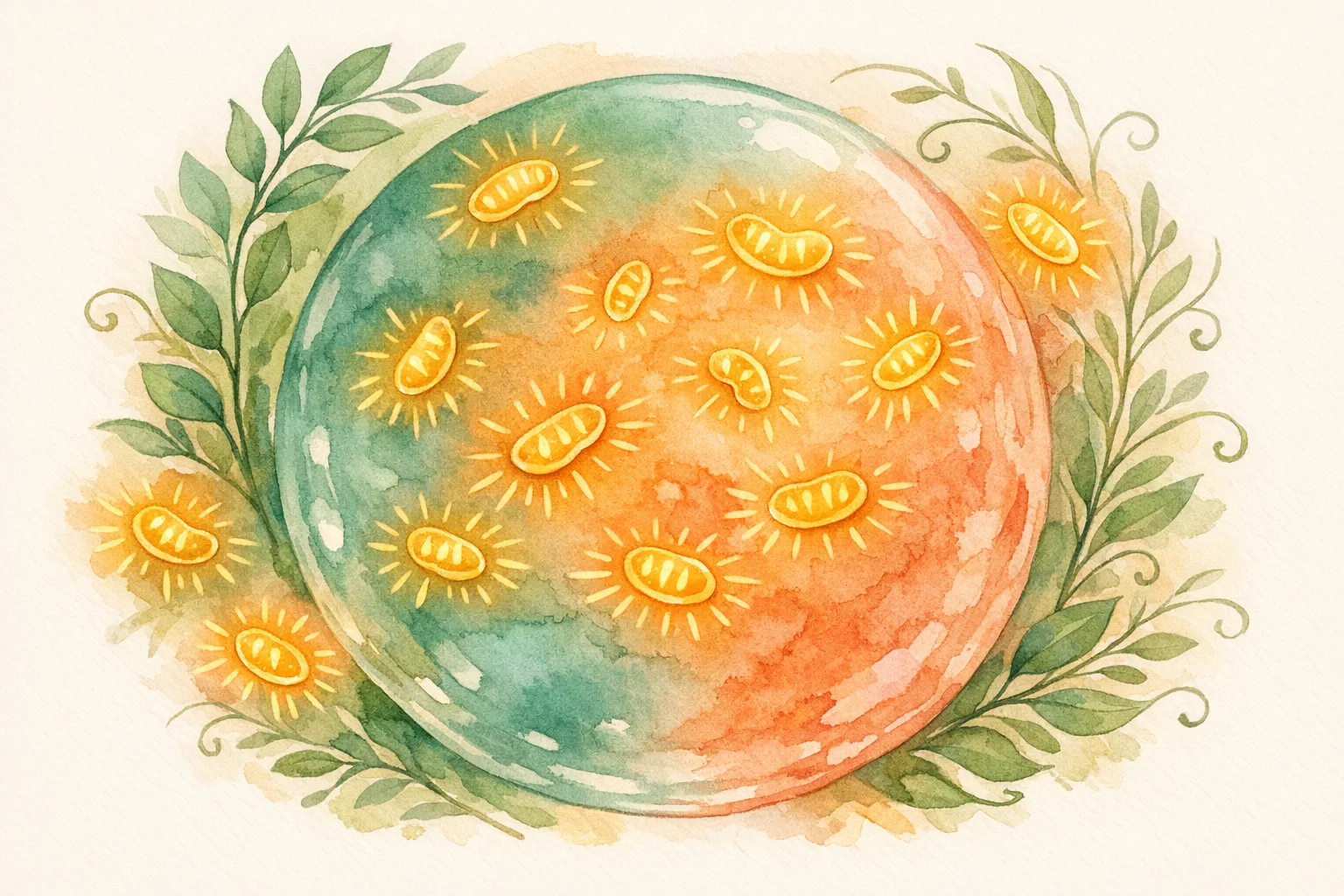
An egg cell contains more mitochondria than any other cell in the human body. Mitochondria are the energy producers inside each cell. They power the egg as it matures, gets fertilized, and divides into an embryo.
When mitochondria do not work well, the egg cannot divide correctly. That leads to failed fertilization, chromosomal problems, and early miscarriage.
A review published in Fertility and Sterility found that the key component behind age-related egg decline is mitochondrial dysfunction - specifically, decreased energy output and greater damage from unstable molecules called free radicals. Oxidative stress adversely affects egg quality through mitochondrial dysfunction, follicular damage, meiotic errors, DNA damage, telomere shortening, and reduced fertilization rates.
Damaged mitochondria make damaged eggs. And mitochondrial health is something you can influence.
What Conventional Medicine Offers
IVF takes your eggs out of your body, fertilizes them in a lab, and puts the resulting embryo back into your uterus. For many people, it works. It has helped millions of families.
But the numbers are harder than most clinics advertise.
The U.S. Department of Health and Human Services estimates the cost for a single IVF cycle at $15,000 to $20,000, and it can exceed $30,000 if a donor egg is involved. FertilityIQ data shows the average patient undergoes 2.3 to 2.7 IVF cycles in total, meaning the average patient will spend close to $50,000.
For women with low egg reserve specifically, the numbers are harder still. A study published in the Middle East Fertility Society Journal found the live birth rate in women with extremely low egg reserve was 11.43%, compared to 30.4% in women with normal reserve.
That is roughly 1 in 9 women with the most compromised reserves having a live birth from IVF. Nobody tells you that number in the consultation room.
What the Research Shows
CoQ10 and Egg Quality
Coenzyme Q10 - CoQ10 for short - is a molecule your body makes naturally. It lives inside mitochondria and helps them produce energy. It also acts as an antioxidant, neutralizing the free radicals that damage egg DNA.
After age 35, your body makes less of it. That decline lines up almost exactly with the age-related drop in egg quality.
A randomized controlled trial published in Reproductive Biology and Endocrinology studied young women with poor egg reserve who took CoQ10 before IVF. Women in the CoQ10 group had an increased number of retrieved eggs, a higher fertilization rate of 67.49%, and more high-quality embryos. Significantly fewer women treated with CoQ10 had cancelled embryo transfers due to poor embryo development - 8.33% versus 22.89% in the control group.
A separate meta-analysis in Annals of Nutrition and Metabolism, examining 20 randomized clinical trials with 2,617 participants, found that antioxidant use significantly increased the number of retrieved eggs and high-quality embryo rates, and CoQ10 tended to be more effective than melatonin, myo-inositol, and vitamins.
A large observational study published in the International Journal of Clinical Obstetrics and Gynaecology had 1,061 women take CoQ10 for an average of 74 days before IVF. The number of high-quality day-3 embryos per cycle was 5, the number of retrieved eggs per cycle was 8, and clinical pregnancy was achieved in 874 patients - a clinical pregnancy rate of 82.53%.
The direction is consistent: CoQ10 improves the cellular environment in which your eggs mature.
Ayurvedic Herbs and Fertility
Shatavari is a plant in the asparagus family. In Ayurveda, Shatavari is commonly prescribed to nourish the ovaries, promote production of reproductive hormones, and maintain libido in women.
A PubMed review funded by India's Department of Science and Technology found that Shatavari may improve female reproductive health complications including hormonal imbalance, PCOS, follicular growth and development, egg quality, and infertility - possibly by reducing oxidative stress and increasing antioxidant levels in the body.
A randomized, double-blind, placebo-controlled clinical study on Shatavari extract found hormonal changes including increased ovarian follicle count and altered levels of FSH, LH, AMH, and estradiol, indicating endocrine modulation.
A case report published in AYU Journal of Research in Ayurveda documented a woman with very low AMH who was told she could not do IVF with her own eggs. After three months of Ayurvedic treatment, her AMH improved to a level that made her eligible.
The Systematic Review
A PRISMA-compliant systematic review published in PubMed reviewed all available evidence on Ayurveda and infertility. In females, Ayurvedic management of infertility involving Ayurvedic medications and Shodhana therapies - especially Basti and Uttarabasti with medicated oils - showed positive outcomes in sperm quality, conception rates, and overall reproductive health.
Conventional vs Natural - An Honest Comparison
| Factor | IVF | Ayurvedic Approach |
|---|---|---|
| What it does | Retrieves eggs, fertilizes outside the body | Improves the cellular quality of eggs before conception |
| Addresses root cause | No - works around egg quality, not with it | Yes - targets oxidative stress and mitochondrial function |
| Live birth rate for very low egg reserve | Approximately 11-15% per cycle (Middle East Fertility Society Journal) | Individual outcomes vary; protocol improves underlying markers |
| Cost per cycle | $15,000 to $30,000+ per cycle (US Dept of Health and Human Services) | Call 972-282-3930 for program details |
| Timeline to see results | One cycle takes 4-6 weeks | Minimum 3 months; ideal 6-12 months |
| Side effects | Hormonal side effects, risk of ovarian hyperstimulation, surgical procedure | Minimal when guided by a practitioner |
| Works with the body | No - stimulates above natural levels | Yes - restores natural hormonal function |

The Ayurvedic Approach to Egg Quality
My great-grandmother lived to 115. She was the woman the village women came to when they needed help with pregnancy. She did not have a clinic. She had plants, oils, food, and knowledge passed down through generations. Among everyone I grew up around, no one had trouble getting pregnant. Not one woman. That is not luck. That is a system that worked.
Ayurveda approaches fertility by treating the whole body as one connected system. Infertility is linked to weak digestive fire and imbalance in the three governing energies (Vata, Pitta, Kapha), which disrupt reproductive function. Ayurvedic herbs and treatments aim to nourish the reproductive system, regulate hormones, detoxify the body, and improve egg quality.
The Ayurvedic framework identifies four things needed for healthy conception: healthy eggs and sperm (Beeja), a nourished uterus (Kshetra), the right timing (Ritu), and proper nutrition (Ambu). Ayurvedic treatment focuses on restoring balance across all four.
Key Herbs for Egg Quality
Shatavari (Asparagus racemosus) - The most studied Ayurvedic herb for female fertility. It reduces the oxidative stress that damages eggs at the cellular level. Research from Biomedicine and Pharmacotherapy found it is beneficial for folliculogenesis, ovulation, preparing the womb for conception, and preventing miscarriages.
Ashwagandha (Withania somnifera) - An adaptogenic herb that reduces cortisol. When cortisol is high, it suppresses reproductive hormones. Chronic psychological stress directly impairs IVF outcomes by reducing egg quality. Ashwagandha addresses that mechanism.
Triphala - A combination of three fruits: amla, baheda, and haritaki. Triphala strengthens the immune system, removes obstructions in the fallopian tubes, and can enhance female fertility and hormone regulation.
Gokshura (Tribulus terrestris) - Works as a fertility tonic in women by stimulating the ovaries and addressing PCOS, a leading cause of female infertility.
The 90-Day Preparation Period
Ayurveda asks you to prepare the body before conception, the way farmers prepare soil before planting. A minimum of three months - ideally twelve months - are required.
That timeline matches what modern science confirms: your eggs take about 90 days to mature before ovulation. Everything that happens to your body during those 90 days - your diet, your stress levels, your sleep, your exposure to toxins - affects the quality of the eggs that will be available at the end of that window.
What the Omioni Program Does
At omioni.com, we bring the full program to your home in Las Vegas. We restructure your entire life around conception.
That means your diet, your movement, your home environment, the products you put on your body, how you manage anxiety, and how you connect with your partner. We work across six areas: physical, environmental, mental, digital, spiritual, and relational.
People travel to Las Vegas to do this program. They move here for it. Because when the fertility industry has failed you - or before you let it take your savings and your hope - this is the path that works with your body instead of around it.
Learn more about natural approaches for low AMH and the Ayurvedic fertility protocol we use.
What You Can Do Today
1. Start CoQ10. The randomized controlled trials used between 300 and 600 mg per day for 8 to 12 weeks before attempting conception. Talk to your doctor before starting any supplement.
2. Reduce oxidative stress through food. Increasing plant diversity - fruits, vegetables, whole grains, nuts, and seeds - helps decrease oxidative stress and improve egg quality. You need variety and color on your plate every day.
3. Cut the things that damage eggs. Alcohol, caffeine, sugar, and saturated fats are direct inputs into the chemical environment your eggs live in.
4. Manage stress as a medical priority. Cortisol suppresses estrogen production in the ovaries. Negative life events trigger release of cortisol that inhibits estradiol biosynthesis in the ovary, resulting in a reduced number and poor quality of eggs. Stress is a chemical event inside your reproductive system.
5. Consider Shatavari. Work with a practitioner to understand the right form and dose. The clinical evidence supports its role in reducing oxidative stress, supporting follicle development, and balancing reproductive hormones.
6. Get your AMH tested if you have not. AMH gives clues about egg quantity - but it does not measure egg quality or potential. Many women with low AMH still conceive.
When to Consider IVF
Some situations call for IVF: blocked fallopian tubes, severe male factor infertility, women who have already tried natural approaches thoroughly, or women with an urgent medical timeline. IVF is a real medical tool and for some people it is the right one.
But the conversation should start with your baseline biology - and with what can be improved before a procedure. If you are in your early-to-mid 30s with low AMH, you have time to try a 90-day Ayurvedic protocol before making the IVF decision. Even if you do end up doing IVF, going in with better egg quality gives the procedure a better chance.
A Note on Realistic Expectations
Egg quality improvement is not instant. It is a 90-day minimum commitment requiring changes to your diet, environment, stress, and routines.
A three-month Ayurvedic protocol that improves your egg quality before any assisted reproduction is - at worst - three months well spent. At best, it is how you get pregnant without any procedure at all.
Ready to Start
If you want to understand what the Omioni program looks like for your specific situation, call us at 972-282-3930. We are based in Las Vegas and we come to you. The first conversation costs you nothing.
Also read: Can You Raise Low AMH Naturally? and The Five Ayurvedic Herbs Every Fertility Patient Should Know.
Medical Disclaimer: This article is for informational purposes only and does not constitute medical advice. The content is not intended to diagnose, treat, cure, or prevent any condition or disease. Always consult a qualified healthcare provider before making changes to your diet, supplement routine, or fertility treatment plan. Individual results vary. Statements about Ayurvedic approaches have not been evaluated by the FDA.