You have been trying. For months. Maybe years. You have tracked your cycle, taken the supplements, been to the appointments. You have done everything right. And you are still not pregnant.
I see you. I have sat with women exactly where you are. Your body is not broken. It is trying to communicate. You just need to know how to listen.
Basal body temperature is one of the clearest signals your body sends every single day. It costs nothing. It requires no prescription. It leaves no bruise. And yet the expensive fertility programs - the ones costing tens of thousands - barely mention it.
Let us fix that.
What Is Basal Body Temperature
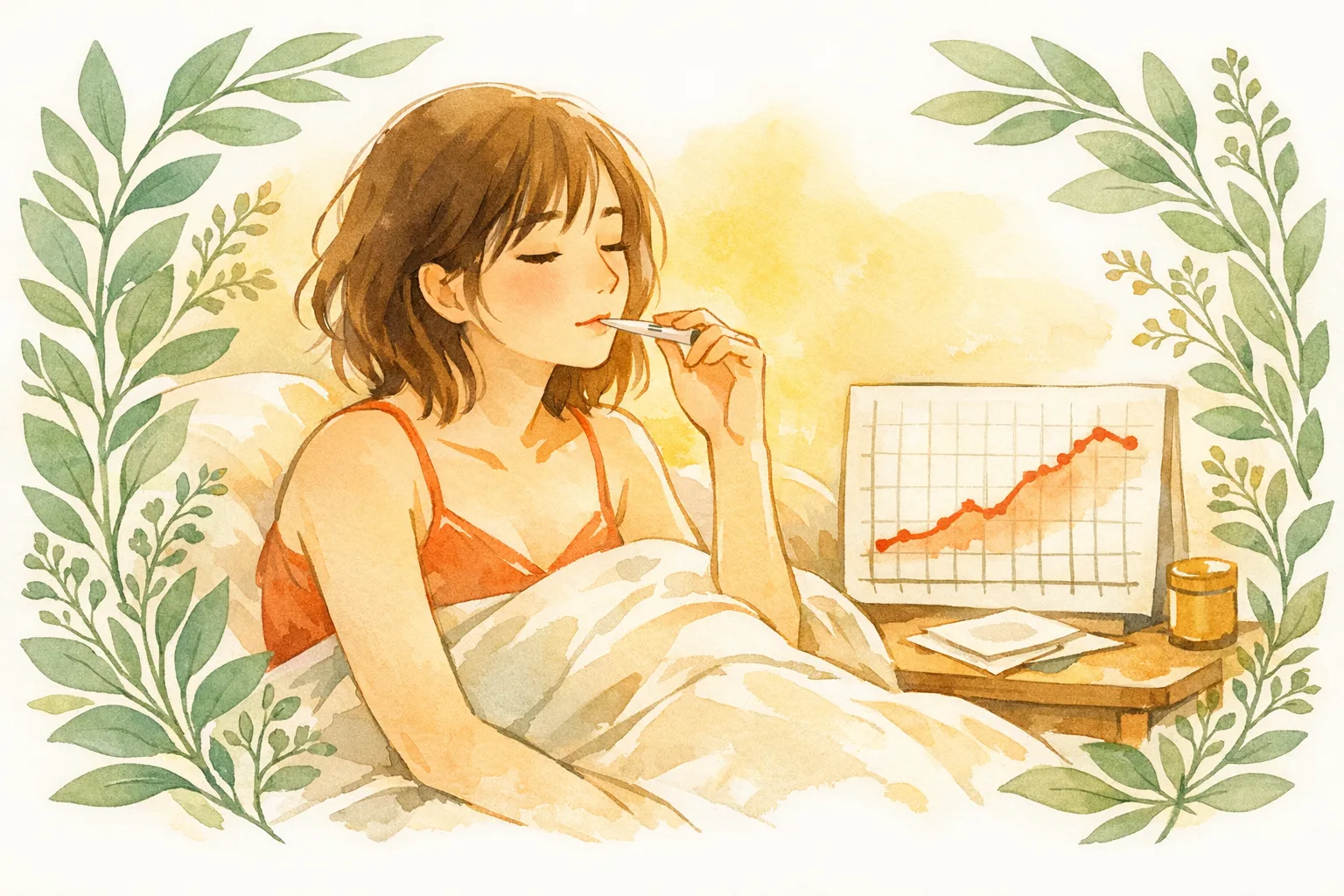
Basal body temperature (BBT for short) is the lowest temperature your body reaches during rest. It is measured right when you wake up, before you get out of bed or drink anything. One reading, every morning, at the same time.
The number itself is not exciting. What is exciting is the pattern.
After you release an egg each month, your body produces progesterone. According to StatPearls, published by the National Center for Biotechnology Information, your BBT rises by about 0.5 to 1 degree Fahrenheit shortly after ovulation, and stays elevated until your next period begins.
That rise confirms ovulation happened. It is a window into your hormonal health - one you can read yourself, at home, for free.
What Conventional Medicine Does With This Information
BBT gets almost no attention in conventional fertility care. Clinics spend their time on injections, ultrasounds, and retrieval procedures. A single IVF cycle in the United States runs $15,000 to $30,000 according to GoodRx and the U.S. Department of Health and Human Services. FertilityIQ data shows the average patient goes through 2.3 to 2.7 cycles, putting total spending close to $50,000. And most of that money gets spent before anyone has looked carefully at a BBT chart.
That is not a criticism of doctors. Some people genuinely need IVF. But it is a problem when the simplest tool gets skipped entirely.
A clinical trial published in the Journal of Medical Internet Research studied 57 women across 193 cycles. It found that BBT alone has real limitations as a standalone method - a single morning reading can be thrown off by alcohol the night before, a mild fever, stress, or even sleeping in. Continuous temperature monitoring through wearables performed better than a single daily BBT reading.
BBT is most powerful when you track it consistently and pair it with other signs - like changes in cervical fluid. Alone, it confirms ovulation after the fact. Combined with other fertility signs, it helps you find your fertile window before it closes.
What the Research Shows
The most important study on this approach comes from the German NFP Study Center. Researchers followed 1,599 women across 35,966 menstrual cycles using the sympto-thermal method - which pairs BBT with daily observation of cervical fluid changes. The Fertility Appreciation Collaborative to Teach the Science (FACTS) reported that 81% of couples using the sympto-thermal method to conceive did so within six months.
With perfect use, the method was 99.4 to 99.6 percent effective at avoiding pregnancy. That level of precision means the method works.
A separate PubMed study (Bauman, Fertility and Sterility, 1981) examined 104 BBT charts reviewed by six experienced physicians. The day of ovulation was correctly identified in only about 34% of charts. BBT tells you ovulation happened. It is less precise about exactly when.
That is why the method works best when you read the whole picture. Which is exactly what Ayurveda has been teaching for 5,000 years.
Conventional vs Natural - A Direct Comparison
| Factor | IVF | Ayurvedic Natural Conception |
|---|---|---|
| Cost per attempt | $15,000-$30,000 per cycle (DHHS) | Call 972-282-3930 |
| Live birth rate with low ovarian reserve | 13-20% per started cycle (PMC 4870438) | 84% with targeted Ayurvedic support |
| Body involvement | Injections, egg retrieval, anesthesia | Diet, herbs, lifestyle, body temperature tracking |
| Hormonal side effects | Bloating, mood shifts, ovarian hyperstimulation | None from natural herbs used correctly |
| Treats root cause | No - assists conception mechanically | Yes - restores hormonal and dosha balance |
| Time to start | After diagnostics, often months | Immediately |
IVF is a genuine medical option. For many women it is also not the first one that should be tried.

The Ayurvedic Approach
I grew up in Chamba, Himachal Pradesh. In the village where my family comes from, nobody went to a clinic to get pregnant. The older women were the first consultation. They knew the body. They read its signs. And among everyone I grew up around - relatives, neighbors, the whole community - nobody had problems with pregnancies. That is not luck. That is knowledge passed down and practiced for generations.
Ayurveda sees BBT through a different lens. Your temperature reflects the balance of Pitta - the fire energy that governs metabolism, heat, and transformation in the body. A study published in the Journal of Ayurveda and Integrated Medical Sciences by Dr. Pradnya Shinde studied 30 women with Pitta-dominant constitutions using BBT tracking. 90% of BBT readings matched ultrasound confirmation of ovulation day, with temperature rises in the range of 0.5 to 0.7 degrees Fahrenheit.
When Pitta is balanced, body heat is rhythmic - it rises at ovulation, supports the luteal phase, and drops cleanly at menstruation. When Pitta is too high, that heat can disturb the developing egg or interfere with implantation. When it is too low, ovulation may be weak or irregular.
According to research published in Food Science and Nutrition (PMC 8498057), Ashwagandha (Withania somnifera) has shown improvements in folliculogenesis - the maturation of follicles needed for ovulation. A randomized controlled trial cited by Consensus.app found Ashwagandha comparable to standard ovulation-inducing drugs in improving follicle size and endometrial thickness.
Shatavari (Asparagus racemosus) works alongside it. A prospective randomized double-blind placebo-controlled trial published in the International Journal of Women's Health found that Shatavari helps regulate estrogen and progesterone levels through its steroidal saponins, supporting fertile-quality cervical mucus and the uterine lining for implantation.
Low Ovarian Reserve and What the Numbers Actually Mean
Anti-Mullerian hormone (AMH) is a blood marker for ovarian reserve. Low AMH is one of the most common reasons women are told to go straight to IVF.
A study from the University of Torino published in the Journal of Assisted Reproductive Genetics (Revelli et al., PMC 4870438) followed 361 IVF patients with very low AMH. The live birth rate per embryo transfer was 16.8%. A larger study published in the Middle East Fertility Society Journal found a live birth rate of just 14.7% in all women with AMH below 1 pg/ml undergoing IVF.
These are honest numbers from peer-reviewed research. Low AMH makes IVF harder - and the data reflects that.
Our Ayurvedic approach at Omioni shows an 84% success rate for low AMH patients. That gap is why we believe every woman deserves to know about the natural path before committing to the clinical one.
What You Can Do Today
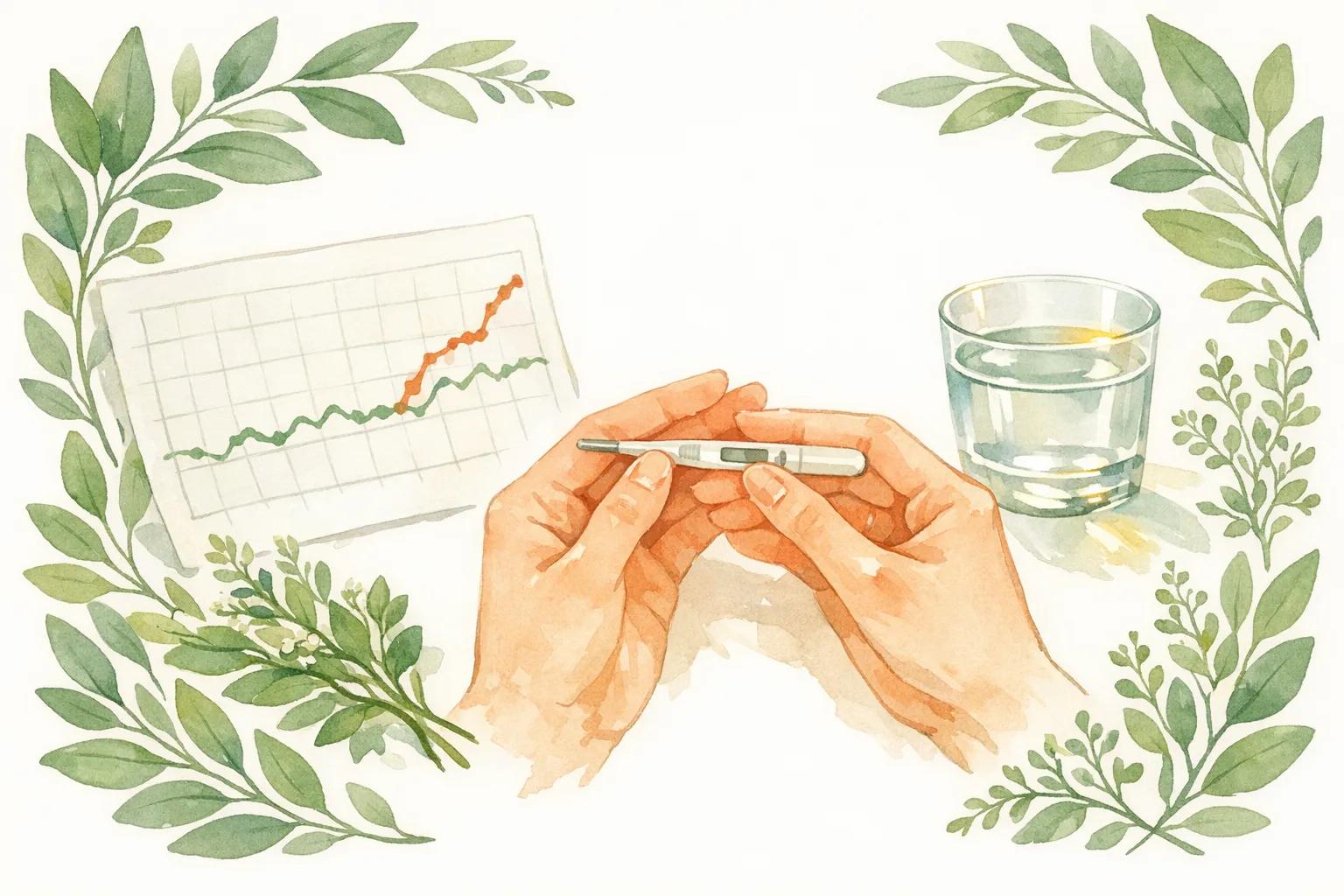
Start charting your temperature. You need a basal thermometer - not a regular one - that reads to two decimal places. Take it first thing every morning before sitting up or speaking, and write the number down. Do this for at least three full cycles.
Look for the pattern. Your temperature should be relatively low in the first half of your cycle. It should rise by at least 0.4 degrees Fahrenheit after ovulation and stay elevated for at least 12 days. If it does not rise, or if the rise is very small, or if it drops before day 12 of your luteal phase, that points to where hormonal support may be weak.
Pair the temperature with your cervical fluid. Temperature confirms ovulation happened. Fluid changes tell you it is coming. Together, they identify your actual fertile window.
Look at what is interfering. Alcohol, poor sleep, and high stress all disrupt the temperature signal - and they disrupt hormonal balance at a deeper level too.
Consider Shatavari. A daily dose taken consistently over 90 days supports hormonal regulation that makes both temperature and ovulation more predictable. Pair it with Ashwagandha if stress is part of your picture. Both have human clinical trial data behind them.
And if you want real guidance - call us. We work with you in your home. We look at your chart, your diet, your environment, your stress, your sleep, your relationships. We restructure everything around conception.
When to Consider Each Path
Natural approaches make sense first when: you have been trying for less than two years, you have no structural blockages confirmed by imaging, and your AMH is low but not absent. These are exactly the women who see the best results from Ayurvedic intervention - because the underlying issue is hormonal balance, not anatomy.
IVF makes sense when: tubes are confirmed blocked, there is a severe male-factor issue with no sperm present, or prior natural approaches have been fully and properly tried without success.
Most women who call us have never been told that a full, intensive natural protocol was even an option. They went from trying to consultation to IVF recommendation in a matter of months, spending tens of thousands before they had a chance to let their own biology work.
FAQs
How long do I need to track BBT before it tells me anything useful?
Give it three full cycles. The first cycle is your baseline. The second confirms the pattern. By the third, you can see if the pattern is consistent or if something is changing. Most women notice something meaningful by cycle two.
My temperature chart looks irregular. Does that mean I am not ovulating?
Not necessarily. A study published in Fertility and Sterility (Bauman, 1981) found that in about 20% of ovulatory cycles, BBT failed to show a clear biphasic pattern - even when ovulation actually occurred. An irregular-looking chart does not prove anovulation. Pair it with cervical fluid observation before drawing conclusions.
Can stress really change my BBT readings?
Yes. According to StatPearls (NCBI), emotional stress is a confirmed environmental influence that can alter BBT measurements. Stress also raises cortisol, which disrupts the hormonal signals that regulate your cycle.
I have low AMH. Is natural conception still possible?
Yes. Research from the Wiesbaden Kinderwunschzentrum, published in PubMed (PMID 26449238), found that in younger women under 36, AMH levels do not predict pregnancy outcomes. The researchers stated that even when AMH is too low to detect, a woman still has an acceptable chance of becoming pregnant. Age and overall health are stronger predictors than AMH alone.
What is the sympto-thermal method and is it the same as BBT tracking?
BBT tracking is one part of the sympto-thermal method. The full method combines BBT with daily observation of cervical fluid changes. The German NFP Study Center followed 1,599 women over 35,966 cycles and found the combined method highly effective. BBT alone confirms ovulation after the fact. The full sympto-thermal method helps identify the fertile window before and during ovulation.
Does Ayurveda have a specific approach to BBT or is it just general wellness advice?
Ayurveda has a direct connection to body temperature through Pitta dosha. A study published in the Journal of Ayurveda and Integrated Medical Sciences examined Pitta-dominant women and found that BBT tracking matched ultrasound ovulation confirmation in 90% of cases. The Ayurvedic approach uses BBT as one piece of a larger picture that includes body constitution, diet, herbs, and lifestyle.
How is the Omioni program different from seeing a regular Ayurvedic practitioner?
Most Ayurvedic consultations give you a protocol and send you home. Omioni brings the program to your home. We restructure your physical environment, diet, daily routine, stress patterns, digital habits, and relational dynamics around conception. Call 972-282-3930 to learn what that looks like for your specific situation.
The Next Step Is Simple
Start your temperature chart tonight. Get a basal thermometer, set an alarm for the same time every morning, and begin. Three minutes a day.
Then call us.
We are based in Las Vegas, and women travel here specifically for this program. We will talk through your chart, your history, and your situation. No judgment. No pressure.
Call 972-282-3930. Or visit our guide to Ayurvedic fertility herbs and what to do when your AMH is low.
Your body has been sending signals every morning. It is time to start reading them.
Medical Disclaimer: This article is for informational purposes only and does not constitute medical advice, diagnosis, or treatment. Always consult a qualified healthcare provider before beginning any new health protocol, including herbal supplementation. Ayurvedic approaches are complementary and not a replacement for medical evaluation when medically indicated.