The Number Most Clinics Skip
Here is the number they rarely put on the wall of the waiting room: for women with low ovarian reserve, IVF produces a live birth in fewer than 1 in 4 attempts. A PLOS One study tracking 769 IVF cycles found a cumulative success rate of just 20% after five to six cycles for low reserve patients. That means 80% of women who go through the full IVF process for this condition do not bring home a baby.
The decision deserves more information than most women get before they sign up.
What Low Ovarian Reserve Actually Is
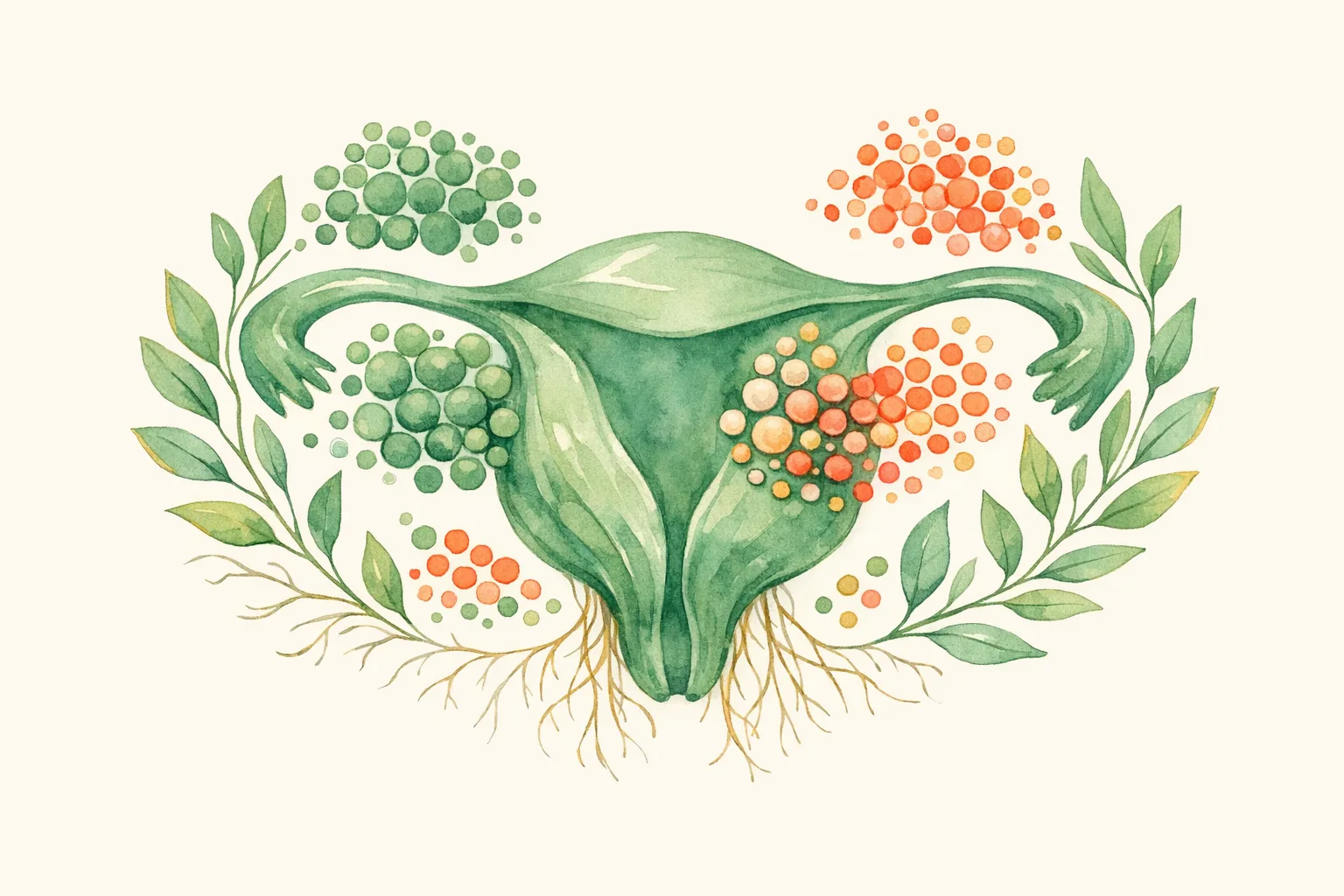
Low ovarian reserve - also called diminished ovarian reserve or DOR - means the ovaries contain fewer eggs than expected for a woman's age.
Women are born with roughly one to two million eggs. By puberty, about 400,000 remain. Only around 400 ever release during a lifetime. The rest are lost continuously, and that loss speeds up after age 37.
Doctors diagnose low ovarian reserve using two main tools. The first is a blood test that measures anti-Mullerian hormone - made by follicles - and a low reading, below 1.0 ng/mL, signals fewer active follicles. The second is an ultrasound that counts small follicles visible. Fewer than five to seven follicles supports the diagnosis.
A systematic review published in the Journal of Obstetrics and Gynaecology Research, covering 1,895 studies, confirmed that both markers predict how many eggs will be retrieved in IVF. Predicting egg retrieval numbers is not the same as predicting pregnancy.
How Common Is This
A large Korean population study of 13,351 women found that 11% of women aged 30 to 34 meet diagnostic criteria for low ovarian reserve. By age 35 to 39, that number rises to 28.6%. A university hospital study of 22,920 AMH results found that diminished ovarian reserve becomes sharply more prevalent through the reproductive years.
Among women already seeking fertility treatment, the numbers are higher. Research published in Nature Scientific Reports found that the prevalence of DOR among women seeking assisted reproduction rose from 19% to 26% between the early 2000s and more recent years. One review put the figure at 31% of all fertility clinic patients.
Roughly 10% of cases occur in women under 35 - where age alone does not explain the diagnosis.
What Causes It
Age is the main driver. But it is not the only one.
Known causes include genetic conditions like Turner syndrome, autoimmune disease attacking the follicles, cancer treatment with chemotherapy or radiation, and surgery on the ovaries. Endometriosis is also directly linked - especially when endometriomas are surgically removed, which can damage healthy ovarian tissue in the process.
Environmental exposures matter too. A review published in PMC5384040 identified over 20 chemical agents - including BPA found in plastics and various heavy metals - as direct contributors to follicle loss. Smoking accelerates the process. Chronic nutritional deficiencies in vitamin D, B12, zinc, and iron create inflammation hostile to follicle development.
Psychological stress disrupts the hormonal signaling chain between the brain and the ovaries. A study published in PMC11670866 confirmed that chronic stress suppresses this chain and worsens IVF outcomes. Many women pursuing fertility treatment are already under extreme stress - which can work directly against the goal.
What Conventional Medicine Offers
The standard medical path begins with stimulation drugs to push the ovaries to produce more eggs, followed by egg retrieval and IVF. For low reserve patients, this often requires higher doses of medication and still yields fewer eggs than average.
A major systematic review published in Fertility and Sterility - covering 38 randomized controlled trials and evaluating protocols including DHEA, testosterone, growth hormone, and various stimulation strategies - found that no single intervention has shown consistent superiority for DOR patients.
Live birth rates with IVF for low reserve patients range from approximately 10% to 30% per cycle, according to Nature Scientific Reports. Cumulative live birth rates across multiple cycles range from 14.9% to 35.3%. Women with expected poor response had the lowest live birth rate of all IVF patient groups - 23.8%.
For women with critically low reserve, donor egg IVF is often presented as the final option. Live birth rates with donor eggs reach approximately 55.6% - far higher than with a woman's own eggs when reserve is depleted. For many women, that option raises painful emotional and ethical questions that go beyond the clinical data.
The Cost Picture
| Factor | Conventional IVF | Ayurvedic Protocol |
|---|---|---|
| Per cycle cost | $19,000 - $30,000 | Call 972-282-3930 |
| Success per cycle (low reserve) | 9.5% - 20.5% | 84% within 12 cycles (Inito study) |
| Cumulative (5-6 cycles) | ~20% (PLOS One) | No large RCT yet |
| Insurance coverage | Only 25% of Americans have any coverage | Varies |
| Out of pocket share | 85% of costs | - |
| Total across 5-6 cycles | $100,000 - $180,000+ | - |
85% of IVF costs in the US come out of pocket. A woman who completes five to six cycles without success has typically spent between $100,000 and $180,000.
And 35% of couples stop before completing treatment - not because of a clinical decision, but because of emotional and physical exhaustion. That statistic rarely appears in the brochures.
What the Research Shows on Ayurvedic Approaches
Ayurveda does not have a term for diminished ovarian reserve. But it does have a detailed framework for what it calls Dhatukshayajanya Vandhyata - infertility arising from depletion of the body's reproductive tissues. The clinical presentation overlaps closely with DOR: scanty periods, irregular cycles, reduced fertility, hormonal imbalance.
The most rigorous current study on this comes from Frontiers in Medicine. Dr. A. Muraleedharan and colleagues published the protocol for an exploratory single-arm clinical trial (registered as CTRI/2023/11/059872) evaluating an Ayurvedic protocol in 40 women aged 25 to 40 diagnosed with DOR. The trial uses a multi-omics approach - analyzing follicular fluid at the molecular level before and after treatment. The authors reported that clinical experience at their institute showed several women diagnosed with DOR who underwent Ayurvedic interventions demonstrated notable improvement in anti-Mullerian hormone levels, subsequently becoming eligible for IVF with their own eggs. Full trial results are pending.
Separate from that trial, a case report published in the Indian Journal of Ayurveda and Integrative Medicine KLEU describes a 35-year-old woman - AMH of 0.37 ng/mL, four years of infertility, failed DHEA treatment, failed IVF - who received Matra Basti, a medicated oil enema, without any oral medication. She conceived naturally within three months.
A second case, published in the Journal of Ayurveda Case Reports, documents a 24-year-old with AMH of 0.23 ng/mL and elevated hormone levels consistent with premature ovarian failure. After seven months of Ayurvedic Rasayana and Brimhana therapy, her anti-Mullerian hormone more than doubled to 0.54 ng/mL. She conceived and delivered a healthy baby.
A third case, published in the World Journal of Advance Healthcare Research, followed a 39-year-old with an AMH of just 0.06 ng/mL - near zero - and a five-year history of secondary infertility. After a personalized Ayurvedic regimen, follicular response was documented despite the negligible hormone level. She conceived naturally in the sixth month of treatment.
A small interventional study from Government Ayurveda College, Thiruvananthapuram, with 15 DOR patients using the Dhatryadi Ghrithm protocol over 90 days found statistically significant improvement in antral follicle count, estradiol, and conception rates. Anti-Mullerian hormone levels did not improve significantly in that study - an honest result worth noting.
The Specific Ayurvedic Protocol - What Is Actually Used
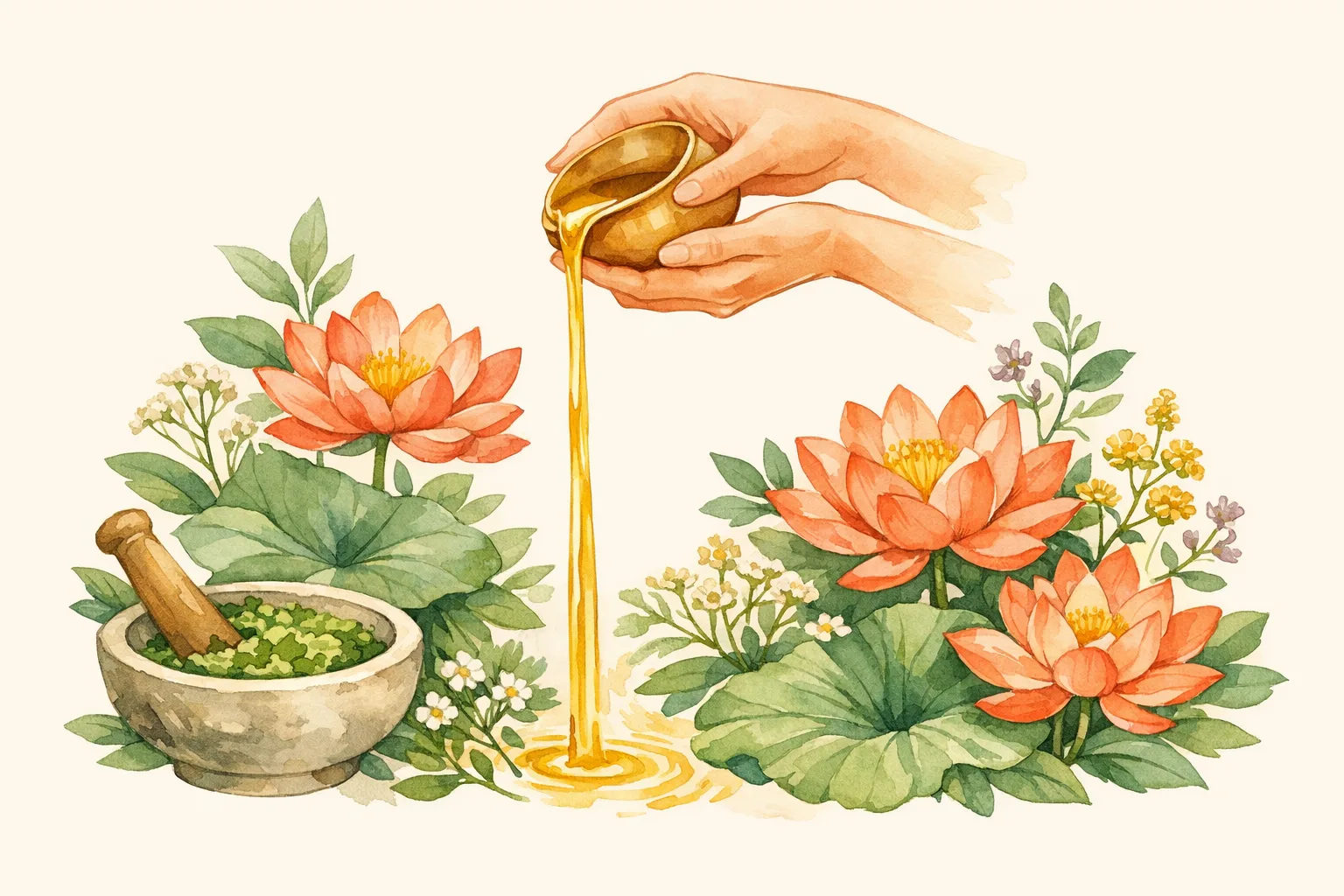
Ayurvedic treatment for low ovarian reserve follows a two-phase structure. The first phase is cleansing. The second phase is rebuilding.
The cleansing phase - called Shodhana - typically uses Virechana karma, a therapeutic purgation that clears inflammatory accumulation. A study published in the LWW journal found Virechana combined with Yoga Basti was statistically as effective as Virechana plus Uttarbasti for treating infertility.
The rebuilding phase - called Shamana - uses individualized herbal medicines aimed at restoring reproductive tissue function. A specific therapy called Uttarbasti - the administration of medicated oil or ghee directly into the reproductive tract - is used to support the uterine lining and follicular environment. Systematic reviews in the Journal of Ayurveda and Holistic Medicine confirm clinical trial evidence of Uttarbasti's role in female infertility management.
The Key Herbs - With Their Evidence
Shatavari (Asparagus racemosus) is the most studied Ayurvedic herb for female reproductive support. A randomized controlled trial of a standardized Shatavari extract published in Tandfonline found a 73% reduction in menopausal hormonal symptoms at a 100mg dose, compared to 22.8% in the placebo group. Mechanistically, Shatavari supports follicle development and regulates the hormonal signals between the brain and ovaries, as documented in PMC12767677.
Ashwagandha (Withania somnifera) is an adaptogen that helps normalize the hormonal signaling chain between the brain and the ovaries. This matters because chronic stress directly suppresses ovarian function.
CoQ10 supports energy production inside egg cells. A meta-analysis published in Annals of Medicine confirmed that CoQ10 pretreatment improves outcomes for DOR women undergoing IVF or ICSI - more eggs retrieved, better embryo quality, higher pregnancy rates. CoQ10 is not Ayurvedic in origin but is commonly integrated into holistic fertility protocols alongside Ayurvedic herbs.
Limitations - What We Do Not Know Yet
The evidence for Ayurvedic approaches to low ovarian reserve is real but small. Most published studies are case reports or small observational trials. The Frontiers in Medicine trial by Muraleedharan et al. is the most methodologically rigorous study underway, but results are not yet published.
No large randomized controlled trial has compared Ayurvedic protocols head-to-head with IVF for DOR patients. The 84% success figure cited from the Inito study reflects a specific holistic support population and requires independent replication before it can be generalized.
Anti-Mullerian hormone is not always the clearest outcome marker. As the large Ayurvedic interventional study from Thiruvananthapuram showed, AFC and conception rates may improve even when the hormone marker does not move significantly. Conception itself is the outcome that matters most to patients.
Natural Conception After an IVF Recommendation
17% to 24% of couples who are told they need IVF go on to conceive naturally afterward - without doing IVF. It is a signal that the body's biology can shift, and that a recommendation for IVF is not always a final verdict.
When to Consider Each Path
IVF makes clear sense when the fallopian tubes are blocked, when there is a severe male factor like zero sperm count, or when a woman is over 40 and time is the primary constraint. It also makes sense when natural approaches have been tried seriously for six to twelve months without result.
A natural or Ayurvedic protocol makes sense first when the diagnosis is low reserve with no structural issue, when a woman is under 38, when there has been no prior Ayurvedic intervention, and when emotional and financial resources are already stretched. The evidence, while limited in scale, shows measurable biological responses - improved follicle counts, improved hormonal balance, and in multiple documented cases, pregnancy.
The two are not mutually exclusive. The Frontiers in Medicine trial is specifically designed to evaluate Ayurvedic treatment as preparation for IVF - improving the starting conditions before stimulation begins.
My wife Kate and I started Omioni because we kept seeing the same pattern: women who had been told their only option was donor eggs, who then tried a structured Ayurvedic approach for the first time and got a very different answer. The fertility industry is not designed to suggest you wait and try something else first. That does not mean waiting and trying something else first is the wrong choice.
What You Can Do Today
First, get your anti-Mullerian hormone level tested if you have not. It is a simple blood draw, done at any point in your cycle.
Second, ask your doctor for an antral follicle count via ultrasound. The two markers together are more informative than either alone.
Third, reduce your exposure to plastics and chemicals. BPA from food containers and cosmetics has direct, documented effects on follicle health.
Fourth, start CoQ10 at 400 to 600mg per day. The meta-analysis evidence for this supplement in low reserve patients is the strongest of any currently studied intervention.
Fifth, reduce the stress load on your hypothalamic-pituitary-ovarian axis. Chronic stress measurably suppresses ovarian function.
Sixth, talk to an Ayurvedic practitioner who has specific experience with fertility and low reserve. Ask them about Shatavari, about Uttarbasti, about a cleansing protocol before you begin any stimulation. If you want to explore what a structured, in-home Ayurvedic fertility program looks like, call Omioni at 972-282-3930.
Learn more about how Ayurvedic herbs are used in fertility support in our article on Shatavari and the evidence behind it. For a broader look at the natural alternatives to IVF, see our piece on natural IVF alternatives and the data behind them.
Medical Disclaimer: This article is for informational purposes only. It does not constitute medical advice, diagnosis, or treatment recommendations. Always consult a qualified healthcare provider before making decisions about fertility treatment. Individual results vary. No specific health outcomes are promised or guaranteed.