
The Finding Most Fertility Clinics Skip
Women who closely follow a Mediterranean diet are 40 to 100 percent more likely to get pregnant through IVF than women who do not. A literature review published in PMC (PMC11356935) covering seven observational studies and 2,321 women undergoing fertility treatment found exactly that.
Live birth rates were 2.64 times higher in the highest-adherence group. That effect size outperforms most fertility drugs currently on the market.
This article covers what the research actually says about fertility nutrition - the evidence that supports it, the evidence that complicates it, and what you can do with it today.
Who This Affects
About 1 in 6 people globally experience infertility, according to the World Health Organization. In the United States, 1 in 5 couples trying for a first pregnancy face difficulty. That rate has worsened over the past 15 years.
The causes are roughly split: female factors account for about 35 percent of cases, male factors about 30 percent, both partners about 20 percent, and unexplained causes make up the remaining 15 percent, according to a review in PMC (PMC8634384).
Sperm counts have dropped roughly 50 percent over 50 years, with the decline accelerating in recent decades, according to board-certified reproductive endocrinologist Dr. Natalie Crawford. The same doctor notes that inflammation is the number one driver of modern infertility - not age alone - driven largely by diet, sleep deprivation, insulin resistance, environmental toxins, and stress.
How Food Affects Fertility - The Mechanisms
Food affects fertility through at least five separate pathways.
Insulin and ovulation. High-glycemic foods raise insulin. High insulin lowers a protein called sex hormone binding globulin. When that protein drops, androgen levels rise. That disrupts ovulation. This is the primary driver of polycystic ovary syndrome (PCOS), which accounts for roughly 80 percent of anovulatory infertility cases, according to research published in PMC (PMC10886842).
Inflammation. Trans fats and saturated fats promote inflammation. Inflammation disrupts egg development and sperm production. Omega-3 fats do the opposite - they reduce the risk of failed ovulation and improve sperm motility and shape.
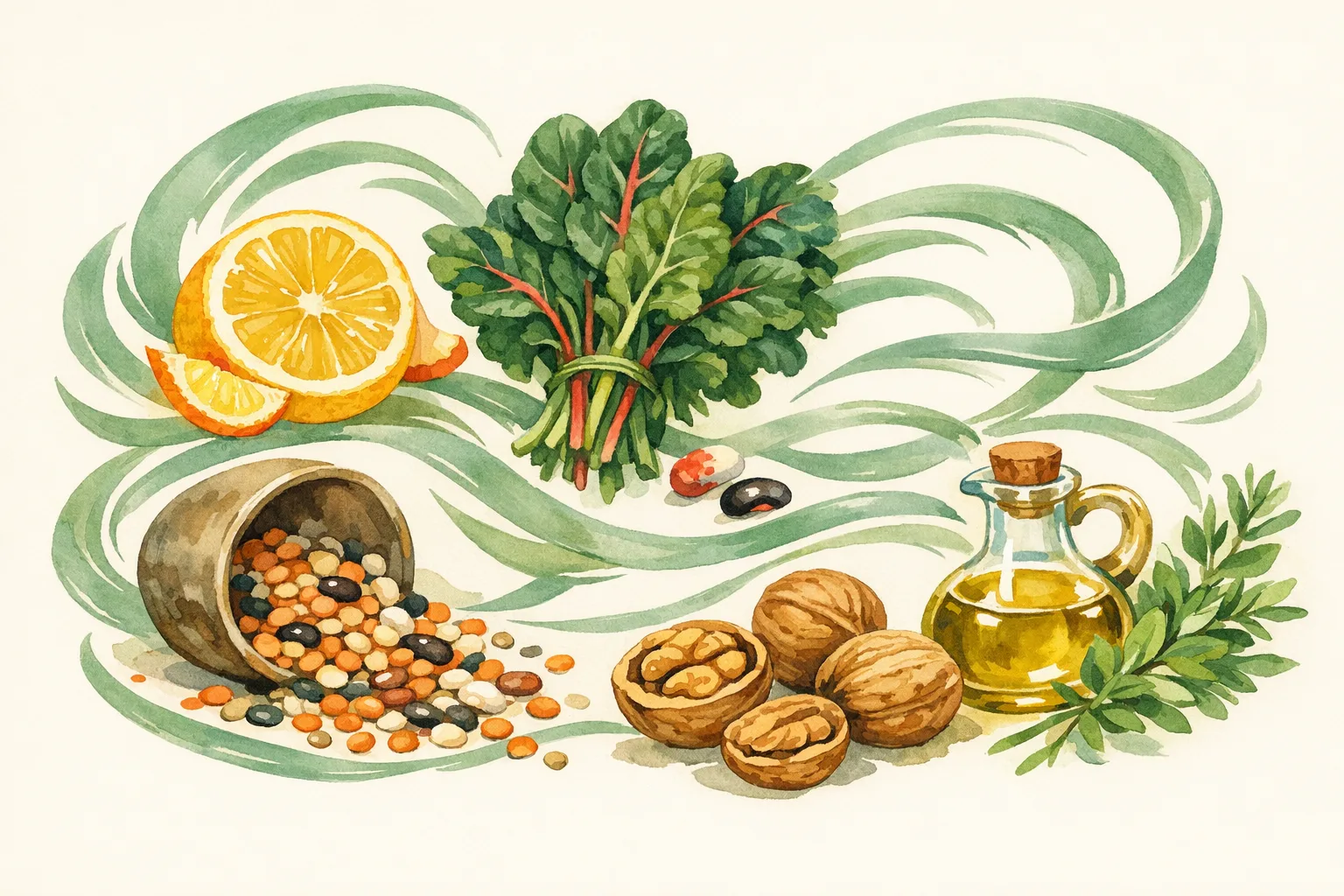
Oxidative stress. Eggs and sperm are vulnerable to damage from reactive oxygen species - unstable molecules that break down DNA. Antioxidants in food (vitamins C and E, carotenoids, polyphenols) counter this damage directly.
Protein source. A landmark analysis found that replacing just 5 percent of calories from animal protein with plant protein was associated with a 50 percent reduced risk of ovulatory infertility in women (PMC10886842).
Gut health and hormones. A community of gut bacteria called the estrobolome metabolizes estrogen. When this system is disrupted by a poor diet, estrogen levels become erratic. This affects ovulation, the uterine lining, and PCOS. Research published in PMC (PMC12465865) found that plant-based eating improves reproductive outcomes partly through favorable shifts in the gut microbiome.
What the Research Shows
The Mediterranean Diet
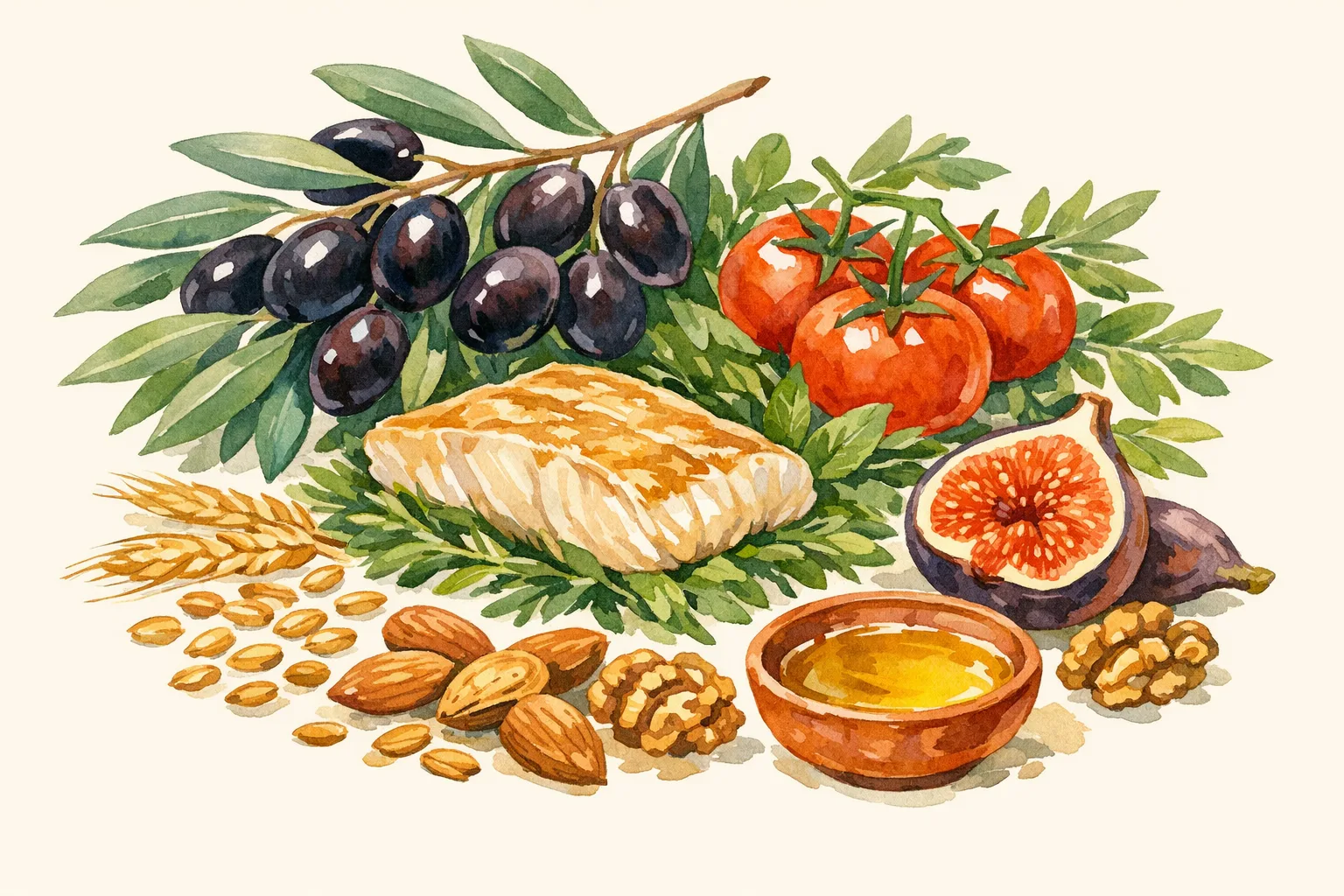
The Mediterranean diet is the most studied dietary pattern in fertility research. It emphasizes fruits, vegetables, legumes, whole grains, nuts, and olive oil. It includes moderate amounts of fish and poultry. It limits red meat, processed food, and sweets.
A literature review in PMC (PMC11356935) pooled data from seven studies covering 2,321 women undergoing assisted reproduction treatment. Three of those studies found that higher Mediterranean diet scores improved clinical pregnancy rates - with odds ratios between 1.4 and 1.98 - and live birth rates with a relative risk of 2.64.
A separate prospective cohort study published in Reproductive Biology and Endocrinology (PMID 31477128) followed 590 women through IVF cycles. Women with higher Mediterranean diet scores produced significantly more embryos (8.4 versus 7.4 on average, p=0.028).
The landmark Greek cohort study published in Human Reproduction (PMID 29390148) followed 244 women through IVF in Athens. Among women under 35, a 5-point increase in the Mediterranean diet score was associated with roughly 2.7 times higher likelihood of achieving clinical pregnancy and live birth.
One study in the same review found 70 percent poorer ovarian responses in some Mediterranean diet followers. Age appears to moderate the effect - benefits are clearest in women under 35.
Vitamin D
A meta-analysis in Reproductive Biology and Endocrinology (PMC9896710) analyzed 9 randomized controlled trials covering 1,677 women. It found that infertile women treated with vitamin D had a significantly higher clinical pregnancy rate than those who did not receive it, with an odds ratio of 1.70.
A separate analysis of women with PCOS found that vitamin D supplementation increased pregnancy rates by 44 percent compared to control groups.
One smaller meta-analysis of five IVF-specific trials found that vitamin D supplementation improved biochemical pregnancy rates but not clinical pregnancy rates, suggesting the effect may be stronger in some patient groups than others.
Vitamin D deficiency is widespread. Getting levels tested before starting any fertility protocol is a low-cost, low-risk first step.
CoQ10 - Coenzyme Q10
CoQ10 is a compound the body makes naturally. It powers the mitochondria inside cells - including the mitochondria in eggs and sperm. Production declines with age.
A randomized controlled trial (PMID 29587861) in young women with low egg reserve found that 60 days of CoQ10 supplementation at 600 mg per day increased the number of eggs retrieved, improved the fertilization rate to 67.49 percent, and produced more high-quality embryos compared to controls. Fewer women in the CoQ10 group had their embryo transfer cancelled due to poor embryo quality: 8.3 percent versus 22.9 percent.
A systematic review published in the Journal of Sexual Medicine found that CoQ10 improved endometrial thickness, egg count, egg retrieval numbers, embryo count, and clinical pregnancy rates across multiple studies.
For men, a meta-analysis of nine randomized trials covering 781 men (PubMed ID 40878114) found that CoQ10 significantly improved sperm concentration, sperm motility, and semen volume. Clinical pregnancy odds were 6 times higher in the CoQ10 group than the control group.
One earlier double-blind trial (PMID 24987272) found no statistically significant difference in pregnancy rates between CoQ10 and placebo groups, though it was underpowered with only 24 participants completing the full cycle. Larger trials are needed.
Folate
Folate is universally recommended for women of childbearing age. Folate supports egg quality and embryo development. Most national health bodies recommend 400 to 800 micrograms per day before and during early pregnancy. Folate also appears naturally in the Mediterranean diet through leafy greens, legumes, and citrus - supplements fill the gap.
Omega-3 Fatty Acids
Omega-3 fats reduce the risk of failed ovulation and raise progesterone levels. In men, they improve sperm motility and shape. A Harvard T.H. Chan School of Public Health meta-analysis linked omega-3 consumption to positive fertility outcomes in both sexes. Fatty fish, walnuts, and flaxseed are the highest natural sources.
Animal Protein vs Plant Protein
Research in PMC (PMC10886842) found that replacing 5 percent of animal protein calories with plant protein was associated with a 50 percent reduction in ovulatory infertility risk. Legumes, lentils, and beans appear to be the most protective. The finding is about ratio - more plants, less red meat.

The Ayurvedic Approach to Fertility Nutrition
Ayurveda - the traditional Indian system of medicine - has described fertility nutrition for over 3,000 years. The classical texts identify four conditions for conception: Ritu (reproductive timing), Kshetram (health of the reproductive tract), Ambu (nutritional factors), and Beejam (quality of egg and sperm).
The Ayurvedic concept of Ojas describes the body's vital life force - built through nourishing food, deep rest, and reduced toxic load. The modern translation: mitochondrial health and systemic inflammation.
What the Systematic Review Found
A systematic review of Ayurvedic fertility interventions (PMC11073818) analyzed 14 studies covering 248 patients under PRISMA guidelines. It found improvements in menstrual regularity, hormone balance, ovulation, and natural conception rates across conditions including PCOS, hormonal imbalances, and low sperm count. The researchers described Ayurvedic management as a promising, cost-effective avenue that can also enhance IVF success rates after previous failed attempts.
The limitation is real: 248 total patients across 14 studies is a small evidence base. Rigorous randomized controlled trials are needed before strong clinical conclusions can be drawn.
Ashwagandha for Male Fertility
Ashwagandha (Withania somnifera) is an adaptogenic root used in Ayurveda for male reproductive health. The clinical evidence for male fertility is the strongest in the Ayurvedic herb literature.
A double-blind randomized controlled trial (PMC3863556) enrolled 46 men with low sperm counts. The treatment group took 675 mg of full-spectrum Ashwagandha root extract daily for 90 days. Sperm count increased 167 percent - from 9.59 million per mL to 25.61 million per mL. Sperm motility increased 57 percent. Semen volume increased 53 percent. Hormone levels improved. The placebo group showed minimal change.
A separate randomized double-blind trial published in Frontiers in Reproductive Health found 38.1 percent higher total sperm count and 87.25 percent higher sperm motility compared to placebo over 8 weeks.
The mechanism: Ashwagandha reduces reactive oxygen species in semen, lowers cortisol, and directly supports testosterone production through compounds called withanolides.
Shatavari for Female Fertility
Shatavari (Asparagus racemosus) is Ayurveda's primary female reproductive tonic. Preliminary clinical evidence published in PMC (PMC12971452) suggests it supports follicular development and ovulation. Its active compounds, called shatavarins, interact with estrogen receptors and help regulate stress hormones that can suppress ovulation.
The human RCT evidence for Shatavari is limited. Most data is preclinical or observational. Larger controlled trials are needed before specific clinical claims can be made.
The Ayurvedic Fertility Diet in Practice
The Ayurvedic approach to fertility nutrition emphasizes whole grains, vegetables, legumes, and healthy fats - similar to the Mediterranean diet. The key differences are in timing, preparation, and the understanding that digestion must be working well before nutrients can reach reproductive tissue.
Ayurveda targets what it calls ama - metabolic waste from incomplete digestion - as a root cause of blocked channels. The preconception purification protocol called Panchakarma is designed to clear this waste before conception is attempted. A narrative review in the Journal of Clinical and Diagnostic Research found that Panchakarma positively affects fertility through detoxification, hormonal balance, and restoration of reproductive tissue health - consistent with modern evidence that environmental toxins directly impair egg and sperm quality.
What Conventional Medicine Offers - Real Numbers
A single IVF cycle in the United States costs between $20,000 and $25,000, including medications, lab fees, and monitoring. Some cycles reach $30,000. Donor egg IVF runs $35,000 to $60,000.
The live birth rate per fresh IVF transfer cycle is approximately 29 to 33 percent for women under 35. For women over 40, fewer than 5 percent of cycles result in a live birth per attempt.
For women with low ovarian reserve, a PLOS One study of 769 cycles found a cumulative success rate of approximately 20 percent after 5 to 6 cycles. At $20,000 to $30,000 per cycle, that represents $100,000 to $180,000 spent for a one-in-five chance of success.
85 percent of IVF costs are paid out of pocket. Only about 25 percent of Americans have any insurance coverage for IVF. And 35 percent of couples quit IVF entirely due to emotional and physical stress before completing their planned cycles.
IVF vs Nutrition-First - Side by Side
| Factor | IVF (US) | Nutrition and Natural Protocol |
|---|---|---|
| Cost per attempt | $20,000-$30,000 | Food and supplements |
| Live birth rate per cycle (under 35) | 29-33% | Varies; 17-24% of IVF-referred couples conceive naturally |
| Side effects | Bloating, mood changes, ovarian hyperstimulation (up to 36% on gonadotropins), multiple pregnancy risk | Minimal; dependent on herbs used |
| Timeline | One cycle: 3-6 weeks | 3-6 months for measurable change |
| Insurance coverage | Only 25% of Americans have any coverage | Not covered |
| Emotional burden | High - 35% quit before completing planned cycles | Lower |
| Male factor improvement | ICSI procedure addresses it mechanically | CoQ10 and Ashwagandha show measurable sperm improvements |
Limitations - What We Do Not Know Yet
Most Mediterranean diet studies are observational, not randomized controlled trials. Women who eat well may also sleep better, exercise more, and have less stress - all independent fertility factors.
Ayurvedic herb studies, with the exception of Ashwagandha, have small sample sizes. The systematic review covering Ayurvedic interventions had only 248 patients across 14 studies.
The vitamin D meta-analysis found improved clinical pregnancy rates with supplementation, but a separate meta-analysis of IVF-only trials did not find the same effect, suggesting results vary by patient population, baseline vitamin D levels, and dosing protocol.
CoQ10 results are promising across multiple studies, but the most rigorous early trial (PMID 24987272) found no statistically significant difference, partly because it was underpowered.
No nutrition intervention has been tested in a large randomized trial against IVF as a primary fertility treatment. That head-to-head data does not yet exist.
What You Can Do Today
These steps are low-cost, low-risk, and supported by the available evidence. None of them require a prescription.
Step 1 - Get your vitamin D tested. A simple blood test shows your level. Deficiency is common and easy to correct. Research links sufficient vitamin D to a 70 percent higher clinical pregnancy rate compared to deficiency in women undergoing fertility treatment.
Step 2 - Shift toward the Mediterranean pattern. Start with more olive oil and vegetables. Replace one red-meat meal per week with fish or legumes. Reduce processed food and added sugar.
Step 3 - Add CoQ10. For women with low egg reserve or over 35, and for men with low sperm count, 200 to 600 mg per day is supported by multiple clinical studies. Start at least 60 to 90 days before your planned conception window or IVF cycle - that is how long egg and sperm development takes.
Step 4 - Consider Ashwagandha for male factor. If low sperm count or motility is a factor, the PMC3863556 trial used 675 mg per day for 90 days. Discuss with a practitioner before starting any supplement protocol.
Step 5 - Start 90 days early. Eggs take about 90 days to mature. Sperm renew on a similar cycle. A nutrition change made today affects the eggs and sperm that will be involved in conception three months from now.
I read through the Ashwagandha study closely when I first started researching male fertility interventions. The sperm count numbers - a 167 percent increase from just a root extract - seemed too good to be true. So I pulled the full PMC text. The methodology was clean: 46 men, randomized, double-blind, placebo-controlled. The improvement in the placebo group was near zero. That is when I understood how much nutritional ground was being left uncovered in standard fertility workups.
When to Consider Each Path
Nutrition-first makes the most sense when there is no structural barrier to conception, when you are under 38 and have time to allow 3 to 6 months for dietary change to take effect, when unexplained infertility is the diagnosis, or when previous IVF cycles have failed and you want to improve egg or sperm quality before the next attempt.
IVF or medical intervention makes more sense when there is confirmed tubal blockage, when male factor is severe and cannot be corrected with supplements alone, when age is a significant factor and time is limited, or when a genetic screening protocol is needed. The question is not whether to use IVF - it is whether nutrition optimization should come first, run alongside it, or be used to improve the odds before the next cycle.
Ayurvedic protocols improve IVF success rates, particularly after previous failed attempts. The two approaches are not mutually exclusive.