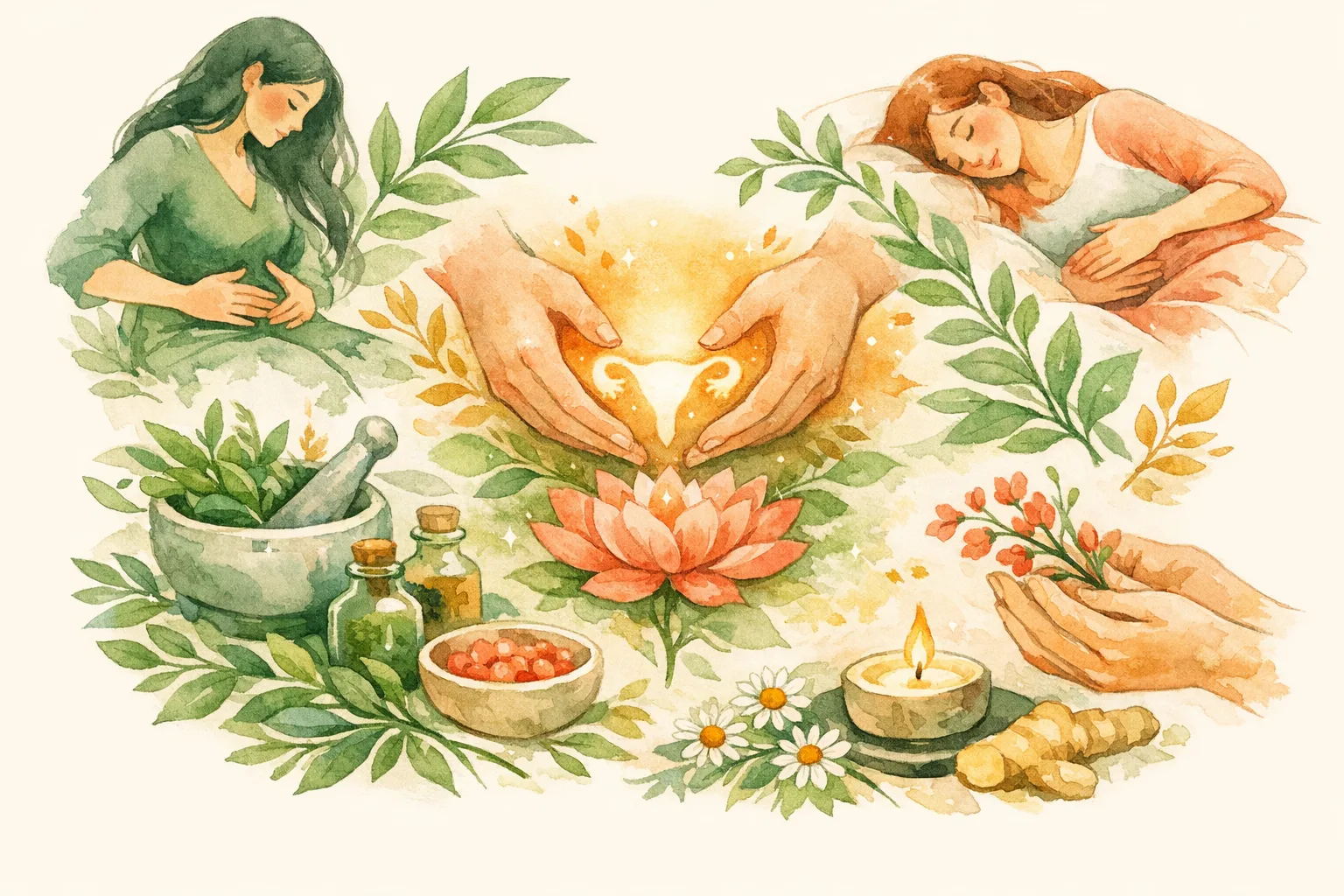
The Number That Changes Everything
Seventy percent of IVF implantation failures trace back to the uterine environment. That number comes from in vitro research published in the journal Human Reproduction. The embryo itself accounts for roughly 30% of failures. The uterine environment accounts for the rest.
Fertility conversations I see every week stay focused on egg quality, sperm count, and drug protocols. Very few start with the womb itself. That gap is exactly what womb healing tries to close.
This article covers what womb healing means in clinical terms, what research supports it, and where the evidence runs thin.
What Womb Healing Actually Means
The term "womb healing" covers a wide range of approaches. Some are physical - improving blood flow to the uterus, thickening the uterine lining, clearing scar tissue. Some are hormonal - lowering excess androgens, regulating the cycle. Stress-related factors matter too, specifically what chronic cortisol elevation does to reproductive function over time.
In Ayurveda, the uterus is called Garbhashaya. When Vata dosha - the body's movement energy - becomes imbalanced in this region, conception fails. The goal of treatment is to restore balance through targeted therapies, diet, and herbs.
In conventional medicine, the equivalent concern is uterine receptivity. Without a receptive uterine lining, even a healthy embryo cannot implant.
The Uterine Lining Problem
The uterine lining is the inner tissue that a fertilized egg must attach to. Doctors measure it in millimeters using ultrasound.
A large Canadian study analyzed over 44,000 IVF cycles. It found that pregnancy and live birth rates fall as the lining gets thinner - specifically below 8mm in fresh IVF cycles and below 7mm in frozen cycles. This research was published in the journal Human Reproduction using data from the Canadian ART Registry.
A separate study of 6,331 women found thicker linings were consistently linked to better IVF outcomes. There was no upper limit where thickness became harmful.
A thin lining represents reduced blood flow, poor glandular growth, and lower levels of a protein called VEGF that helps new tissue form. Research from Fertility and Sterility showed that women with thin endometria had significantly higher blood flow resistance in the uterine artery and fewer blood vessels in the lining compared to women with normal thickness.
The uterus needs good circulation to receive an embryo. Womb healing protocols, regardless of their origin, target exactly this mechanism.
What the Research Shows
Uttara Basti - Ayurveda's Targeted Uterine Therapy
Uttara Basti is a specialized Ayurvedic treatment described in classical texts including the Charaka Samhita and Sushruta Samhita. The therapy involves introducing medicated oils or herbal preparations through the vaginal canal toward the uterus.
A review published in the Journal of Ayurveda and Integrated Medical Sciences by Dr. Deepika Munjal and colleagues examined Uttara Basti alongside another Panchakarma therapy called Ksheerbasti in a case of endometrial fibrosis-related infertility. The patient had been unable to conceive for four years. Following treatment, a positive pregnancy test was confirmed, with a viability scan showing a single live intrauterine pregnancy.
A separate review by Bhadargade, Patil, and colleagues published in the Journal of Ayurveda and Holistic Medicine analyzed multiple clinical studies on Uttara Basti in female infertility. The authors concluded that the therapy showed substantial results as a palliative treatment for conditions involving hormonal disruption and blocked channels in the reproductive system.
A study published in the International Research Journal of Ayurveda and Yoga by Lamoria et al. specifically examined Uttara Basti's effect on endometrial thickness and ovulation in women with thin endometrium, finding support for it as an integrative therapy that may improve uterine receptivity and fertility outcomes.
One important caveat: Uttara Basti must be performed by trained practitioners under aseptic conditions. The procedure carries infection risk if done incorrectly.
Shatavari and the Hormonal Case
Shatavari (Asparagus racemosus) is the most researched Ayurvedic herb for female reproductive health. A randomized, double-blind, placebo-controlled trial published in Frontiers in Endocrinology tested a standardized Shatavari extract in 70 women with PCOS. The Shatavari group showed a significant increase in endometrial thickness and a significant reduction in follicular count compared to placebo.
Shatavari's effects appear to work through local uterine and ovarian mechanisms rather than gross systemic hormone changes. This may explain why it supports the womb environment without the side effects associated with synthetic hormones.
A separate randomized controlled trial published in Food and Nutrition Research by Kondamudi and colleagues found that a standardized Shatavari extract reduced ovarian volume by over 20% in women with PCOS. It also reduced serum testosterone by 33.9% and improved the ratio of luteinizing hormone to follicle-stimulating hormone by 18.6%.
A PubMed review (PMID 29635127) proposed that Shatavari may improve egg quality, follicular development, and hormonal balance by reducing oxidative stress in the ovary - one of the major mechanisms linking chronic stress to fertility problems.
Ayurvedic Treatment for Uterine Fibroids
Uterine fibroids are benign growths in the uterus that affect 20-40% of women during reproductive age. Fibroids can block implantation and disrupt the cycle.
A randomized single-blind clinical trial published in Evidence-Based Complementary and Alternative Medicine by Karunagoda and colleagues tested two Ayurvedic drug regimens in 120 participants with uterine fibroids. After 12 weeks, the treatment groups showed a significant decrease in fibroid volume and a significant reduction in symptom severity compared to the control group. Quality of life scores improved in both treatment arms. The control group got worse over the same period.
These results held through the 12-week follow-up period after treatment ended. No significant adverse effects on liver or kidney function were reported.
A case series published in PMC showed that Ayurvedic formulations including Kanchanara Guggulu and Haridra Khand were effective treatment options for uterine fibroids. A separate case report by Shubhashree and colleagues showed fibroid shrinkage confirmed by ultrasound after six months of Ayurvedic treatment, in a patient who had declined surgery.
Comparison - Conventional vs Ayurvedic Approaches to Uterine Health
| Factor | Conventional Medicine | Ayurvedic Approach |
|---|---|---|
| Primary focus | Hormonal stimulation, surgery | Blood flow, tissue nourishment, detox |
| Thin uterine lining treatment | Estrogen supplements, PRP, G-CSF | Uttara Basti, Shatavari, dietary oils |
| Fibroid management | Surgery (myomectomy, hysterectomy) | Kanchanara Guggulu, herbal regimens |
| PCOS hormonal balance | Clomiphene, Metformin, Letrozole | Shatavari, Shatpushpi, Panchakarma |
| IVF cycle cost per attempt | $19,000-$30,000 | Call 972-282-3930 for Omioni pricing |
| Low AMH - IVF cumulative success (5-6 cycles) | 20% (PLOS One, 769 cycles) | 84% conceived within 12 cycles (Inito study) |
| Couples who quit conventional treatment | 35% stop due to emotional/physical stress | Home-based, minimal procedure stress |
| Side effects | Hormonal, bloating, OHSS, emotional | Minimal when properly supervised |
| Evidence quality | Large RCTs available | Mostly small trials and case series |
The Ayurvedic Womb Healing Protocol
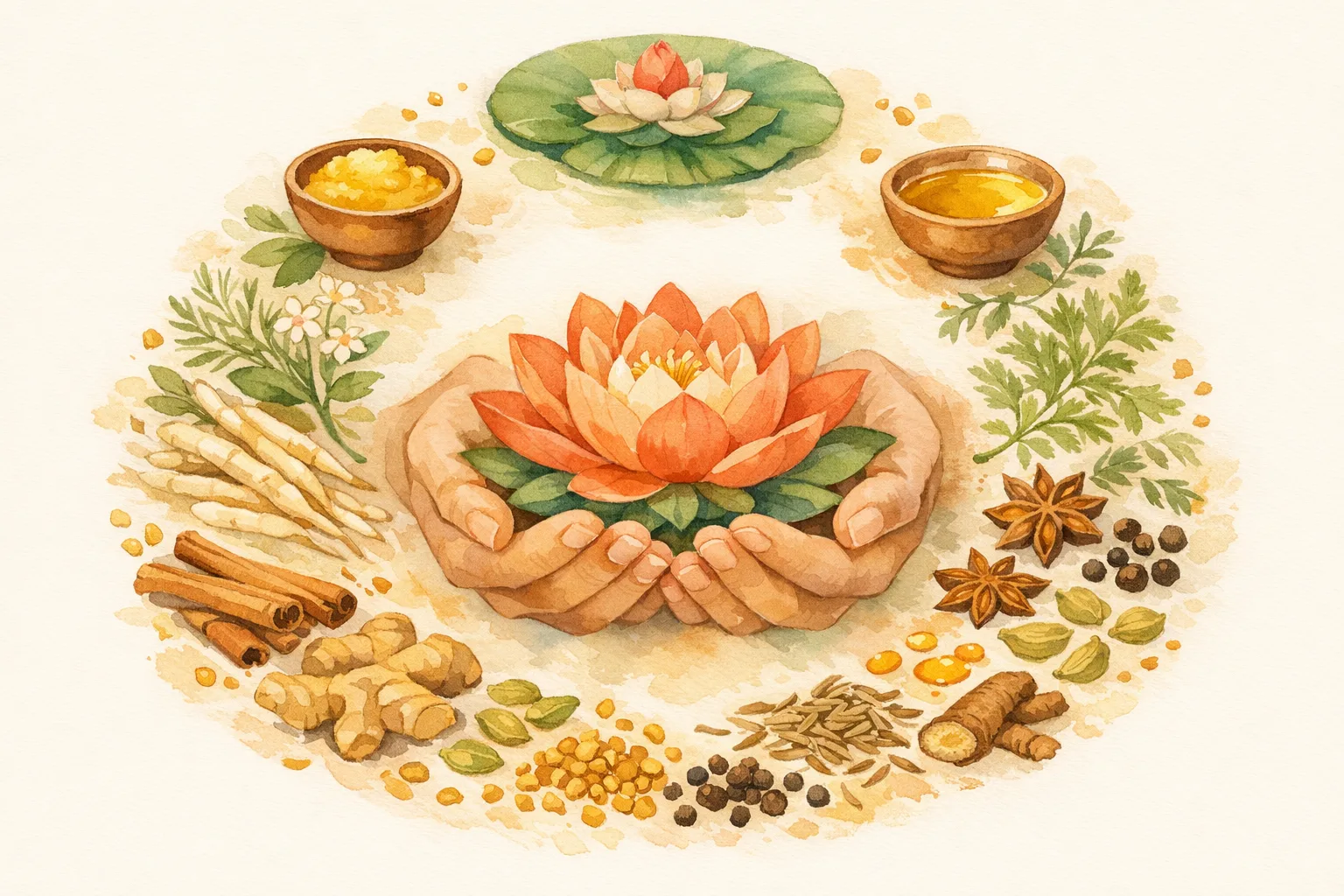
Ayurvedic womb healing is a layered protocol. Each element targets a different mechanism.
Step 1 - Detoxification (Shodhana)
Before building uterine tissue, Ayurveda clears what it calls Ama - metabolic waste that blocks channels. This typically involves dietary changes, herbal preparations, and in some cases Panchakarma cleansing therapies. Uttara Basti is administered only after this preliminary cleansing phase.
Step 2 - Uttara Basti (Uterine Nourishment)
Medicated oils or ghee preparations - commonly Phala Ghrita or Bala Taila - are introduced into the uterine cavity in cycles timed to the menstrual phase. The procedure is carried out over 3-7 sessions depending on the condition.
Step 3 - Shatavari Supplementation
Daily Shatavari - typically 500mg to 6g depending on the formulation - is used to support ovarian function, reduce oxidative stress, and improve the hormonal environment for conception.
Step 4 - Diet and Lifestyle Restructuring
Ayurvedic womb healing protocols include warm, oily, easily digestible foods to nourish uterine tissue. Cold, raw, or processed foods are reduced. Sleep is prioritized. Stress reduction is non-negotiable. A review published in PLOS One linked chronic psychological stress directly to oxidative damage in the ovary and poor egg quality.
Step 5 - Satvajaya (Mind Therapy)
The Munjal et al. case report specifically included Satvajaya Chikitsa - mental and emotional support. The researchers noted that stress can result in reproductive failure and that addressing psychological state is a core part of the treatment, not an add-on.
Who Conceived Naturally After Being Told They Needed IVF
Between 17% and 24% of couples told they need IVF conceive naturally without intervention. The fertility industry has strong financial reasons to move patients quickly toward procedures.
IVF costs $19,000 to $30,000 per cycle. For women with low egg reserve markers, a PLOS One study of 769 cycles showed cumulative success of only 20% across five to six cycles. That is $100,000 to $180,000 for a one-in-five outcome. Eighty-five percent of those costs are out of pocket. Only 25% of Americans have any IVF coverage.
Limitations - What We Do Not Know Yet
Most Uttara Basti studies are case reports or small clinical series. There are no large randomized controlled trials comparing Uttara Basti directly against standard fertility treatments. The Karunagoda fibroid trial had 120 participants and 12 weeks of follow-up. The Frontiers in Endocrinology Shatavari trial had 70 participants. Larger trials are needed.
Dosing, preparation method, and practitioner skill all vary widely. The quality of a Shatavari extract used in a trial may differ significantly from a product purchased online.
The 84% conception rate for low AMH patients comes from the Inito study. It represents a specific patient population with targeted, supervised support over 12 cycles. It is not a universal guarantee.
What You Can Do Today
First: get a baseline. Before any fertility treatment, ask your doctor for an anti-Mullerian hormone test, a uterine lining measurement, and a complete hormone panel. You cannot fix what you have not measured.
Second: start Shatavari. The clinical evidence for its safety is strong. A standardized extract - 500mg to 1,000mg daily - has been used safely in multiple controlled trials.
Third: address uterine blood flow. Gentle exercise, adequate hydration, and warm foods are evidence-adjacent approaches. The fibroid trial data and Uttara Basti research both point to circulation as a primary target.
Fourth: do not ignore stress. The PubMed review (PMID 29635127) shows stress reduction changes the chemistry of the uterine environment - this is a biological mechanism, not a lifestyle preference.
If you want a supervised, intensive protocol that combines all five steps above, that is what the Omioni program offers - built around your home, your cycle, and your specific hormonal picture. Call 972-282-3930 to discuss whether it fits your situation.
When IVF Makes Sense vs When to Try Natural Approaches First
IVF is the right path in certain cases: complete tubal blockage, severe male factor infertility, premature ovarian failure, or advanced age with documented rapid decline. In these situations, waiting costs time that cannot be recovered.
Natural approaches are most supported by evidence when the barrier is uterine environment, hormonal imbalance, mild PCOS, or elevated stress response.
Most women should do the diagnostics first, spend 90 days on a structured natural protocol, and then make an IVF decision with full data. Spending $20,000 on a cycle without first optimizing the uterine environment is like planting seeds in unprepared soil.