
You have been trying for a long time. You have read everything. You have spent money. Maybe you have cried in waiting rooms. Maybe you have been told your options are limited.
And now someone told you about maca root.
Maybe it was a friend who mentioned it, or a thread online that pulled you in. Maybe a wellness influencer with a smooth complexion and a bag of powder promised you it would change everything.
I want to tell you the real story. The actual research - what it found, what it did not find, and what maca can realistically do as part of a complete approach to natural conception.
Because maca is real. The evidence is real. But maca alone is not your fertility plan. It is one ingredient in a much larger recipe.
What Maca Root Is
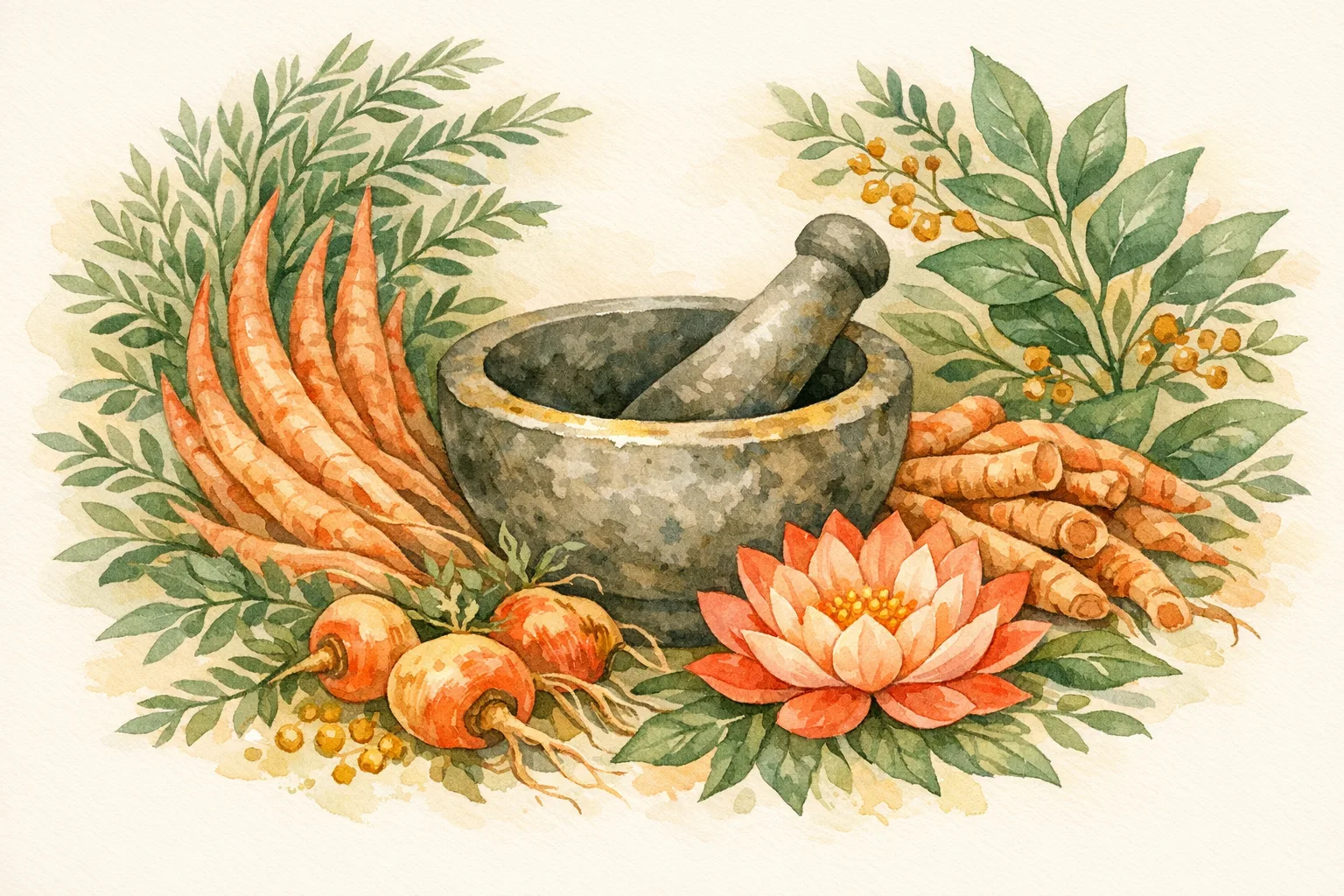
Maca, known scientifically as Lepidium meyenii, is a root vegetable native to the Andes mountains of Peru. It grows at altitudes above 4,000 meters - some of the harshest growing conditions on earth.
Peruvians have used it for over 2,000 years. They eat it. They use it as medicine. As a fertility aid for both people and animals.
It is part of the same plant family as broccoli, cabbage, and kale. It is packed with minerals, amino acids, and a group of compounds called glucosinolates and macamides that researchers are still working to fully understand.
It is also classified as an adaptogen - a substance that helps the body handle stress and return to balance.

What the Research Shows
The research on maca and fertility is real. It is also honestly mixed. Here is what the studies actually found.
For men, the evidence is more consistent.
A study by Dr. G.F. Gonzales, published in the Asian Journal of Andrology, treated nine healthy men with maca tablets for four months. The result: increased seminal volume, sperm count per ejaculation, motile sperm count, and sperm motility. Hormones did not change. The improvement happened through a different mechanism.
That last part matters. Maca works through a non-hormonal mechanism. It supports sperm function without altering testosterone or any other reproductive hormone in the blood. A separate 12-week, double-blind, randomized, placebo-controlled pilot study published in Evidence-Based Complementary and Alternative Medicine, conducted at Charles University in Prague, followed 20 healthy men and found rising trends in sperm concentration, motile sperm count, and normal sperm morphology in the maca group. The placebo group showed decreases in motility and morphology over the same period.
A systematic review published in Phytotherapy Research analyzed all available randomized trials on maca and semen quality. Three out of five trials showed mixed but favorable effects on sperm parameters in men with fertility challenges. The review noted the total number of trials and sample sizes remain too small to draw firm final conclusions - but the direction of evidence points positive.
For women, the data is limited and comes primarily from perimenopausal populations, but it consistently points toward hormonal support.
A double-blind, placebo-corrected pilot study by Dr. H.O. Meissner, published in the International Journal of Biomedical Science, gave gelatinized maca to 20 early postmenopausal women for several months. The result: follicle-stimulating hormone (the hormone that drives egg development) decreased significantly. At the same time, estrogen and progesterone increased. The researchers described maca as acting like a toner of hormonal processes - not adding hormones, but nudging the body's own system into better balance.
A more recent case report published in Gynecology and Obstetrics Open Access documented a woman with polycystic ovary syndrome who used a concentrated gelatinized maca formulation as her primary therapy for three months. She experienced menstrual regularity, improved ovulation signs, and reduced cycle pain. A two-year follow-up showed improved hormone ratios and estradiol levels.
An animal study from Reproductive Biology and Endocrinology found that maca increased litter size in adult female mice. Another study in female rats, published in the Journal of Ethnopharmacology, found that maca enhanced the hormone surge that triggers egg release during the reproductive cycle.
What Conventional Medicine Offers
IVF is remarkable technology. It has helped millions of people have children who would not have been able to otherwise. Nobody here is dismissing it.
But the numbers are worth knowing before you sign up.
According to the U.S. Department of Health and Human Services, a single IVF cycle in the United States costs between $15,000 and $20,000. With medications and add-ons, the total often reaches $20,000 to $30,000 per cycle. According to FertilityIQ, the average patient goes through 2.3 cycles. That puts the average total cost close to $50,000.
For women with low levels of the egg-reserve marker known as anti-Mullerian hormone, the live birth rate per IVF transfer is roughly 19 to 20 percent, according to a study published in BMC Reproductive Biology and Endocrinology that analyzed 543 cycles.
One in five. That is the honest number for this specific group.
Side effects of IVF medications include mood swings, bloating, fatigue, hot flashes, and a small risk of ovarian hyperstimulation syndrome - a condition where the ovaries swell and fluid builds up in the body.
None of this means IVF is wrong. It means you should know the odds and the cost before you decide it is your first step.
Conventional vs Natural - An Honest Comparison
| Factor | IVF (Low AMH) | Natural Ayurvedic Protocol |
|---|---|---|
| Cost per attempt | $15,000-$30,000 per cycle | Call 972-282-3930 for program details |
| Live birth rate (low AMH) | 16-20% per retrieval | Omioni program: 84% with full protocol |
| Needles/procedures | Daily injections, egg retrieval under sedation | None |
| Side effects | Hormonal, physical, emotional | Minimal for most women |
| Timeline | 4-6 weeks per cycle | 90-day minimum commitment |
| What it addresses | The mechanical act of fertilization | The whole body environment for conception |
The fertility industry focuses on the moment of fertilization. Ayurveda focuses on everything that makes your body ready and safe for a pregnancy to begin and hold.
The Ayurvedic Approach to Maca and Fertility
I grew up in Chamba, Himachal Pradesh, in northern India. Among everyone I knew growing up - my whole extended family, the families in our village - nobody had problems getting pregnant. Nobody.
That was not luck. That was a way of life. The food nourished reproductive tissue. Rest was protected. The herbs were part of daily life. The rhythm of the seasons shaped everything, and the knowledge moved from grandmother to daughter to granddaughter without interruption.
My great-grandmother was the woman people came to for health consultations in our village. She lived to 115. My mother works today at a women's health nonprofit helping village girls understand their cycles and bodies. Reproductive health is not something I studied from a book. It is what I was raised inside of.
In Ayurveda, maca is not a traditional herb. It comes from Peru, not India. But it is an adaptogen, and the Ayurvedic tradition has always understood adaptogens - herbs that meet the body where it is and bring balance rather than force.
In an Ayurvedic fertility protocol, maca is used alongside traditional herbs that have been part of Indian reproductive medicine for thousands of years.
Shatavari - known as the queen of Ayurvedic herbs for women - is described in Herbal Reality as a renowned tonic for the female reproductive system. It contains natural precursors to female hormones that support balance without being phyto-estrogens. It nourishes the uterine lining, supports healthy cervical mucus, and helps regulate the menstrual cycle. Research from Andrologia found it improved sperm count and motility in men after three months of use as well.
Ashwagandha supports the stress response. High cortisol directly disrupts the hormonal signals needed for ovulation and implantation. A body under chronic stress is a body that delays pregnancy. Ashwagandha helps turn that system down.
Maca slots into this protocol as the energy and libido support. It does not raise hormones. It addresses fatigue - one of the most common and underrated obstacles to conception. A woman who is exhausted, anxious, and depleted is not in a fertile state. Maca helps restore the energy baseline.
But the Ayurvedic approach is never just herbs. It is:
- Diet that reduces inflammation and nourishes reproductive tissue
- Sleep that lets hormones regulate naturally
- Stress reduction that keeps cortisol from blocking ovulation
- Movement that supports circulation without depleting the body
- Environmental calm that removes disruption from the space where life begins
At Omioni, we come to your home in Las Vegas and restructure everything. Diet, environment, mental state, digital life, relationships, spiritual practice. The herbs are one thread. The whole program is the fabric.
Practical Guidance - What You Can Do Today
Whether or not you call us, here are things you can start right now.
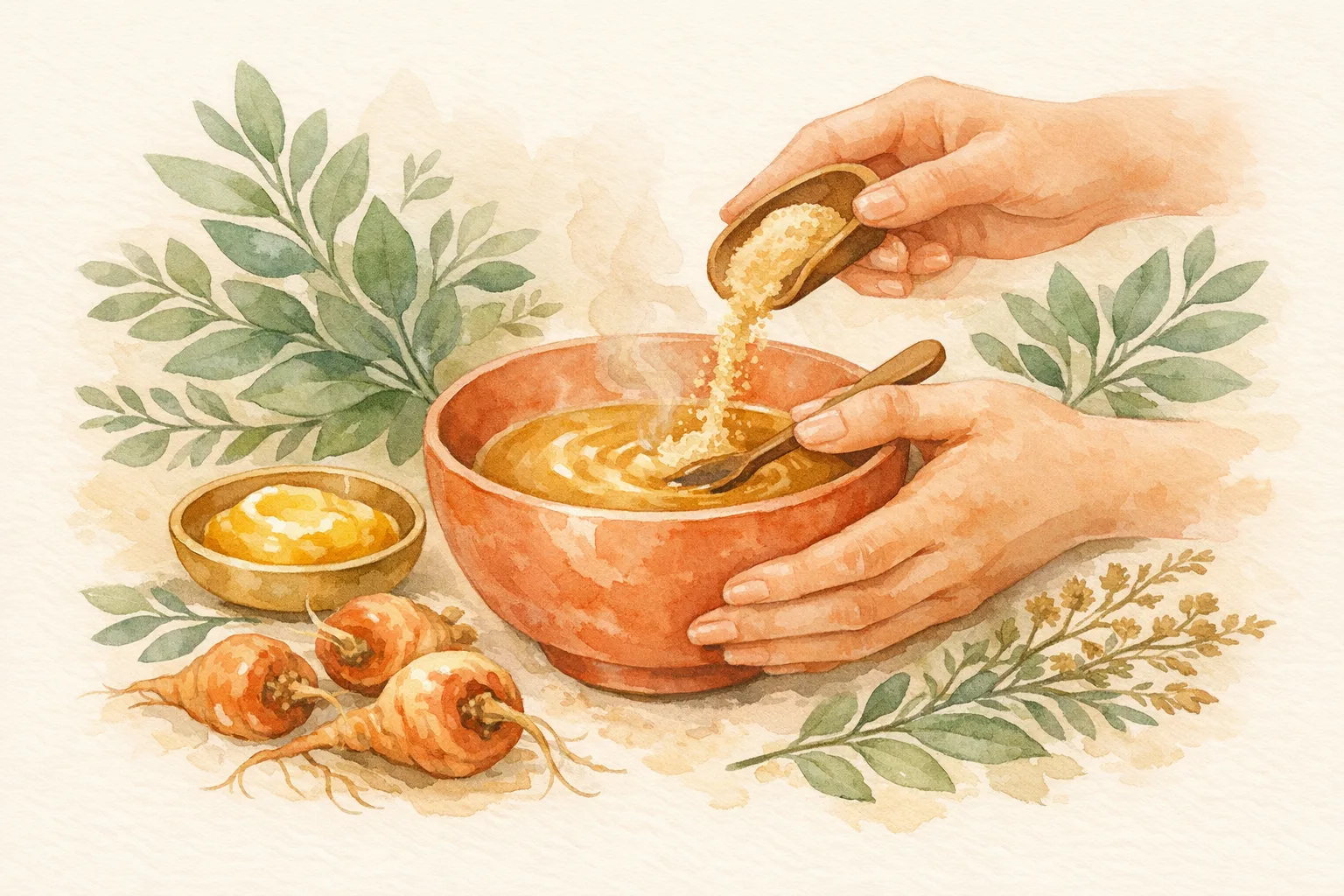
1. Add maca to your morning routine. Research suggests doses of 1.5 to 3 grams per day appear safe and well-tolerated. Gelatinized maca is easier on the stomach than raw powder. Add it to a smoothie or warm water. Give it at least 12 weeks before evaluating.
2. Choose the right kind. For women, red maca has the most studied hormonal support. For men, black maca shows the strongest effect on sperm parameters. Yellow maca is the most widely available and still effective.
3. Pair maca with Shatavari. These two herbs work well together. Shatavari addresses the female reproductive system directly. Maca supports energy and hormonal balance. A typical Shatavari dose is a quarter to half a teaspoon twice daily, mixed in warm water or with ghee.
4. Address the cortisol problem. Before any herb can help, your body needs to feel safe. Chronic stress raises cortisol. High cortisol tells your body this is not the right time for pregnancy. Cut the stressors you can cut. Protect your sleep. Start a daily 10-minute stillness practice.
5. Remove the things that disrupt your hormones. Plastics in food packaging. Synthetic fragrances. Alcohol. Excessive caffeine. These accumulate into hormonal interference. One by one, remove them.
6. Track your cycle honestly. You cannot optimize what you do not understand. Know when you ovulate. Know your cycle length. Know your fertile window. This knowledge alone changes outcomes.
7. Get your partner involved. Male factor contributes to roughly 15 percent of infertility cases worldwide, according to Phytotherapy Research. Maca, Ashwagandha, and a clean diet are as important for him as for you. Fertility is a two-body project.
When to Consider Each Path
Ayurveda first makes sense if you have been trying for less than two years, have no diagnosed structural issue such as blocked tubes, are under 38, and have not yet done a full hormone workup. Three months of a clean protocol - herbs, diet, sleep, stress, environment - is a reasonable first investment before spending tens of thousands on medical procedures.
IVF makes sense when there is a known structural cause that cannot be resolved naturally - such as a tubal blockage or a severe sperm count problem - or when you have completed a thorough natural protocol without success and a specialist has confirmed a medical reason to proceed. Even then, the natural protocol can improve IVF outcomes. A body that is well-nourished and low-stress responds better to stimulation and implantation.
Nobody needs to choose a path in a panic. The panic itself is part of what stops conception. Slow down. Know your numbers. Understand your options. Then decide.
Frequently Asked Questions
How long does maca take to work for fertility?
Most studies ran for 12 to 16 weeks. Give it at least three months of consistent daily use before evaluating results.
Is maca safe to take while trying to conceive?
Based on available research, doses of 1.5 to 3 grams per day appear safe and well-tolerated for most adults. However, once pregnancy is confirmed, stop maca and consult your practitioner. There is not enough safety data on maca use during pregnancy itself.
Does maca raise hormone levels?
No. Multiple clinical trials confirmed that maca does not raise testosterone, estrogen, or other reproductive hormones in the blood. It improves sperm and reproductive function through a non-hormonal mechanism that researchers are still identifying.
What is the best type of maca for female fertility?
Red maca has the most studied hormonal support for women. Yellow maca is widely available and effective as a general starting point. Gelatinized (heat-treated) maca is easier to digest than raw powder.
Can maca help with PCOS?
A case report published in Gynecology and Obstetrics Open Access documented significant improvements in a woman with PCOS after three months of a concentrated gelatinized maca formulation - including menstrual regularity, improved ovulation, and better hormone ratios maintained over two years. This is one case, not a clinical trial. But it is consistent with maca's known effects on the hormonal feedback system.
Should my partner take maca too?
Yes. The evidence for maca in men is actually stronger than in women. Multiple studies show improvements in sperm count, motility, and volume. If you are trying to conceive, both partners benefit from the full protocol.
Is Omioni's approach just about herbs?
No. Herbs are one part. Omioni's in-home Natural IVF program covers diet, physical conditioning, environment, mental state, digital life, relationship dynamics, and spiritual practice. One herb does not fix a depleted, overstressed body. The whole system has to be addressed at once.
Ready to Start
You deserve to know every option before you spend tens of thousands of dollars on a procedure with a one-in-five success rate.
Omioni's Natural IVF program is intensive, in-home, and built around one goal - your conception. We come to Las Vegas, or people come to us. We restructure everything. Herbs, food, sleep, space, mind, relationship. The whole body. The whole life.
Call us at 972-282-3930. We will talk through where you are and what your path forward looks like.
Also read: Shatavari for Fertility - The Queen of Ayurvedic Herbs | Low AMH Natural Treatment - What the Research Shows | The Ayurvedic Fertility Diet - What to Eat and What to Cut
Medical Disclaimer: This article is for educational purposes only. Nothing in this article constitutes medical advice or replaces consultation with a qualified healthcare provider. Maca and other herbs mentioned have not been evaluated by the FDA for the treatment of infertility. Do not stop or change any prescribed treatment without speaking to your doctor first. If you are currently undergoing IVF or fertility treatment, consult your reproductive endocrinologist before adding any new supplement to your protocol.