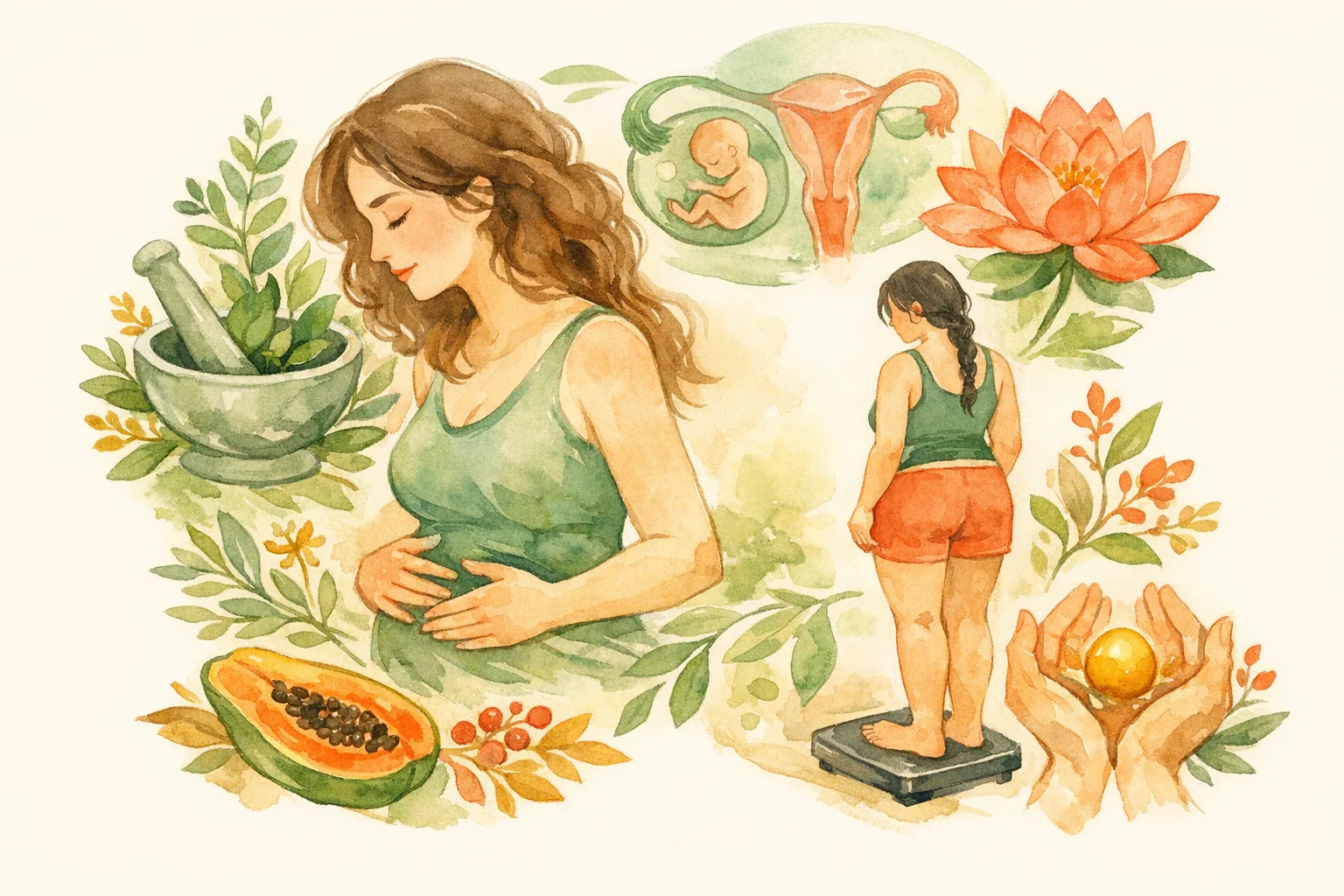
You have been trying. Maybe for months, maybe for years. You have sat in clinic waiting rooms, cried in the car afterward, and spent money you did not have on tests, consults, and treatments that left you with more questions than answers. And somewhere along the way, someone may have mentioned your weight. Either way, it landed like a verdict. There is a real, documented, reversible connection between body weight and fertility. Once you understand what is happening in your body, you can actually do something about it.
How Extra Weight Gets Between You and Pregnancy
Fat cells are not just storage. They act like a small hormone factory. In obese individuals, fat tissue becomes the primary source of estrogen, leading to elevated levels of the hormone. Too much estrogen confuses the brain-to-ovary signal, causing irregular menstrual cycles, lack of ovulation, and reduced fertility.
Then there is insulin. Obesity is often related to insulin resistance, and elevated insulin levels may stimulate the ovaries to produce excess androgens - a known contributing factor to polycystic ovary syndrome, also characterized by irregular periods and lack of ovulation.
Put simply: extra fat raises estrogen, raises androgens, and blocks ovulation. That is three problems at once.
The risk of infertility has been shown to be threefold higher in obese women than in women who are not obese. But here is the more important number: it is reversible.

Weight Also Affects Your Partner
A meta-analysis published in World Journal of Men's Health analyzed 12 studies and 345 men. Weight loss resulted in a significant increase in sperm concentration and sperm movement speed, and a significant decrease in sperm DNA damage.
The most common cause is increased conversion of testosterone into estrogen by an enzyme called aromatase, which suppresses the hormonal signals that control sperm production. When weight drops, that conversion slows. Testosterone returns and sperm quality follows.
If you and your partner are both carrying extra weight, addressing both at once can make a real difference.
What the Research Shows
Research consistently points to a weight reduction of 5% of initial body weight - about 5 to 6 kilograms - as the threshold at which fertility improvement becomes measurable. For a woman who weighs 80 kilograms, that is 4 kilograms. Not a dramatic transformation. A meaningful one.
A randomized controlled trial published in the journal Obesity studied 49 obese women preparing for fertility treatment. The intervention group followed a 12-week structured program of very low calorie diet combined with weekly group support. They achieved a pregnancy rate of 48% compared with 14% in the control group, took a mean of two fertility treatment cycles to achieve pregnancy compared with four, and had a live birth rate of 44% versus 14%.
That is three times the pregnancy rate with the same fertility treatment, just after losing weight first.
A systematic review and meta-analysis published in PLOS ONE looked at 16 studies covering 3,588 women. Women who went through a weight loss program were significantly more likely to become pregnant, with a risk ratio of 1.24. Women with a BMI at or above 35 were 54% more likely to become pregnant after a weight loss program.
Another meta-analysis published in Human Reproduction found that women who went through a combined diet and exercise program were 2.2 times more likely to have a live birth compared with women who received no intervention.
What Conventional Medicine Offers
When a woman with weight-related infertility walks into a clinic, she may be told to lose weight before treatment can begin. NICE states that women with a BMI at or above 30 seeking IVF should be advised that losing weight will likely increase their chances of conception. But women are generally not offered support to actually lose that weight. They are told what to do, then sent home to figure it out alone.
Extra abdominal fat pushes the ovaries higher in the pelvis, making them harder to reach safely with a retrieval needle, and can create blurry ultrasound images. A study of 191 IVF cycles published in Frontiers in Endocrinology confirmed that pregnancy, implantation, and live birth rates were significantly lower in women who were overweight or obese compared to women with normal weight.
For women who want to use IVF, weight loss before the procedure meaningfully changes the odds. For women who want to conceive naturally, the connection is even more direct.
Conventional vs Natural Approach
| Factor | IVF Without Weight Loss | Lifestyle + Ayurvedic Protocol First |
|---|---|---|
| Approach | Bypass the hormonal problem with medical intervention | Fix the hormonal problem at the root |
| Live birth improvement | Lower in obese women; up to 37-68% reduced odds vs normal BMI | Combined diet and exercise linked to 2.2x higher live birth rate in trials |
| Ovulation | Stimulated with drugs, requiring higher doses in obese women | Can restore naturally with 5-10% weight loss |
| Male fertility | Not addressed by IVF process | Improved through weight loss and Ayurvedic herbs |
| Duration | Immediate treatment start, but lower success per cycle | 3-6 months of preparation for significantly better outcomes |
| Side effects | Hormonal stimulation, egg retrieval complications higher with obesity | Diet, movement, herbs - no medical side effects |

The Ayurvedic Approach to Weight and Fertility
Ayurveda has been addressing the relationship between body weight and fertility for 5,000 years. In Ayurvedic terms, excess weight - particularly around the belly - is an imbalance of Kapha dosha that leads to hormonal disruptions. Reducing Kapha dosha helps balance hormones and enhances fertility.
The approach starts with the digestive fire - Agni. When digestion is strong and clean, the body metabolizes properly, hormones regulate themselves, and the reproductive system functions as it should.
My mother has spent her career helping village girls in Himachal Pradesh understand exactly this. Food timing, herbs, and movement - that is what she uses. Among everyone I grew up around, fertility problems were simply not a crisis the way they are here. The knowledge was always there. It was passed down, not sold.
Three herbs sit at the center of the Ayurvedic fertility protocol for women with weight-related reproductive issues.
Shatavari
Shatavari - Asparagus racemosus - is the most important women's reproductive herb in Ayurveda. A review published in Biomedical Pharmacotherapy from Banaras Hindu University found that shatavari may improve female reproductive health complications including hormonal imbalance, PCOS, follicular growth and development, oocyte quality, and infertility, possibly by reducing oxidative stress and increasing antioxidant levels.
A systematic review published in Medical Sciences Forum noted that when women take 5 grams of shatavari, hormones are balanced, antioxidant levels increase, and menstruation improves. It also helps manage insulin levels - which matters especially for women with PCOS and insulin resistance connected to weight.
Triphala
Triphala is a blend of three fruits - amla, bibhitaki, and haritaki. It is a natural antioxidant rich in vitamin C that reduces body fat and insulin resistance, strengthens the immune system, and can enhance female fertility and hormone regulation. A published Ayurvedic clinical study on PCOS patients noted that Triphala helps clear obstruction and normalize the body's channels, and is particularly useful for reducing excess weight.
Ashwagandha
Ashwagandha works on the stress-cortisol-hormone chain. High cortisol suppresses reproductive hormones. Ashwagandha may help regulate cortisol levels, reduce stress, and modulate hormonal imbalances, with some studies suggesting it could improve insulin sensitivity and support better ovarian function.
Together, these three herbs work on three separate parts of the problem: estrogen balance, insulin sensitivity, and the stress-hormone connection.
The Ayurvedic Protocol for Weight and Fertility
A clinical study published in PMC followed 40 PCOS patients through a six-month Ayurvedic protocol in three stages. Stage one used Triphala and supporting herbs for two weeks for basic body purification. Stage two introduced Shatavari, Shatapushpa, and Guduchi powder twice daily, followed by additional herbs to support follicular development.
The study observed the protocol over two years and concluded that the treatment had a powerful effect for the management of fertility issues related to PCOS.

What You Can Do Today
You do not need a clinic visit to start. You need a protocol.
Step 1 - Find your 5%. Calculate 5% of your current weight. That is your first target. For most women, this is 3 to 6 kilograms.
Step 2 - Fix your food, not your portions. A review published in Nutrients identified that a reduced calorie diet cutting fat and refined carbohydrates, combined with increased aerobic exercise, should form the basis of programs for weight-related fertility issues. In Ayurvedic terms: eat warm, freshly cooked food, remove processed sugar, and eat at consistent times each day.
Step 3 - Move your body gently every day. Walking, yoga, and swimming support weight loss and hormonal balance without the cortisol spike that comes from extreme exercise.
Step 4 - Start Triphala in the morning. Triphala taken with warm water on an empty stomach reduces insulin resistance, supports digestion, and clears the channels Ayurveda connects to reproductive health. Start with 1 gram daily and increase slowly.
Step 5 - Add Shatavari in the afternoon. Shatavari powder (5 grams) in warm milk or water, taken after lunch. Give it 90 days before evaluating results. Herbs are rebuilding function, not overriding it.
Step 6 - Protect your sleep. Sleep fragmentation disrupts overnight hormone rhythms. Seven to eight hours of uninterrupted sleep is when your body resets its hormone signals for the next day.
Step 7 - Track your cycle. Weight loss often restores regular ovulation before you see it on a scale. A returning, regular cycle is a signal that your body is responding.
When to Consider Each Path
Ayurveda is not the answer for every situation. There are cases where IVF or medical intervention is the right choice - structural issues, very low ovarian reserve, certain diagnoses in older women, and cases where time does not allow for a longer natural approach.
What Ayurveda is right for is the large group of women whose fertility is weight-connected and hormone-connected - women with PCOS, irregular cycles, anovulation, or unexplained infertility who have not yet addressed what is happening in their metabolism.
Before spending $15,000 to $30,000 on IVF, the research clearly supports trying a 90-day structured lifestyle and Ayurvedic protocol first. The risk is essentially zero. The upside is real.
If you have already been through IVF cycles without success, it is worth asking whether the weight and hormonal environment was ever fully addressed.
The Omioni Program
At Omioni, we do not send you home with a pamphlet. We come to your home in Las Vegas and restructure your life around conception. Diet, herbs, movement, environment, stress, sleep, digital habits, relationships - everything that science and Ayurveda tell us matters for fertility gets addressed at once, in your actual life, not in a clinical setting.
This is not a supplement subscription. It is an intensive, in-home natural fertility program. If you are ready to take a real, structured approach, call us at 972-282-3930.
Frequently Asked Questions
How much weight do I need to lose before my fertility improves?
Research consistently points to 5% of body weight as the starting threshold. That is about 4 kilograms for an 80-kilogram woman. Small, but meaningful.
Can I still do IVF if I am overweight?
Yes. The American Society for Reproductive Medicine notes that weight should not be the sole reason to deny fertility treatment. But obese women may have a significantly improved chance of IVF success if they reduce weight before the procedure.
Does weight affect my husband's fertility too?
Yes. A meta-analysis in World Journal of Men's Health covering 345 men found that weight loss produced a significant increase in sperm concentration and movement speed, and significantly reduced sperm DNA damage.
How long does Ayurvedic treatment take to work for fertility?
Most clinical protocols run 3 to 6 months. This reflects how long it takes to restore hormonal balance, improve egg quality, and regularize ovulation through natural means. The result is more durable than drugs that override function.
What is Shatavari and is it safe?
Shatavari is Asparagus racemosus, a root herb used in Ayurveda for thousands of years as a primary women's reproductive tonic. Research from Banaras Hindu University proposes it improves hormonal balance, follicular development, and egg quality by reducing oxidative stress. It is generally considered safe. Consult an Ayurvedic practitioner for your specific dose and situation.
My BMI is not that high but I still have irregular cycles. Is weight still a factor?
Possibly. Even modest weight in the overweight range can disrupt hormone signals enough to affect ovulation. Abdominal fat is more hormonally active than fat elsewhere. If your cycles are irregular and your weight is above your natural set point, it is worth addressing.
What if I have already done IVF and it failed?
Failed IVF is exhausting and painful. It is also information. If weight and metabolic health were not addressed before those cycles, that is a variable worth changing before the next attempt. A structured Ayurvedic protocol of 90 days can change the hormonal environment your eggs and uterus are operating in. Call 972-282-3930 to talk through what a natural program would look like for your specific situation.
Medical Disclaimer: This article is for informational purposes only and does not constitute medical advice. The content is not intended to diagnose, treat, cure, or prevent any condition. Consult your physician or a qualified healthcare provider before making changes to your diet, supplement routine, or fertility treatment plan. Individual results vary.