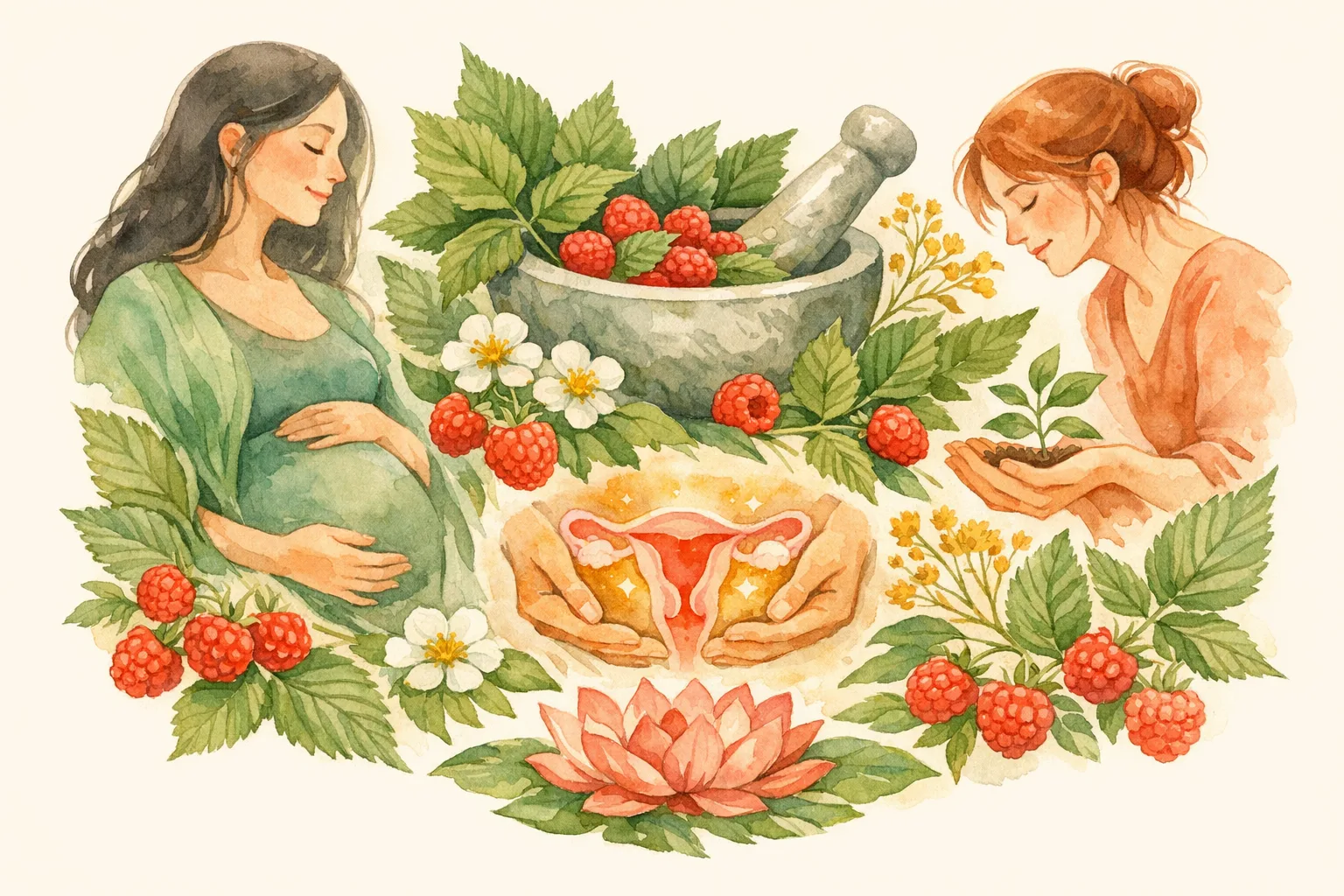
You Have Probably Already Tried Everything
You have tracked your cycle. You have taken the vitamins. Sitting in waiting rooms, paying for tests, nodding when doctors used words you had to Google later - that has been your life. And you are still here, still trying.
Red raspberry leaf is one of the oldest women's herbs on the planet. It has been used for uterine health since at least the 6th century. Midwives in Australia, the UK, and North America still recommend it today. And new research published in the Nutrients journal is now showing us why it works - right down to the specific molecules in the leaf.
This article will tell you exactly what the science says. What it proves. What it does not prove yet. And how to use this herb safely if you choose to.
What Is Red Raspberry Leaf
Red raspberry leaf comes from the same plant as the berry you eat. But it is the leaf - not the fruit - that herbalists have used for centuries as medicine. It is a caffeine-free herbal tea made from the dried leaves of the raspberry plant, known scientifically as Rubus idaeus.
The taste is mild. Think of a gentle black tea without the caffeine. You can drink it warm or cold, steeped from loose leaves or tea bags.
Red raspberry leaf has been used as a uterine tonic for at least two centuries. It is listed in the British Herbal Pharmacopoeia. It is the herb midwives reach for most.
What Is Actually Inside the Leaf
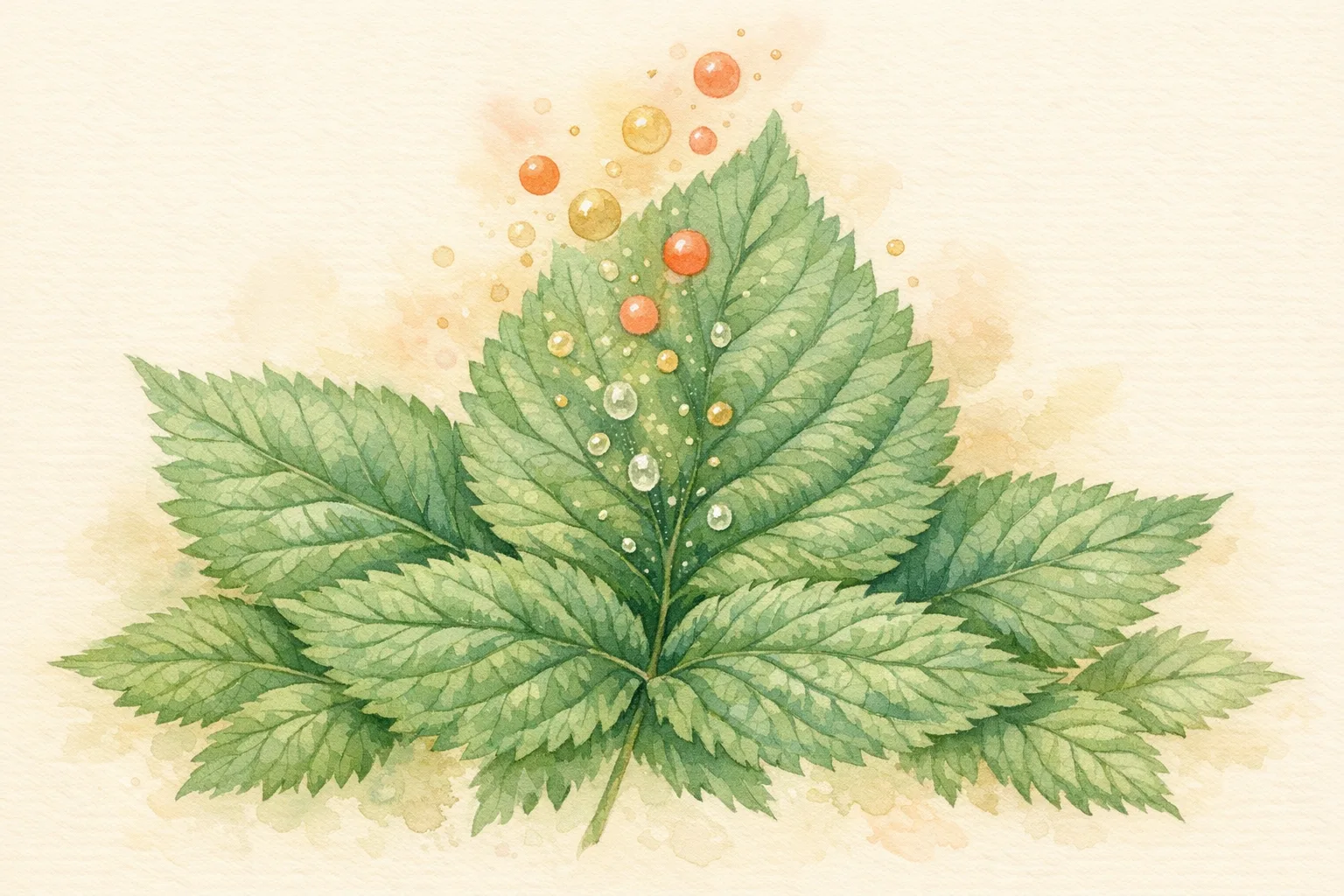
Fragarine is an alkaloid compound unique to raspberry leaf. It is believed to be responsible for the herb's reputed effects on uterine muscle tone - the basis of the "uterine tonic" claim that has been studied in laboratory settings.
The antioxidant properties of raspberry leaf extract are considered to be associated with polyphenolic compounds - quercetin derivatives, ellagic acid derivatives, caffeic and chlorogenic acids - mainly due to their ability to scavenge free radicals and prevent oxidation.
The leaf also contains calcium, magnesium, iron, potassium, vitamins C, E, and B-complex. For women who are building iron and folate stores, managing menstrual cycle health, and supporting the nutrient environment for early pregnancy, raspberry leaf contributes meaningfully.
A recent analysis identified 37 distinct polyphenolic compounds in a single raspberry leaf tea infusion.
What the Research Shows
Uterine Toning - The Core Claim
In laboratory studies, raspberry leaf compounds - particularly fragarine - have a dual effect on uterine muscle. They can produce both relaxation and contraction of uterine smooth muscle, depending on the state of the tissue. Herbalists describe this as a "toning" effect - the herb does not simply stimulate or simply relax the uterus, but helps it function with better coordination.
Put simply: a tense uterus relaxes. A slack uterus firms up.
Raspberry leaf is purported to increase blood flow to the uterus and aid the uterine muscle fibers in more organized contraction. This is the biological basis for why midwives have recommended it before birth - and why women trying to conceive use it to prepare the uterus before pregnancy.
The Clinical Trials
The most rigorous human study on raspberry leaf is a double-blind, randomized, placebo-controlled trial published in the Journal of Midwifery and Women's Health by Simpson et al. The study included 192 low-risk, first-time mothers who gave birth at a large hospital in Sydney, Australia. The aim was to identify the effect and safety of raspberry leaf tablets, consumed from 32 weeks of pregnancy until labor, on labor and birth outcomes.
Consumption of raspberry leaf tablets from 32 weeks of pregnancy until labor resulted in a shorter second stage of labor and a decrease in the rate of forceps delivery compared to the control group. Specifically, forceps use dropped from 30.4% in the control group to 19.3% in the raspberry leaf group.
There were no statistically significant results, but the researchers concluded that further studies with a higher dose are needed before drawing final conclusions regarding safety and efficacy. The dose used in the trial - 2.4 grams per day - was well below the British Herbal Medicine Association's recommended range of 4 to 8 grams per day.
A more recent prospective Australian study published in BMC Complementary Medicine and Therapies looked at 91 women. Results suggest that raspberry leaf use in pregnancy is associated with a reduction in augmentation of labour, an increase in vaginal birth, and no association with postpartum haemorrhage.
Menstrual Health - Official Recognition
The European Medicines Agency's Committee on Herbal Medicinal Products claims that raspberry leaf tea could help relieve period spasms and diarrhea based on its long history of use in traditional medicine. That is not a wellness blog saying it. That is a regulatory body approving a therapeutic indication.
The flavonoids in the leaf also inhibit the enzymes that drive inflammation - the same mechanism as many over-the-counter pain medications, but without the side effects.
Blood Sugar - The Newest Finding
A randomized crossover study published in the Nutrients journal tested raspberry leaf tea on 22 healthy adults. This was the first clinical study to investigate the acute effects of raspberry leaf tea consumption on blood glucose and insulin levels, using 50 grams of common dietary carbohydrates with or without 10 grams of raspberry leaf tea.
The tea significantly lowered blood glucose at 15 and 30 minutes - representing 25.6% and 43.6% reductions - and lowered insulin at 15, 30, and 60 minutes when consumed with sucrose.
Unlike common diabetes medications such as acarbose, participants reported no gastrointestinal discomfort after consuming the raspberry leaf tea, suggesting better tolerability.
Why does this matter for fertility? Blood sugar instability is one of the most common and under-treated drivers of hormonal disruption in women. Insulin spikes affect the hormones that control egg release and cycle regularity.
Antioxidant Protection for Egg Quality
The abundant antioxidants in raspberry leaf may help to reduce oxidative stress, which can impact egg quality. Ellagic acid, the dominant compound in the leaf, has been shown in laboratory studies to inhibit cancer cell growth and reduce inflammation.
The Ayurvedic Approach
In Ayurveda, red raspberry leaf is known as Rasbhari patta. It is classified as a plant that balances vata dosha - the energy associated with movement and instability in the body. An imbalanced vata shows up as irregular cycles, anxiety, sleep disruption, and reproductive weakness.
The Ayurvedic concept of garbhashaya shodhana means uterine purification and toning. Raspberry leaf is one of the herbs used for exactly this purpose - clearing congestion, improving blood flow, and preparing the uterine environment before conception.
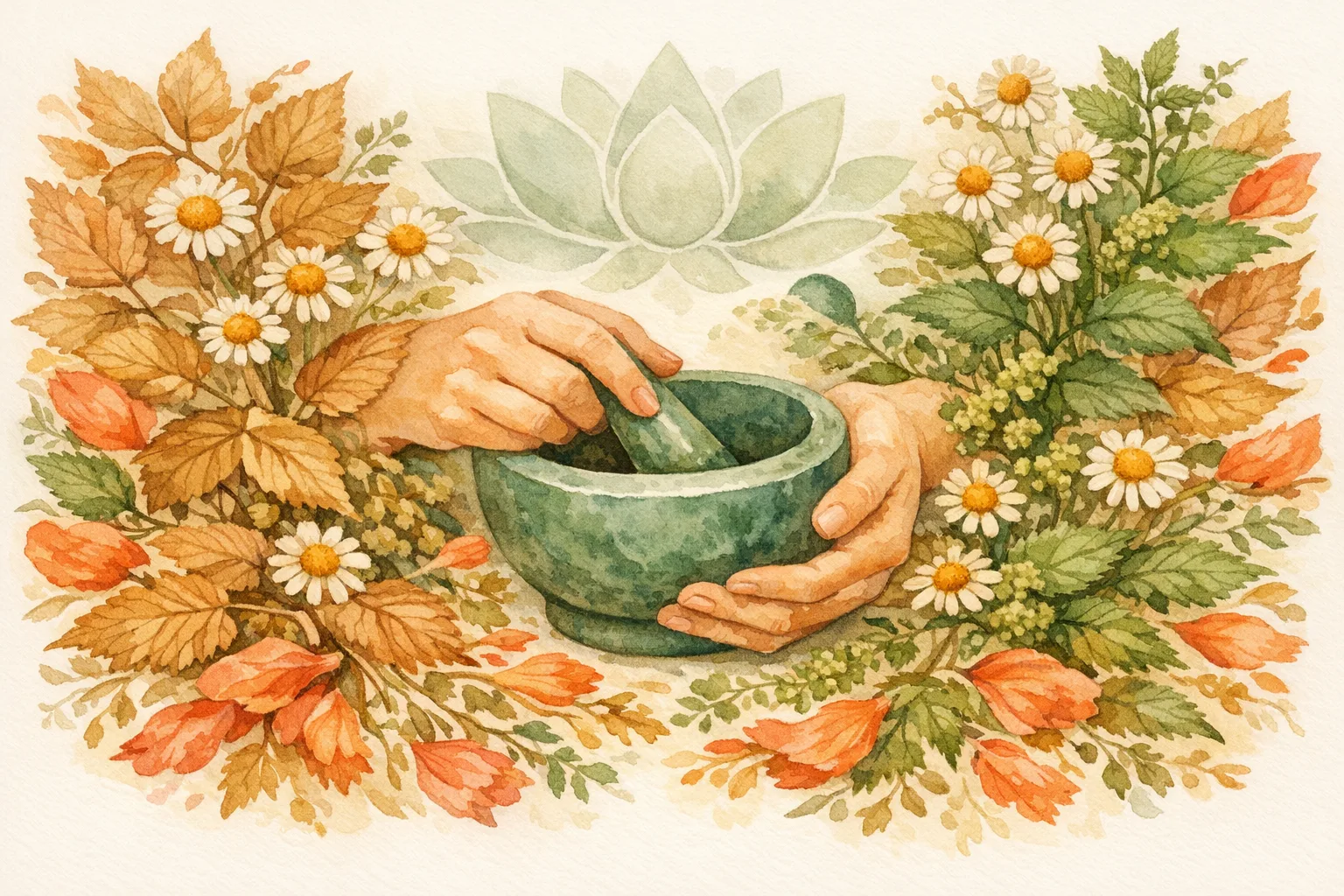
Ayurvedic practitioners traditionally combine raspberry leaf with nettle, chamomile, and hibiscus as a women's tonic blend. Each herb has a different role. Together, they address the uterus, the hormones, the digestion, and the nervous system.
Conventional vs Natural - An Honest Comparison
| Factor | Conventional Approach | Raspberry Leaf / Natural Support |
|---|---|---|
| What it targets | Specific hormone levels; egg retrieval | Uterine tone, blood flow, mineral support, inflammation |
| Evidence level | Multiple large RCTs for IVF outcomes | EMA-approved for menstrual pain; limited human RCTs for fertility |
| Side effects | Bloating, mood changes, ovarian hyperstimulation, significant cost | Mild laxative effect; avoid in first trimester |
| Who recommends it | Reproductive endocrinologists | European Medicines Agency, midwives, Ayurvedic practitioners, herbalists |
| Time to effect | One IVF cycle is 2-3 weeks | Herbalists recommend 3 months before TTC for full toning effect |
| Accessibility | Requires clinic, monitoring, prescriptions | Available as tea, capsule, tincture; used at home |
These approaches are not enemies. Some women need IVF. But everyone deserves to know what a natural foundation can do before reaching for the most expensive, most invasive option first.

What You Can Do Today
Step 1: Start the tea. The recommended dose is one to three cups per day, prepared by steeping one to two teaspoons of dried raspberry leaves in hot water for about 10 to 15 minutes. Consistency is thought to be more beneficial than high doses. Herbalists suggest starting one to three months before actively trying to conceive, allowing the herb's compounds to build up and exert their toning effect on the uterine musculature.
Step 2: Time it with your cycle. The tea is generally advised to be consumed during the follicular phase, which starts on the first day of the period and continues until ovulation. Many women pause during the luteal phase as a precaution and resume at the start of each new cycle.
Step 3: Be consistent for 90 days. It would be best to use this plant to help heal and prepare for pregnancy for at least 3 months prior to trying to conceive.
Step 4: Think about what you are combining it with. Raspberry leaf is more powerful in a system. At Omioni, we structure the entire body around conception - nutrition, sleep, stress, relationships, environment, and targeted herbal support.
Who Should Be Careful
Raspberry leaf is generally safe for healthy adults at one to three cups per day. The European Medicines Agency found no reported adverse effects at normal doses.
Many practitioners recommend avoiding raspberry leaf tea during the first trimester due to the theoretical concern about uterine stimulation during the period of highest miscarriage risk. This is a precautionary recommendation, not based on documented harm.
Also use caution if you have gestational diabetes. Consumption of raspberry leaf may lead to reduced insulin requirements in gestational diabetes mellitus. Women with this condition should be cautioned about its use and have their glucose levels more closely monitored.
Avoid it if you have a history of preterm labor, a planned cesarean, or hormone-sensitive conditions. When in doubt, ask your midwife or practitioner first.
The Omioni Approach - Why One Herb Is Never Enough
At Omioni, we offer Natural IVF - an in-home fertility program based in Las Vegas. We come to your home and restructure your entire life around conception. We work on what you eat, how you sleep, what you put on your body, how you arrange your space, and how you manage your mind.
Raspberry leaf is a wonderful beginning. A clean, affordable, side-effect-free way to start nourishing your uterus right now. But if you have been trying for a long time, if you have had losses, if you feel like your body is fighting itself - you may need more than tea.
Call us at 972-282-3930. We will talk through where you are and what the right next steps look like for you. No judgment. No pressure.
You can also explore more on our blog: Ayurvedic fertility herbs and how they work, natural approaches for low AMH, and how to support uterine lining thickness naturally.
Frequently Asked Questions
Can red raspberry leaf help me get pregnant?
Raspberry leaf does not directly stimulate ovulation or boost egg count. There is no randomized controlled trial that has tested whether drinking red raspberry leaf tea improves conception rates in women trying to conceive. What it does do is nourish the uterus, support cycle regularity, reduce menstrual pain, and deliver minerals that are essential for early pregnancy. Think of it as building the best possible home for a pregnancy, not as a fertility drug.
When should I start drinking it if I am trying to conceive?
Start one to three months before you plan to actively try. Drink one to three cups per day during the follicular phase of your cycle. Many women pause after ovulation and restart at the next period. Stop when you get a positive pregnancy test and speak with your midwife before continuing in pregnancy.
Is it safe to drink during pregnancy?
The third trimester from 32 weeks onward is the period with the most clinical evidence supporting safety and potential benefit. Most practitioners advise avoiding it in the first trimester. A randomized controlled trial of 192 women found no adverse effects on mother or baby when taken from 32 weeks. If you want to use it earlier in pregnancy, speak to your midwife first.
What does it taste like and how do I make it?
It tastes similar to a mild black tea - slightly astringent, earthy, with no strong herbal bitterness. Steep one to two teaspoons of dried leaf in hot water for 10 to 15 minutes. For a stronger medicinal infusion, steep for 20 to 30 minutes. It can be drunk warm or cold. It pairs well with a small amount of honey.
Does red raspberry leaf balance hormones?
No research studies confirming a direct estrogenic effect can be found - the belief that raspberry leaf mimics estrogen is based on a general folk tradition rather than clinical evidence. What the leaf does do is reduce inflammation, improve the cycle environment, support magnesium levels, and help tone uterine tissue.
Can I take it alongside my fertility medications?
Speak to your doctor first. Raspberry leaf has shown some inhibition of cytochrome P-450 enzymes in laboratory studies, which means it could theoretically interact with certain medications. The blood-sugar-lowering effect also means women on metformin or insulin should monitor carefully. Always disclose herbal use to your prescribing physician.
How is this different from what a fertility clinic offers?
A fertility clinic focuses on egg retrieval, hormone stimulation, and embryo transfer. Raspberry leaf works on a different level - it supports the uterine environment, the mineral foundation, the cycle regularity, and the body's ability to receive and sustain a pregnancy. The two are not mutually exclusive. Many women use herbal support alongside or before medical fertility treatment.