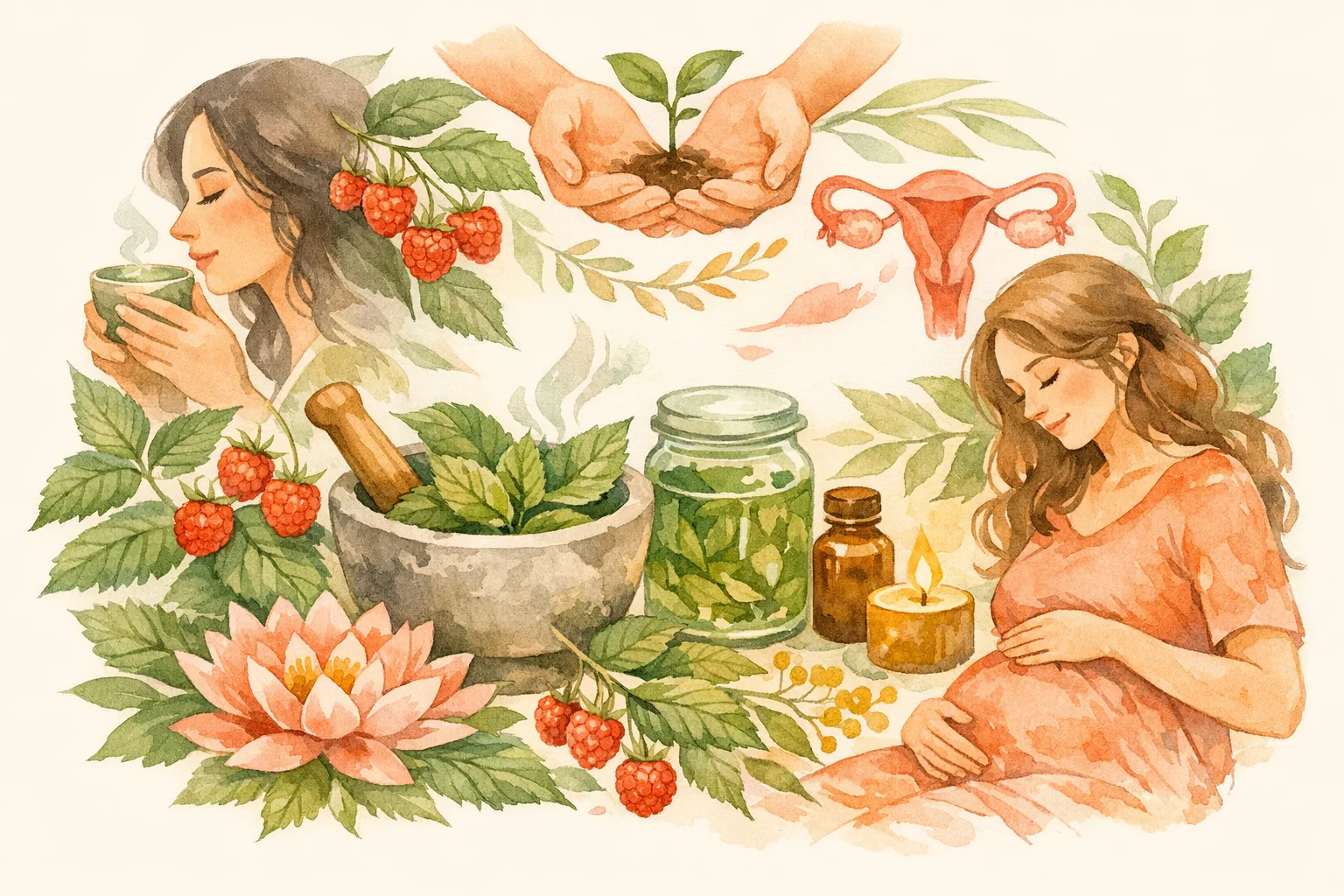
You Are Not Imagining It - This Is Hard
You have been trying for months. Maybe years. You have tracked your cycle until you can recite it from memory. You have spent money you did not have. You have sat in a clinic waiting room and cried quietly so the other patients would not notice.
You started searching for anything that might help. Someone in a forum mentioned raspberry leaf tea. You clicked. Now you are here, looking for an honest answer.
Here it is. What the research actually says is straightforward - and where this herb fits into a real fertility plan is specific.
What Red Raspberry Leaf Actually Is
Red raspberry leaf comes from the leaves of Rubus idaeus, the red raspberry plant. The leaf is not the fruit, and it carries none of that flavor. The tea tastes mild and slightly astringent - closer to black tea than to a smoothie.
It has been used in European and North American herbal medicine since at least the 6th century. Midwives across generations have used it to support the uterus during pregnancy and labour. Between 7% and 56% of pregnant women use it today, depending on the country, according to a 2021 systematic review published in BMC Complementary Medicine and Therapies.
A survey of 571 midwives found that 52.5% recommended it for post-dates pregnancy management.
So why is the fertility conversation around it so confusing? Because the evidence for pregnancy preparation and the evidence for actually getting pregnant are two completely different things.
What Is Inside the Leaf
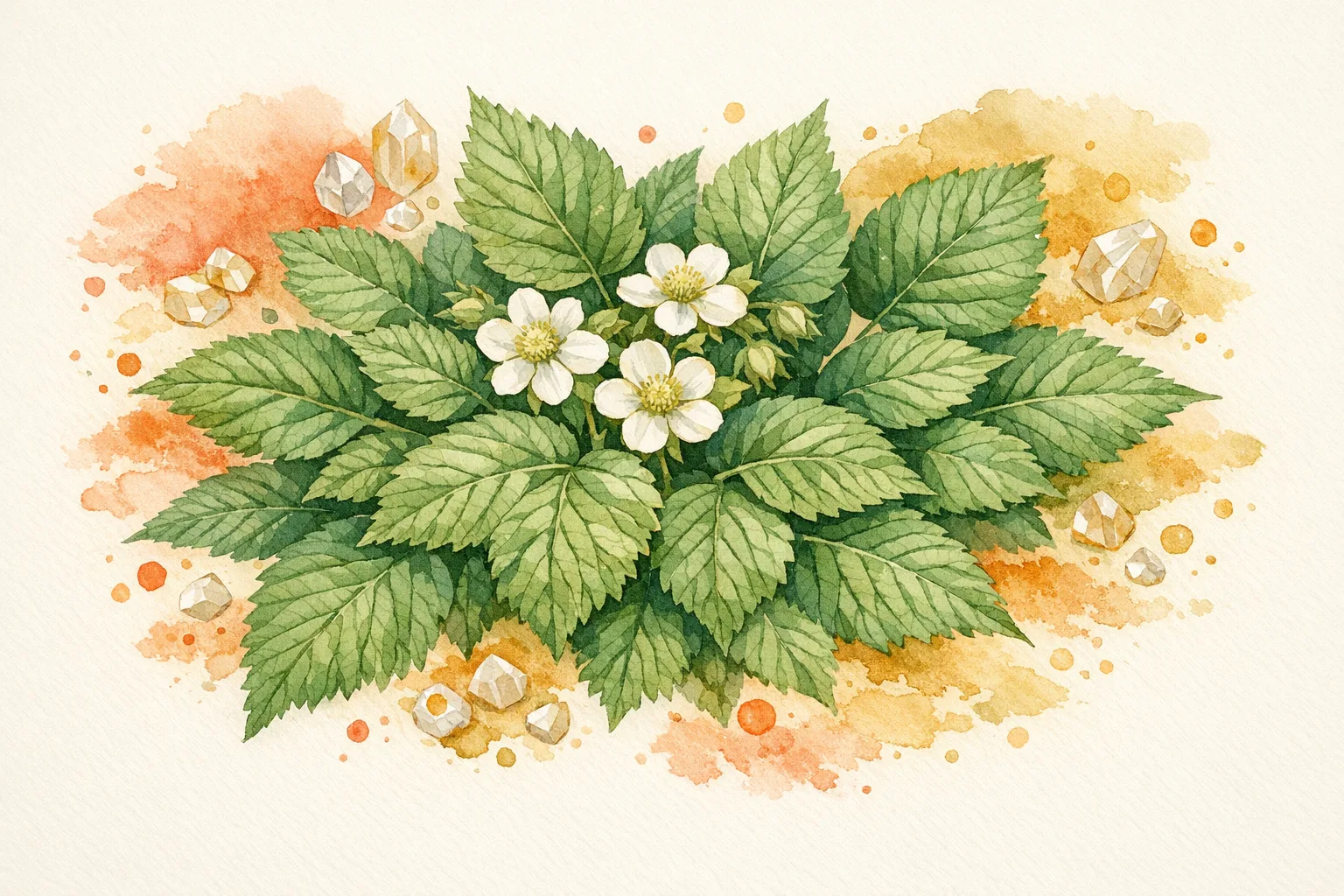
A LC-MS/MS polyphenol analysis published on PubMed Central (PMC11858761), which tested leaves from six countries, found total polyphenol content ranging from 358 to 601 mg per 100 grams. The dominant compound class is ellagitannins.
The key active compound for reproductive health is fragarine - an alkaloid found in raspberry leaf and almost nowhere else. According to the BMC Complementary Medicine and Therapies systematic review, fragarine acts on the smooth muscle tissue of the uterus.
Beyond fragarine, the leaf contains calcium, magnesium, iron, folate, and vitamins A, C, and E. Iron deficiency is the most common mineral deficiency in women of reproductive age, folate is essential for DNA synthesis before conception, and magnesium supports hormone production.
For maximum polyphenol extraction, steeping for five minutes produced the highest total polyphenol yield. Longer is not always better.
What the Research Shows
What the research confirms: Laboratory studies using animal and human tissue have shown that fragarine produces a bidirectional effect on uterine smooth muscle. According to fertility naturopath Nella Vosk, fragarine can both relax and contract uterine smooth muscle depending on the tissue state and concentration. Herbalists call this a toning effect. The 2021 systematic review in BMC Complementary Medicine and Therapies confirmed biophysical effects on smooth muscle across five laboratory studies.
What the research does not confirm: There is no randomised controlled trial showing that raspberry leaf tea increases conception rates. Nella Vosk states directly that no such trial exists. A systematic review cited by The Dietologist (Holst et al.) found no proven benefits for fertility outcomes. The phyto-progesterone claim - widely repeated in online wellness spaces - is not supported by clinical pharmacological research.
In plain terms: raspberry leaf can tone and nourish your uterus. It cannot directly trigger ovulation, boost progesterone, or guarantee pregnancy. Any source telling you otherwise is ahead of the science.
The UK Committee on Toxicity assessed raspberry leaf and concluded low risk but with a high level of uncertainty. Two Australian human safety studies found no adverse effects at 1 to 8 cups per day. Safety is not the concern. Effectiveness for conception is simply not yet proven in human clinical trials.
Conventional vs Natural - An Honest Comparison
According to SART and CDC data, the average live birth rate per IVF cycle is approximately 32% across all ages. For women aged 38 to 40, live birth rates are 20 to 25% per transfer using their own eggs - and for women over 40, rates often drop to single digits.
A PMC study (PMC4870438) analyzing 448 IVF cycles in women with very low anti-Mullerian hormone found clinical pregnancy rates varied from 31% in women under 35 down to 10.2% in women aged 40 to 43. Age, not anti-Mullerian hormone level alone, was the key predictor.
Raspberry leaf tea has no clinical trial data on conception rates. IVF has extensive data - but that data shows it does not work for most people who try it, especially as age increases or ovarian reserve decreases. Both paths deserve honesty.
| Factor | IVF (Own Eggs, Age 38-40) | Red Raspberry Leaf |
|---|---|---|
| Conception rate evidence | 20-25% live birth per transfer (SART/CDC) | No clinical trial data exists |
| Uterine support evidence | Procedural (embryo transfer) | Lab-confirmed toning effect via fragarine |
| Nutritional support | None | Iron, folate, magnesium, calcium, vitamins A/C/E |
| Safety profile | Known side effects: hormonal stimulation, multiple births, OHSS | UK COT: low risk; possible ovulation timing effects in some women |
| Best use case | Blocked tubes, severe male factor, medical necessity | Preconception nutritional support, uterine toning, cycle regularity |
The Ayurvedic Approach
Growing up in Chamba, Himachal Pradesh, I never saw fertility discussed the way it is in American clinics. The older women in the village were the first and only consultation. The difference was not luck. It was a way of living that kept the body ready.
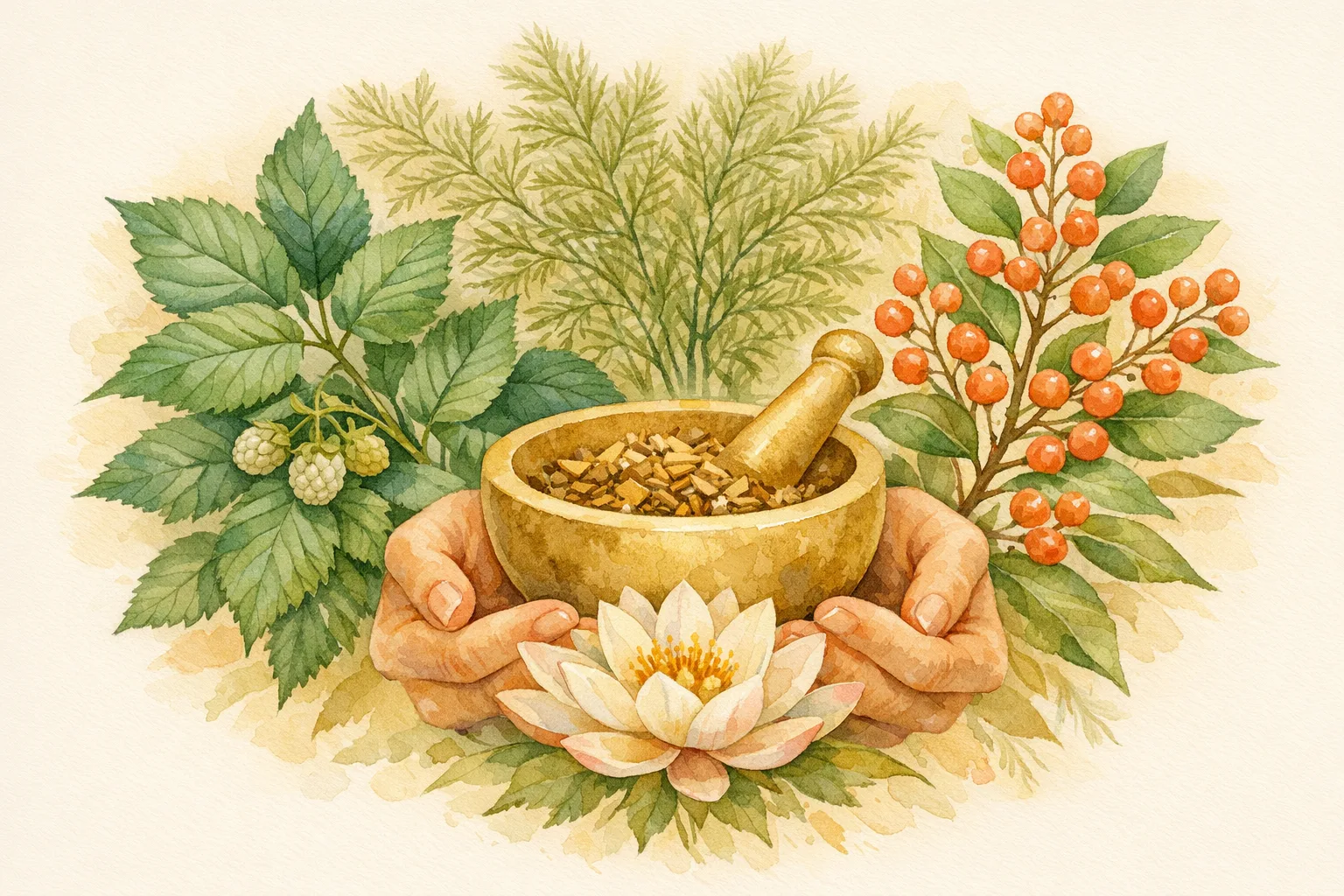
In Ayurveda, raspberry leaf does not sit alone. No single herb is considered sufficient on its own. Ayurvedic treatment combines herbs that address different root causes simultaneously - hormonal balance, uterine health, stress, and digestive function together.
In Ayurvedic terms, raspberry leaf functions closest to what is called a rasayana - a nourishing, rejuvenating tonic. The targeted Ayurvedic herbs are what directly regulate hormones.
Shatavari (Asparagus racemosus) - A review published on PubMed (PMID 40974515) found that Shatavari has the potential to enhance fertility rates through its active saponins and flavonoids. Its mucilage compounds help the cervix produce healthy mucus at the right time in the cycle, supporting the meeting of sperm and egg. Shatavari works on specific hormonal pathways. Raspberry leaf does not.
Ashwagandha (Withania somnifera) - A systematic review published in the Wiley Online Library (PMID 41249015) found that Ashwagandha addresses stress-induced hormonal disruption, polycystic ovary syndrome, and menstrual irregularities. A randomised controlled trial published in the Journal of Alternative and Complementary Medicine found that 600mg per day for 8 weeks produced statistically significant improvements in thyroid hormones - relevant because subclinical thyroid dysfunction is linked to anovulation and elevated miscarriage risk. A pilot study (PMC3863556) found that Ashwagandha root extract given to men with low sperm count for 90 days significantly improved sperm concentration, motility, and volume.
Raspberry leaf provides a foundation of nutritional support and uterine tone. Think of it as the soil preparation. The targeted herbs are the seeds.
The Ovulation Question - What Women Report
Multiple women in the r/TryingForABaby subreddit have reported that raspberry leaf tea delayed their ovulation by several days. The reports are anecdotal. There is no clinical trial that has replicated or explained this finding.
The practical guidance used by most experienced practitioners is simple: use raspberry leaf in the follicular phase, which begins on the first day of your period and runs through ovulation. Stop at ovulation or confirmed positive pregnancy test.
Some women also report benefits for short cycles and premenstrual symptoms. One Fertility Glo customer review noted her cycle lengthened to 26 days after one month of use - meaningful because a short cycle can make conception timing more difficult. These are individual reports, not clinical data.

What You Can Do Today
Step 1 - Time it correctly. Use raspberry leaf from day one of your period through ovulation only. Stop when you ovulate. One to three cups per day is the dose used in safety studies. Steep for five minutes for maximum polyphenol content.
Step 2 - Do not use it alone. Raspberry leaf is a nutritive tonic, not a hormonal corrector. If your cycles are irregular, if you have elevated follicle-stimulating hormone levels or low anti-Mullerian hormone, or if you have been trying for more than six months, you need more targeted support. Shatavari and Ashwagandha have clinical evidence behind them. Raspberry leaf supports them. It does not replace them.
Step 3 - Fix the environment, not just the herb. Raspberry leaf cannot overcome a body that is exhausted, inflamed, or chronically stressed. The Ayurvedic approach treats your entire life as the fertility protocol - food, sleep, movement, stress, your phone, your home, your relationships.
Step 4 - Choose organic. The tea plant absorbs what surrounds it. Pesticide-laden raspberry leaf is counterproductive when you are trying to reduce toxic load before conception.
Step 5 - Give it time. Natural Fertility Info recommends using raspberry leaf for at least three months before actively trying to conceive, allowing the toning effect on uterine tissue to build.
When to Consider Each Path
Raspberry leaf, and natural fertility protocols generally, make the most sense when:
- You have been trying for fewer than 12 months and are under 35
- Your cycles are irregular or your premenstrual symptoms are significant
- You want to create the strongest possible foundation before attempting any assisted reproduction
- You have had a failed IVF cycle and want to prepare differently for the next attempt
- You have a history of menstrual flooding, cramps, or uterine weakness
IVF makes sense when:
- Fallopian tubes are blocked
- There is a documented severe male factor that cannot be addressed naturally
- You have a specific genetic screening need before transfer
- Natural approaches have been tried for a full year with no result
The Ayurvedic protocol at Omioni supports an 84% success rate for low anti-Mullerian hormone patients. The conventional IVF rate for the same population is 16 to 20% per retrieval according to SART database data. You deserve to know that before you decide.
Call 972-282-3930 to learn what a personalized, in-home Ayurvedic fertility protocol looks like for your specific situation.
FAQs
Does raspberry leaf tea increase fertility?
It supports the conditions for fertility - uterine tone, nutritional status, and potentially cycle regularity. But no randomised controlled trial has shown it directly increases conception rates. Nella Vosk, an Australian fertility naturopath who reviewed the full body of literature, states clearly that this trial does not yet exist. It is best understood as a tonic and nutritional support herb, not a fertility drug.
When should I drink raspberry leaf tea during my cycle?
Most practitioners recommend from day one of your period through ovulation - the follicular phase. Stop at ovulation or when you get a positive pregnancy test. This avoids any theoretical stimulation of the uterus during implantation.
Can raspberry leaf tea delay ovulation?
Some women in fertility forums report a delay of several days in cycles when they used the herb. The cause is not confirmed in any clinical study. The UK Committee on Toxicity acknowledged high uncertainty about real-world effects. To reduce this risk, stop use at ovulation and do not continue into your luteal phase while trying to conceive.
How many cups per day?
One to three cups per day is the dose used in the two Australian human safety studies reviewed by the UK Committee on Toxicity. Steep for five minutes. The PMC polyphenol study (PMC11858761) found this produces the highest total polyphenol yield. Start with one cup and see how your body responds before increasing.
Is raspberry leaf tea safe during the first trimester?
Most midwives and practitioners advise against it in the first trimester. The concern is that fragarine could stimulate contractions at the wrong time. The UK Committee on Toxicity could not establish a safe guidance value for pregnancy due to data gaps. Stop when you confirm pregnancy.
How is raspberry leaf different from Shatavari?
Raspberry leaf is a nutritional tonic. It feeds and tones. Shatavari works directly on hormonal pathways - its steroidal saponins modulate estrogen, support follicular development, and help the cervix produce mucus at the right time. A PubMed review (PMID 40974515) found Shatavari shows genuine promise for fertility enhancement through these targeted mechanisms. A complete protocol uses both.
Can I use raspberry leaf tea alongside IVF?
Some practitioners and women in fertility communities report using it before egg retrieval and transfer cycles. The key is to inform your IVF clinic of everything you are taking. Some herbs interact with IVF medications. Raspberry leaf has a relatively mild profile, but your clinical team should always know what you are using.
Ready to build a complete fertility protocol around your actual body? Call Omioni at 972-282-3930. Based in Las Vegas. We come to your home and restructure everything - from what you eat and how your room is set up, to which apps are on your phone and how you manage stress. This is not a supplement plan. This is a full environmental reset built around conception.
Also read: Shatavari for Fertility - Clinical Evidence and Ayurvedic Protocol | Low AMH Natural Treatment - What Actually Moves the Number | Ashwagandha and Female Fertility - What the Studies Show
Medical Disclaimer: This article is for informational purposes only and does not constitute medical advice. Red raspberry leaf and other herbs discussed here are not approved treatments for infertility by the FDA or any equivalent regulatory body. Consult a qualified healthcare provider before starting any herbal supplement, particularly if you are pregnant, trying to conceive, or undergoing fertility treatment. Individual results vary. Nothing in this article guarantees any specific fertility or pregnancy outcome.