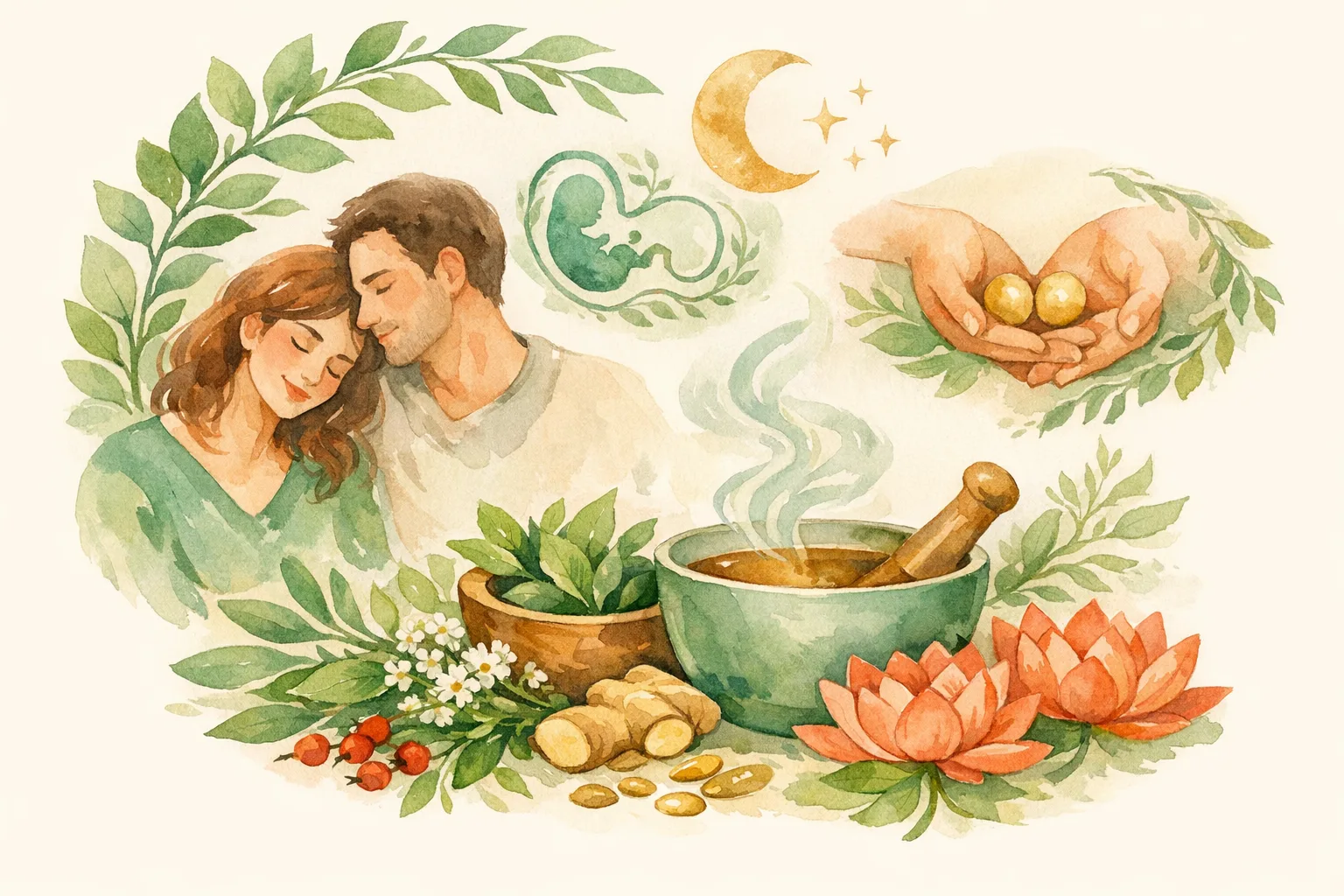
You've tried everything.
You've tracked your cycle, changed your diet, taken the prenatal vitamins. And somewhere along the way, someone told you to drink a fertility tea. So you bought one. Or three. And now you're wondering if any of it actually does anything.
Some of the herbs in these teas have real research behind them, and some do not. Most products mix powerful ancient herbs with marketing copy and very little guidance on how to actually use them.
I grew up in a village in Himachal Pradesh. Among all of my relatives, nobody had problems getting pregnant. The older women in our community knew which herbs to use, how to prepare them, when to drink them, and what else needed to change in your life. The tea was never the whole answer. It was part of a whole approach.
What Is Fertility Tea
Fertility tea is any herbal blend made to support your reproductive system. The top-selling versions in America - brands like Pink Stork and FertiliTea - typically contain chasteberry (also called vitex), red raspberry leaf, nettle leaf, and sometimes green tea. Some include shatavari, licorice root, and passionflower.
These are not random ingredients. Many come from traditions that are thousands of years old. How much of the herb is actually in the tea, whether it is the right herb for your specific situation, and whether tea alone is enough - those are the real questions worth asking.
What the Research Shows
Chasteberry - the most studied fertility herb
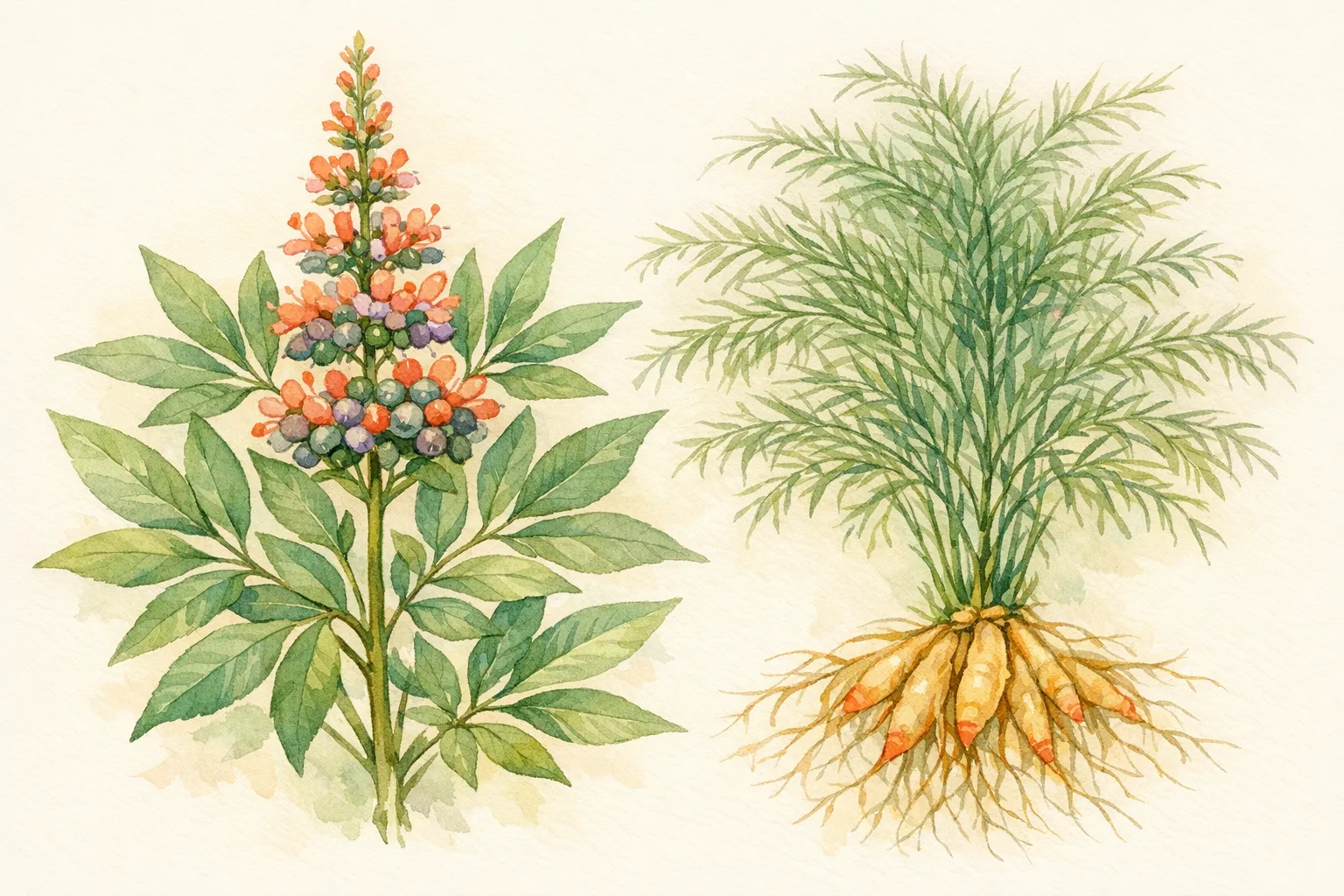
Chasteberry, also called vitex or Vitex agnus-castus, has the strongest research behind it of any herb in commercial fertility teas.
A randomized controlled trial published in Phytomedicine followed 96 women with luteal phase defects. Women taking vitex for three months had significantly higher mid-luteal progesterone levels, longer luteal phases, and higher pregnancy rates compared to placebo. A separate trial of 52 women found a pregnancy rate of 26% in the vitex group versus 10% in the placebo group over six months.
Vitex works on the pituitary gland, not directly on the ovaries. Its active compounds bind to dopamine receptors and suppress prolactin. When prolactin is too high, it blocks ovulation. Bringing prolactin down can restore normal cycles.
A systematic review published in PubMed (PMID 23136064) reviewed 13 randomized controlled trials on Vitex agnus-castus. For latent hyperprolactinemia, vitex normalized a shortened luteal phase, increased mid-luteal progesterone, and reduced prolactin - all markers that directly affect fertility. Women who used research-grade vitex consistently for 6 months had the best outcomes, with 85% experiencing improved cycle regularity.
Most commercial fertility teas do not tell you how much vitex is in each bag or whether it is standardized. That is the problem with buying a box off Amazon and hoping for the best.
Shatavari - the queen of Ayurvedic fertility herbs
Shatavari (Asparagus racemosus) is the most important fertility herb in Ayurveda. It enhances follicular growth and ovulation, balances hormones disrupted in PCOS, promotes regular menstrual cycle duration, and supports antioxidant levels that protect egg quality. It also helps the cervix produce the right kind of mucus at the right time in the cycle, which helps sperm reach the egg.
A recent PubMed study (PMID 40974515) found that shatavari shows promise for fertility enhancement through its active compounds - saponins and flavonoids - while noting further clinical trials are still needed to confirm effects and establish dosing guidelines.
Red raspberry leaf - nutritious, but limited fertility evidence
Red raspberry leaf is rich in vitamins A, C, E, and the B family, plus magnesium, potassium, and iron. A 2021 systematic review concluded that the evidence base supporting raspberry leaf in pregnancy is weak, with no strong clinical studies evaluating it specifically for pre-conception outcomes.
Raspberry leaf will not hurt you, and the nutrients are real. But on its own, it is not a fertility treatment.
Green tea - antioxidant support for egg quality
Green tea is added to many fertility blends for its antioxidant content. High levels of free radicals can negatively impact egg health and sperm health. However, high caffeine intake has been linked to fertility issues, so low-caffeine or decaffeinated green tea is recommended when trying to conceive.
What this means in practice
The herbs with real fertility research - vitex and shatavari - work slowly. Both require three to six months of consistent use. Neither comes with a guarantee. And the dose inside a teabag may not match the dose used in clinical trials.
Conventional vs Natural - a real comparison
| IVF | Ayurvedic Approach | |
|---|---|---|
| Cost per cycle | $15,000-$30,000 per cycle (US Department of Health and Human Services) | Call 972-282-3930 to discuss |
| Average cycles needed | 2.3 to 2.7 cycles (FertilityIQ data) | 3-6 months protocol |
| Success rate (women 38-40) | 20-25% live birth per transfer (CDC/SART data) | Comprehensive lifestyle + herb protocol |
| Side effects | Hormonal injection side effects, cycle cancellation risk | Mild, infrequent with quality herbs |
| Invasiveness | Egg retrieval procedure, injections, monitoring | No procedures |
| Who benefits most | Blocked tubes, severe male factor, advanced age with time pressure | Hormonal imbalance, PCOS, unexplained infertility, irregular cycles |
The U.S. Department of Health and Human Services estimates a single IVF cycle costs $15,000 to $20,000, and can exceed $30,000 with donor eggs. Most patients go through 2.3 to 2.7 cycles, pushing total spending close to $50,000 per patient. According to a Rescripted survey, 70% of IVF patients incur debt from fertility treatments. Nearly half had at least $10,000 in debt.
For women aged 38 to 40, the live birth rate per IVF transfer is 20 to 25%. After age 40 with your own eggs, the rate often falls into single digits. A study published in PMC (PMC4870438) analyzing 448 IVF cycles found a clinical pregnancy rate per retrieval of 31% in women under 35, 23% in the 35 to 39 group, and 10% in the 40 to 43 group.
The Ayurvedic Approach
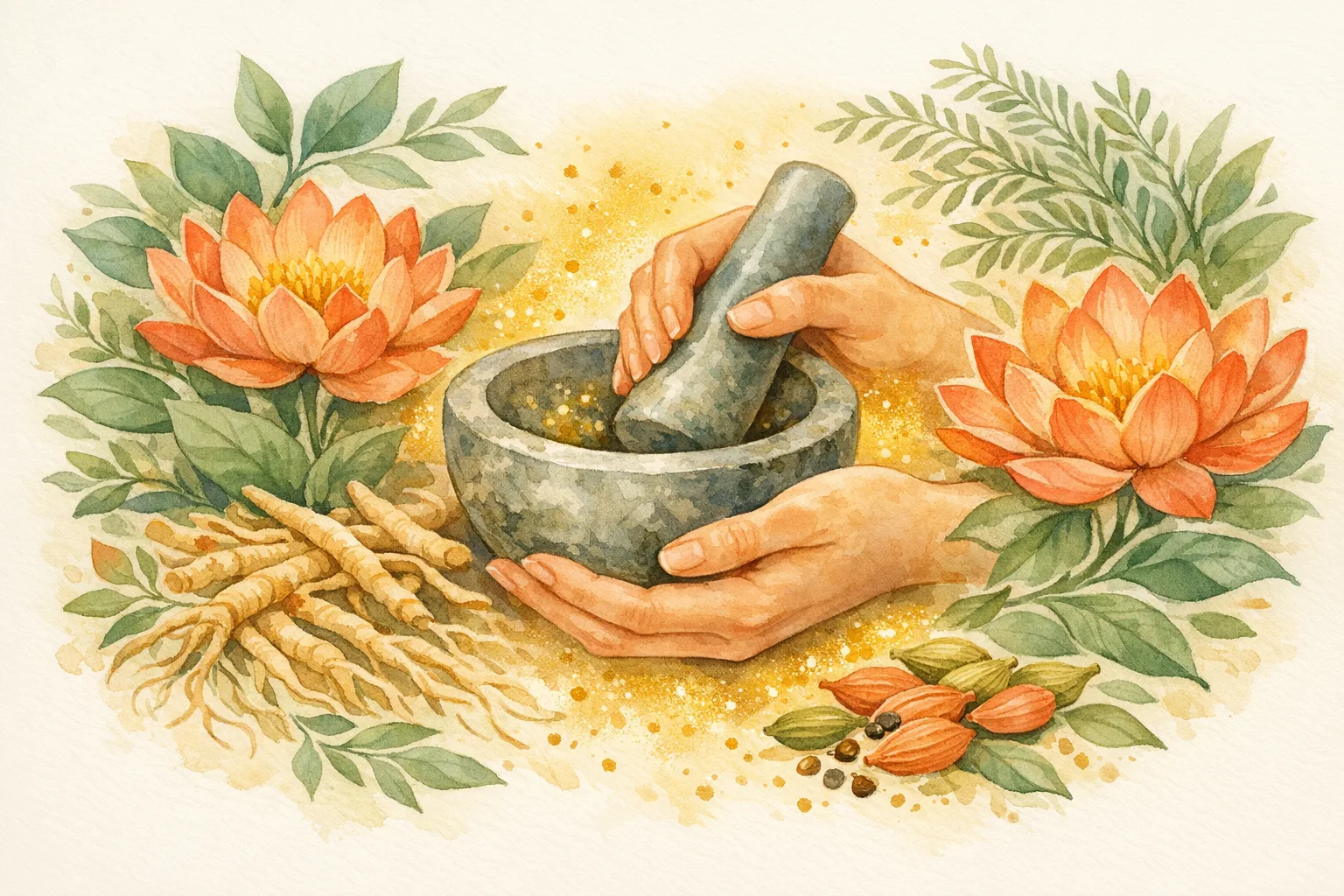
Ayurveda is 5,000 years of clinical observation. It is not a wellness trend. Ayurveda does not treat a symptom. It treats the whole person. Digestion, sleep, stress, environment, food, relationships - all of it touches fertility.
A clinical trial published in PMC (PMC3215317) followed 40 women with PCOS-related subfertility through a six-month Ayurvedic protocol using shatavari, Guduchi, and shatapushpa. The study found the treatment had "a powerful effect for the management of subfertility with polycystic ovarian syndrome."
A case report published in the Journal of Ayurveda and Integrative Medicine (PMC8814398) followed a woman who had been unable to conceive for 11 years. She had PCOS and had tried IUI and hormonal therapy, both without success. After eight months of Ayurvedic treatment, she conceived and delivered a healthy baby girl.
A scoping review published in PubMed (PMID 36944117) identified 57 clinical studies on Ayurveda for PCOS and concluded there is "a promising role in managing symptoms of PCOS," including reproductive outcomes. A small open-label study of 100 women with various infertility causes reported a 75% overall conception rate following comprehensive Ayurvedic treatment.
The Ayurvedic approach combines herbs like shatavari, ashwagandha, and triphala with specific foods, sleep protocols, stress work, and lifestyle adjustments. Ashwagandha helps regulate hormones, reduce cortisol, and supports the endocrine system. High cortisol disrupts hormone production, which disrupts the cycle.
What You Can Do Today
1. Choose herbs with real research behind them. Look for a fertility tea that contains standardized vitex extract (also listed as Vitex agnus-castus or chasteberry) and shatavari. Check that the label shows the amount per serving. If it just says "proprietary blend," the dose is likely too small.
2. Give it at least three months. Vitex requires three to six months to produce hormonal changes. One box of tea for two weeks will not change anything.
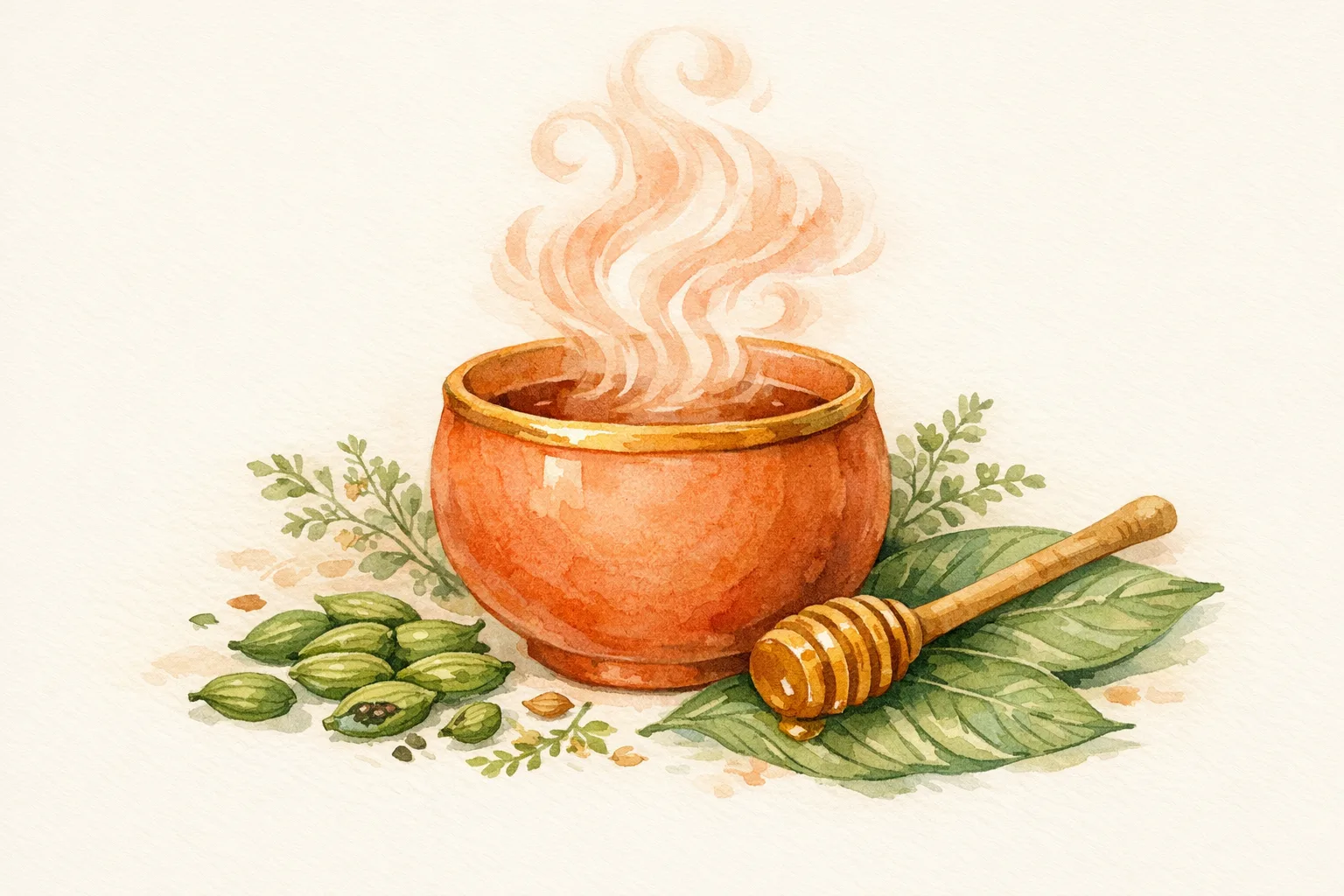
3. Stop drinking coffee. Caffeine raises cortisol. Cortisol disrupts progesterone. Progesterone is what holds a pregnancy. Swap your morning coffee for warm shatavari tea with a little raw honey and cardamom.
4. Look at your stress. A review published in Biomedicine and Pharmacotherapy found that high stress leads to elevated cortisol production, which disrupts hormone synthesis in women. No tea will fix that. But a calm nervous system is one of the most powerful fertility tools you have access to today, for free.
If you want to go deeper - change your diet, restructure your environment, address your anxiety, and build a whole protocol around conception - that is exactly what we do at Omioni. We come to your home in Las Vegas and rebuild your life around getting pregnant. No procedures. No needles.
Call 972-282-3930 to learn more.
When to Consider Each Path
Start with the Ayurvedic approach if: You have irregular cycles, PCOS, unexplained infertility, high stress, or a history of hormonal imbalance. If you have not yet tried a structured natural protocol, try it first. You have time and it costs a fraction of what IVF costs.
Consider IVF if: You have both fallopian tubes blocked, a diagnosis of severe male factor infertility, a known genetic condition requiring embryo screening, or you are over 43 and time is a real constraint. IVF exists for a reason. Some people need it. But not everyone who is sent to an IVF clinic needs it.
Women are going straight to IVF before ever trying anything else. The failure rates at 38, 40, and beyond are real. Everyone deserves to know that there is another path worth trying first.
Frequently Asked Questions
How long should I drink fertility tea before expecting results?
The key herbs in fertility tea - especially vitex - require consistent use for three to six months before producing measurable hormonal changes. Do not expect results in two weeks. Treat it like a protocol, not a supplement.
Can I drink fertility tea while also doing IVF?
This depends on the herb. Chasteberry (vitex) is generally not recommended alongside IVF because it can interfere with the medications used to stimulate ovulation. Shatavari may be more compatible, but discuss any herbs with your reproductive endocrinologist before starting a cycle. Do not combine herbs and IVF medications without medical guidance.
What is the difference between fertility tea and Ayurvedic fertility treatment?
Fertility tea is one ingredient. Ayurvedic fertility treatment is a complete system - herbs, food, sleep, stress, relationships, environment. The tea supports the body. The full protocol rebuilds the conditions that make conception possible.
Is shatavari safe to take every day?
Shatavari is considered safe in Ayurveda for daily use in women who are trying to conceive. Standard guidance suggests 3 to 6 grams of powder per day in warm water or milk. Stop using it once pregnancy is confirmed and consult your healthcare provider before continuing.
Does fertility tea work for PCOS?
It depends on which herbs are in the blend and how severe your PCOS is. Vitex may help regulate cycles in women with mild hormonal imbalance. Shatavari supports hormonal balance and follicular development. However, PCOS often requires a full dietary and lifestyle intervention alongside herbs for real results.
Should I stop drinking fertility tea once I get pregnant?
Most commercial fertility teas recommend stopping once you get a positive pregnancy test. Vitex (chasteberry) in particular is not recommended during pregnancy. Shatavari is considered safe during pregnancy in Ayurvedic tradition, but confirm with your doctor before continuing any herbal supplement after conception.
How is Omioni's approach different from just drinking fertility tea?
Omioni is not a tea subscription. It is an in-home fertility program. We restructure your physical environment, your diet, your sleep, your stress, your relationships, and your daily routine around conception. If you have been trying for more than six months and you have only changed what you drink, there is a lot more we can do together. Call 972-282-3930.
Medical Disclaimer: This article is written for educational purposes only and does not constitute medical advice. Herbal supplements are not regulated by the FDA and are not intended to diagnose, treat, cure, or prevent any disease. Always consult a qualified healthcare provider before starting any herbal supplement, especially if you are currently undergoing fertility treatment, taking medications, or are pregnant or breastfeeding. Results discussed in referenced studies may not apply to all individuals.