The Finding That Surprised Us
Fertility supplement research is dominated by small, poorly designed trials. CoQ10 is not. It has been tested in six randomized controlled trials involving 1,529 women with low ovarian reserve. A meta-analysis published in the Annals of Medicine pooled those six trials and found that CoQ10 pretreatment raised clinical pregnancy rates with an odds ratio of 1.84. That means women who took CoQ10 before IVF were nearly twice as likely to get pregnant as women who did not. The number is striking - read the caveats before spending money on a supplement.

Why Egg Quality Matters and What Can Damage It
An egg cell needs more energy to mature than almost any other cell in the human body. That energy comes from mitochondria. A review published in Frontiers in Cell and Developmental Biology explains that oocytes contain more mitochondria than any other human cell, and that they require significant amounts of ATP for maturation, fertilization, and early embryo development. As women age, mitochondrial function declines. Natural CoQ10 levels fall at the same time. The result is eggs that run low on energy at exactly the wrong moment. Oxidative stress makes the problem worse. Free radicals damage egg DNA and mitochondrial membranes. CoQ10 is both an energy carrier inside the mitochondria and a direct antioxidant that neutralizes those free radicals. That dual role is why researchers began testing it for fertility in the first place.
What the Research Shows
The Xu et al. Randomized Controlled Trial (PubMed PMC5870379)
This is the most widely cited human trial on CoQ10 and egg quality. Dr. Xu and colleagues recruited 186 women under 35 with low ovarian reserve. Participants were randomized to 60 days of CoQ10 pretreatment or no pretreatment before an IVF cycle.
The results in the CoQ10 group: higher fertilization rates (67.49%), more high-quality embryos, and lower rates of canceled embryo transfer due to poor embryo development (8.33% vs. 22.89%).
Here is what the trial did not find: no statistically significant difference in live birth rates or clinical pregnancy rates. Intermediate markers improved. Final outcomes did not reach significance. The trial was not large enough to detect a difference in those endpoints.
The Meta-Analysis (PubMed 39129455)
A systematic review and meta-analysis published in the Annals of Medicine pooled six randomized controlled trials with 1,529 women with low ovarian reserve undergoing IVF. The pooled data showed CoQ10 pretreatment significantly correlated with higher clinical pregnancy rates (OR = 1.84, 95% CI 1.33-2.53, p = 0.0002), more high-quality embryos, and more eggs retrieved per cycle. The included trials had relatively limited sample sizes and needed replication in larger, more rigorous trials.
The 2020 Meta-Analysis (PubMed 32767206)
A 2020 meta-analysis by Florou et al., published in the Journal of Assisted Reproduction and Genetics, analyzed five randomized controlled trials with 449 infertile women. It found that CoQ10 supplementation raised clinical pregnancy rates compared to placebo (28.8% vs. 14.1%, OR 2.44, 95% CI 1.30-4.59). However, the same meta-analysis found no effect on live birth rates or miscarriage rates. The authors noted high heterogeneity between the included trials, which limits the strength of that conclusion.
The Aneuploidy Data (Published in MDPI, PMC8431086)
A study by Ma et al. tested CoQ10 directly on immature eggs in culture. In women over 38, eggs cultured with CoQ10 had significantly higher maturation rates (82.6% vs. 63%) and lower chromosomal abnormality rates (36.8% vs. 65.5%). Younger women showed no significant difference. Chromosomal abnormalities in eggs are the leading cause of early miscarriage and failed IVF cycles.
The Animal Data (PubMed PMC4568976)
A study from the University of Toronto found that older female mice treated with CoQ10 had improved ovulation rates, more ovarian follicles, and normalized litter sizes compared to untreated older mice. CoQ10 slowed follicle loss and improved oocyte mitochondrial energetics in the aged animal model. The researchers were explicit that human data is needed before drawing firm clinical conclusions.
The Large Observational Study (Gynaecology Journal)
A study involving 99 infertility specialists across India enrolled 1,061 patients. Women received CoQ10 300 mg twice daily for an average of 74 days before IVF. The mean fertilization rate was 73%. Clinical pregnancy was achieved in 874 patients, a rate of 82.53%. No adverse events led to treatment discontinuation. This was an observational study without a control group. It cannot establish causation, but the scale is notable.
What the Research Does Not Show
Women are born with all the eggs they will ever have. CoQ10 supports the function of existing eggs. It cannot add to that supply.
The pregnancy and live birth data is mixed. Trials consistently show improved intermediate markers - fertilization rates, embryo quality, eggs retrieved - but fewer reach statistical significance on pregnancy or live birth rates. The 2020 Florou meta-analysis found no effect on live birth rates. The Xu et al. trial found higher pregnancy rates in the CoQ10 group, but the difference was not statistically significant.
Timing may matter in ways we do not fully understand yet. A review in MDPI International Journal of Molecular Sciences noted that CoQ10 added to culture media after fertilization appears to have little effect. The intervention likely needs to happen before eggs finish their final maturation stage, which means oral supplementation weeks before retrieval is the approach with the strongest evidence base.
Limitations of the Current Evidence
- Doses ranged from 200 mg to 600 mg per day across trials, durations varied, and comparing them directly is difficult.
- Sample sizes are still small. The largest randomized trial had 169 evaluable participants.
- No trial has been large enough to show a statistically significant difference in live birth rates.
- Studies enrolled different populations. Results in women with low ovarian reserve may not apply to younger women with no fertility diagnosis.
- The optimal dose, duration, and form of CoQ10 are still not established.
Ubiquinone vs. Ubiquinol: Which Form to Take
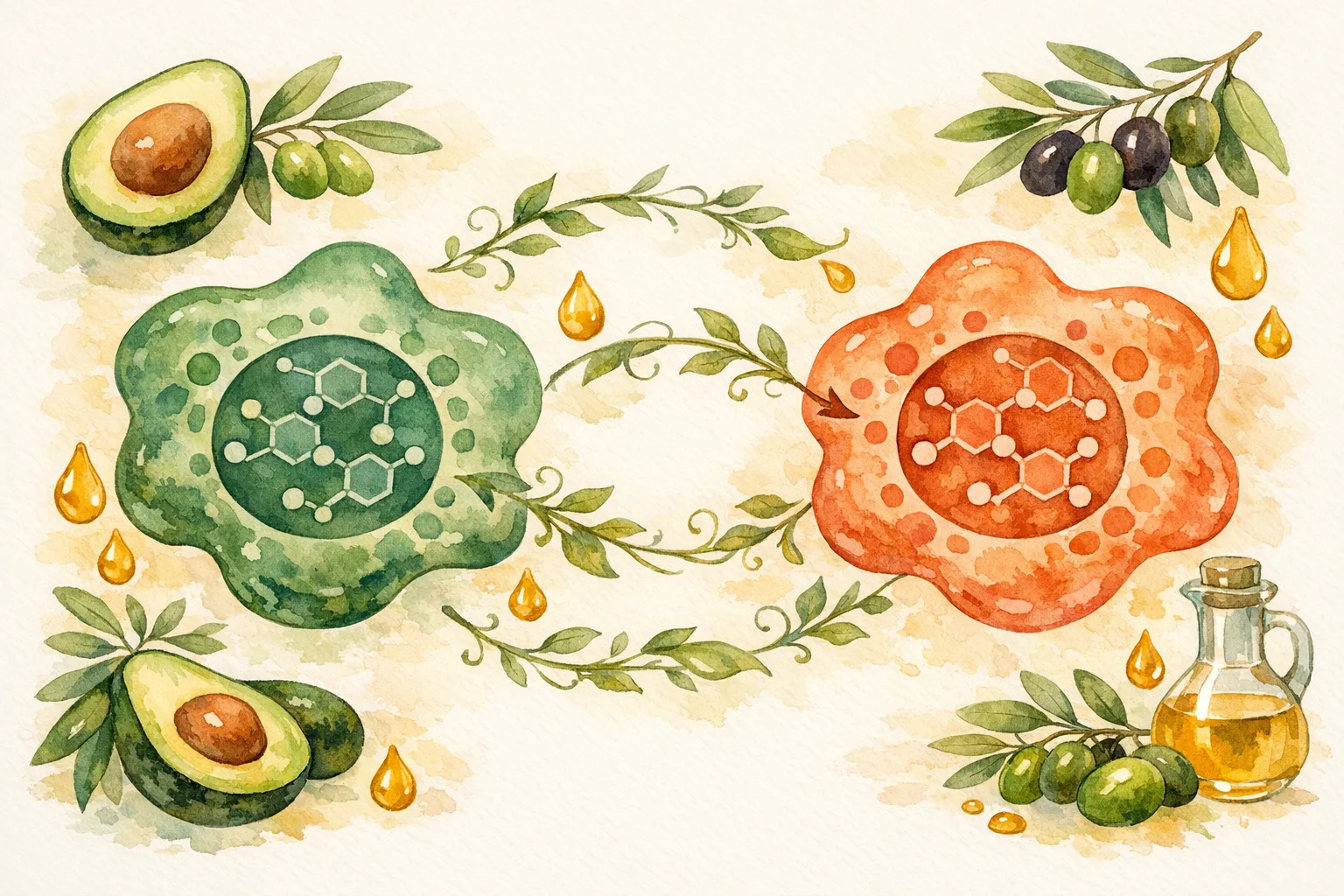
CoQ10 comes in two forms. Ubiquinone is the oxidized form found in most supplements. Ubiquinol is the reduced, active form that cells use directly. The body converts ubiquinone into ubiquinol during absorption, but this conversion becomes less efficient with age.
A 2020 study found no significant difference in blood levels between the two forms in people using quality soft-gel formulations. Both forms appear in the clinical trials showing benefit. Consistency matters more than the specific form.
Take it with a fat-containing meal, since CoQ10 is fat-soluble and absorption drops significantly without dietary fat present.
How Conventional Medicine Approaches This
CoQ10 rarely comes up as a primary recommendation from reproductive endocrinologists - it gets mentioned as an adjunct, if at all. Standard care for low egg quality typically involves IVF with high-dose ovarian stimulation, sometimes combined with donor eggs.
| Factor | IVF Alone (Low AMH) | CoQ10 + IVF |
|---|---|---|
| Clinical pregnancy rate | 9.5-20.5% per cycle | Elevated (OR 1.84 in meta-analysis) |
| Canceled transfers | 22.89% (control group) | 8.33% (CoQ10 group, Xu et al.) |
| Fertilization rate | Baseline | 67.49% (Xu et al.) |
| Aneuploidy rate (over 38) | 65.5% | 36.8% (Ma et al.) |
| Live birth rate | Low for low AMH patients | Not significantly different in trials |
| Cost of CoQ10 supplement | N/A | $20-$60/month (widely available) |
| Risk profile | Ovarian hyperstimulation, multiple pregnancy, emotional stress | Generally well-tolerated, no adverse events in trials |
Five to six IVF cycles for low ovarian reserve patients can cost between $100,000 and $180,000 out of pocket. CoQ10 is not a replacement for that pathway when IVF is medically indicated. It may improve what those cycles produce.

The Ayurvedic Context: Shukra Dhatu and Oxidative Stress
Ayurveda describes the reproductive tissue as Shukra Dhatu. The modern equivalent maps closely to mitochondrial health and oxidative stress balance: protect the reproductive cell from damage, fuel it with energy, and clear the waste products that impair its function.
Ayurvedic herbs used in fertility protocols address the same biological targets as CoQ10 through different pathways. Shatavari (Asparagus racemosus) is documented in multiple peer-reviewed journals to enhance egg quality and restore hormonal balance. Ashwagandha (Withania somnifera) has been shown in a randomized placebo-controlled trial to balance reproductive hormones in women. Amalaki (Emblica officinalis) is one of the richest food sources of vitamin C, a potent antioxidant that reduces the oxidative stress that damages eggs.
Both CoQ10 and these Ayurvedic compounds work on oxidative stress and can be used together. In an Ayurvedic fertility program, CoQ10 is often one piece of a larger protocol that includes diet, stress reduction, sleep, and specific herbal support tailored to the individual's constitution.
What You Can Do Today
These steps are supported by the evidence reviewed above. They are not medical advice. Discuss any supplementation with your doctor before starting.
- Start CoQ10 at least 60-90 days before IVF retrieval or before trying to conceive naturally. The Xu et al. trial used 60 days of pretreatment. The oocyte maturation cycle is approximately 90 days. Starting earlier may be more protective.
- Take 200-600 mg daily with a fat-containing meal. Most trials used 200-600 mg. Higher doses were used in the Indian observational study (600 mg/day). Doses above 1,200 mg per day have not been studied for fertility.
- Choose a quality soft-gel formulation. Soft-gel capsules, whether ubiquinone or ubiquinol, showed the best absorption in a 2019 study testing seven different CoQ10 supplements.
- Pair it with an anti-inflammatory diet. Oxidative stress is worsened by processed foods, alcohol, and poor sleep. The supplement cannot override a pro-inflammatory lifestyle.
- Get your baseline tested. Ask your doctor for an AMH and FSH level before starting any fertility protocol. These numbers tell you where you are starting from and let you measure progress.
When to Consider Each Path
CoQ10 and Ayurvedic support are most relevant when egg quality is the issue, you have time to try a 90-day protocol, and IVF has not yet been attempted or has failed due to poor embryo quality. The data from the Xu et al. trial showed the biggest benefit in women under 35 with low ovarian reserve. The evidence does not strongly support CoQ10 for women with normal ovarian reserve and no fertility diagnosis.
IVF makes clear sense when tubes are blocked, when the male partner has severe sperm issues, when age makes a 90-day protocol medically inadvisable, or when multiple natural cycles have already failed. IVF and CoQ10 are not mutually exclusive. The evidence actually suggests combining them.
Seventeen to 24% of couples told they need IVF conceive naturally afterward. That number suggests some couples may benefit from a structured natural protocol before committing to a first IVF cycle. A conversation with a reproductive specialist familiar with both approaches is the right starting point.
A Note From Alex
My business partner Kate and I talk to a lot of couples trying to figure out where to put their energy. Couples spend years on the wrong protocol because nobody identified the right target. CoQ10 is worth knowing about. It is not magic. But if egg quality is the specific gap in your situation, a 90-day CoQ10 protocol costs almost nothing to try before a $20,000 IVF cycle. The data says it may improve what that cycle produces.
If you want to talk through what a full Ayurvedic fertility protocol looks like, call us at 972-282-3930.
Frequently Asked Questions
How long does CoQ10 take to improve egg quality?
The Xu et al. randomized controlled trial used 60 days of pretreatment. Most practitioners recommend starting 90 days before a planned retrieval or conception attempt, because that is the approximate length of the oocyte maturation cycle. Starting sooner allows CoQ10 to support eggs through the full maturation window.
What dose of CoQ10 should I take for egg quality?
Most randomized controlled trials used 200-600 mg per day. The Xu et al. trial used 600 mg per day (200 mg three times daily). The large Indian observational study used 600 mg per day and reported a 73% fertilization rate. Most fertility specialists who recommend it suggest 400-600 mg per day. Always take it with a fat-containing meal, as absorption is much lower without dietary fat.
Is ubiquinol or ubiquinone better for fertility?
Both forms appear in the clinical trials showing benefit. A 2020 study found no significant difference between the two forms when using quality soft-gel formulations. Formulation quality and fat co-ingestion appear to matter more than which form you choose.
Can CoQ10 help if I have low ovarian reserve?
Low ovarian reserve is the population with the strongest evidence. The meta-analysis by Lu et al. pooled six randomized controlled trials with 1,529 women with low ovarian reserve and found an odds ratio of 1.84 for clinical pregnancy rate. The Xu et al. trial found significantly more high-quality embryos and significantly lower rates of canceled transfers. Two small studies also showed reductions in chromosomal abnormality rates in eggs from older women exposed to CoQ10 in culture media.
Does CoQ10 work for women over 40?
The evidence is more limited for women over 40. The Ma et al. study found that CoQ10 significantly reduced chromosomal abnormality rates in eggs from women over 38. The Xu et al. trial excluded women 35 and older. A 2023 literature review found that CoQ10 improved fertilization rates, embryo maturation rates, and embryo quality in women aged 31 and over when used before IVF. The benefit likely decreases with age but may still be meaningful. Women over 40 should discuss the evidence with a reproductive specialist.
Does CoQ10 replace IVF?
No. CoQ10 is not a replacement for IVF when IVF is medically indicated. It does not create new eggs, unblock tubes, correct severe sperm factors, or eliminate the age-related decline in egg number. For couples where IVF is the appropriate path, CoQ10 pretreatment appears to be a low-risk, low-cost way to potentially improve outcomes.
Can I combine CoQ10 with Ayurvedic herbs?
The current clinical literature does not include trials combining CoQ10 with Ayurvedic herbs specifically. Both approaches target oxidative stress and mitochondrial function through different mechanisms. Shatavari and Amalaki have antioxidant properties that may complement CoQ10. There is no known interaction between CoQ10 and these herbs that raises safety concerns. A qualified Ayurvedic practitioner and a reproductive specialist working together is the most evidence-aligned approach for a combined protocol.