You Have Been Trying Long Enough to Deserve Real Answers
You know the feeling. Another month passes. Another test. Another round of hope followed by disappointment. You have sat in waiting rooms. You have paid for consultations. Late nights doing research at 2 a.m. when you could not sleep.
And somewhere along the way, someone probably handed you a pamphlet for IVF. Maybe you have already done a round. Maybe you are thinking about it. Or maybe you are wondering if there is something - anything - you can try first that does not cost $20,000 and leave you feeling like a science experiment.
Seed cycling is one of those things. It is simple and food-based. It costs almost nothing. And the research behind it - while still growing - is more solid than most people realize.
Let us walk through what it is, what the studies say, and what you can do starting today.
What Is Seed Cycling
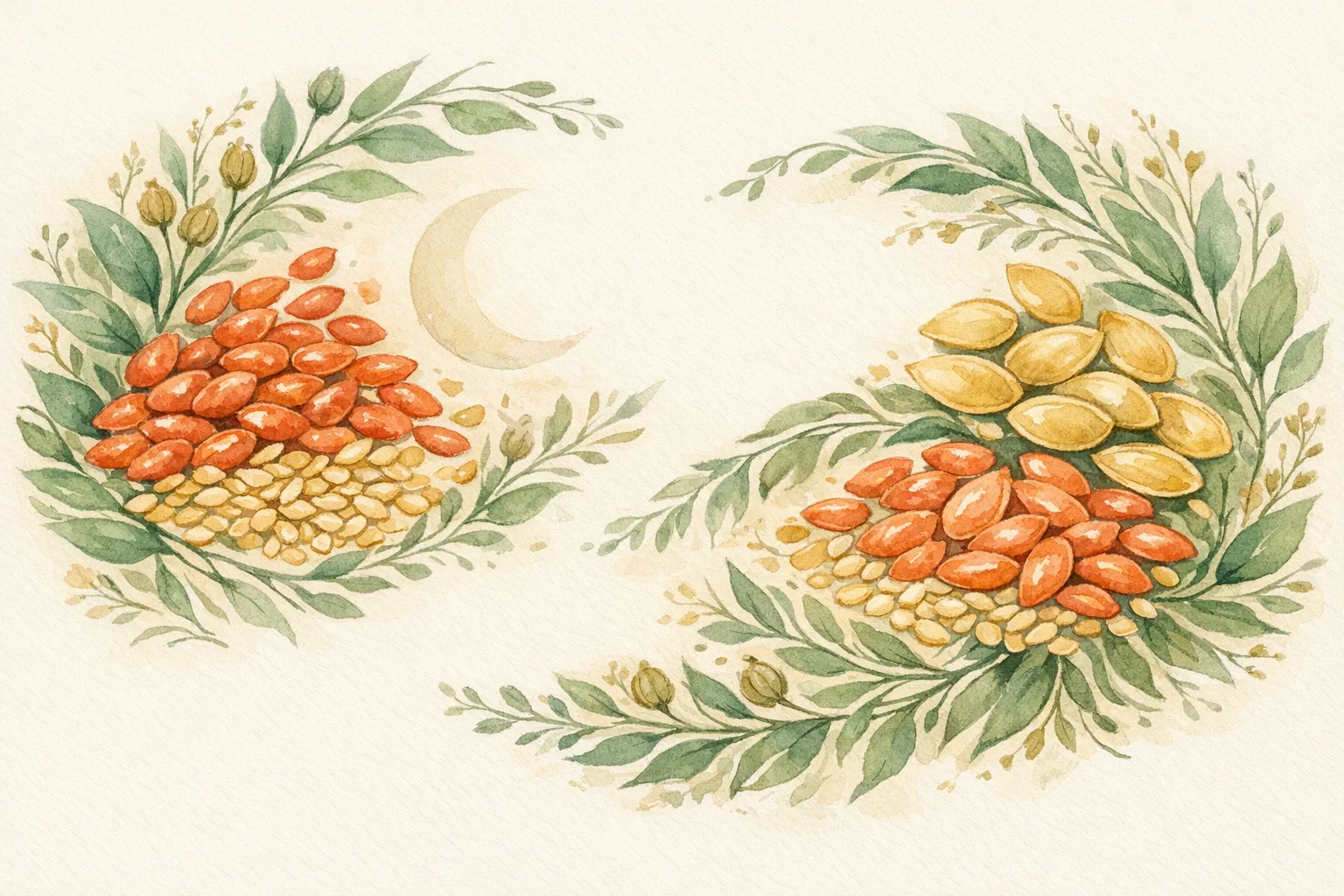
Seed cycling is a food-based practice. You eat specific seeds during the two phases of your menstrual cycle to support your body's natural hormone rhythm.
Your cycle has two main phases. The first is called the follicular phase. It runs from day 1 to roughly day 14. Your body is building toward ovulation. Estrogen should be rising. The second phase is the luteal phase. It runs from day 15 to day 28. After ovulation, your body needs progesterone to support a possible pregnancy.
During the follicular phase - days 1 to 14 - you eat 1 tablespoon of ground flaxseeds and 1 tablespoon of ground pumpkin seeds daily. During the luteal phase - days 15 to 28 - you eat 1 tablespoon of ground sunflower seeds and 1 tablespoon of ground sesame seeds daily.
Four seeds. Two tablespoons a day. Timed to your cycle.
What the Research Shows
Seed cycling did not have peer-reviewed clinical support for most of its history. It was passed down through women's communities. Practiced. Trusted. But not published.
That is changing.
A case study published in the Journal of Pharmacy and Bioallied Sciences examined a 29-year-old woman with PCOS who had been trying to conceive for two years. She had irregular cycles, acne, hair thinning, and hormonal imbalances. Her luteinizing hormone was elevated. Her follicle-stimulating hormone was low. The researchers placed her on a plan that included seed cycling alongside nutritional support. After 6 months, she had regular cycles, normalized hormone levels, and a significant drop in her body mass index. She went on to achieve a confirmed clinical pregnancy.
A study published in Food Science and Nutrition tested 90 women with PCOS in a 12-week clinical trial. The group that followed seed cycling alongside a portion-controlled diet showed meaningful reductions in both follicle-stimulating hormone and luteinizing hormone compared to both the control group and the group using only dietary changes plus medication. The study concluded that seed cycling is effective and has significant results in women with PCOS.
The most comprehensive review to date analyzed 10 studies involving 635 women with PCOS or premenstrual syndrome. Published in Cureus (a peer-reviewed journal indexed in PubMed), the review found that seed cycling - particularly flaxseeds and sesame seeds - was linked to improved menstrual regularity, reduced premenstrual symptoms, better hormone levels, and improved metabolic markers including body weight and insulin resistance. The authors noted that larger randomized controlled trials are still needed.
Seed cycling is not a proven cure. But the evidence is real, growing, and pointing in a clear direction.
Why Each Seed Does What It Does
Flaxseeds are one of the richest food sources of lignans. Lignans are plant compounds that your gut bacteria convert into substances that interact with estrogen receptors. A 1993 study by Thompson et al., published in the Journal of Clinical Endocrinology and Metabolism, found that flaxseed supplementation was associated with changes in the progesterone-to-estrogen ratio during the luteal phase in healthy women.
Pumpkin seeds are high in zinc. Zinc plays a direct role in the production of follicle-stimulating hormone and luteinizing hormone - the two hormones that trigger ovulation. The Cureus systematic review notes zinc also influences egg maturation and early embryo development.
Sunflower seeds are rich in vitamin E. Research cited in the PMC case study suggests vitamin E may help support progesterone levels - the hormone your body needs to maintain early pregnancy.
Sesame seeds contain sesamin and sesamol - lignans studied for their antioxidant properties and effects on metabolism. Like flaxseeds, sesame seeds contain compounds that may help your body manage excess androgens and support hormone balance.
These four seeds are timed so that each set of nutrients arrives when your body is most likely to use them.
Conventional vs Natural - An Honest Comparison
| Factor | IVF | Seed Cycling + Lifestyle |
|---|---|---|
| Cost per cycle | $15,000 - $30,000 per cycle (U.S. Dept. of Health and Human Services estimate) | Cost of seeds - under $20/month |
| Average cycles needed | 2.3 to 2.7 cycles on average (FertilityIQ data) | Protocols typically 3 to 6 months |
| What it targets | Retrieves eggs, fertilizes externally, transfers embryo | Supports your body's own hormone production and cycle regulation |
| Side effects | Ovarian hyperstimulation, bloating, mood shifts, injection site reactions, emotional toll | None documented in research. Seeds are food. |
| Can they work together? | Yes | Yes - the PMC case study used both |
The average IVF patient undergoes 2.3 to 2.7 cycles before success, putting average total spend close to $50,000 - before factoring in donor eggs, storage, or genetic testing. Only about 20% of U.S. patients have insurance coverage.
Seed cycling does not replace IVF. Some women will need it. But seed cycling is something you can start today, for almost nothing, while you figure out your path forward.
The Ayurvedic Approach
Seed cycling is not a new idea. Seeds have been used in women's reproductive health in India for thousands of years.
Ayurveda - the traditional medicine system of India, documented in texts going back more than 5,000 years - has always used food as medicine. Sesame oil is used in Ayurvedic fertility therapies. Flaxseed appears in formulations for uterine health. The ancient text Atharvana Veda addresses reproductive medicine directly.
I grew up watching this in practice. In my family's village in Himachal Pradesh, the older women were the first consultation for anything related to reproduction. Nobody needed to explain seed cycling to them. They already knew which foods to eat and when. The knowledge was just there - passed mother to daughter, grandmother to granddaughter.
Ayurveda describes conception through four elements - the seed, the soil, the timing, and the nourishment. Seed cycling fits inside this framework naturally. It nourishes the body in phase-specific ways. It works with the body's timing rather than overriding it.
A systematic review published in PMC examining Ayurvedic treatment for infertility concluded that Ayurvedic management offers a promising, cost-effective avenue for addressing infertility and may enhance the success rates of IVF, especially after previous unsuccessful attempts.
Diet, lifestyle, stress, environment - all of it matters. The seeds are one tool. The full picture is what changes outcomes.
What You Can Do Today
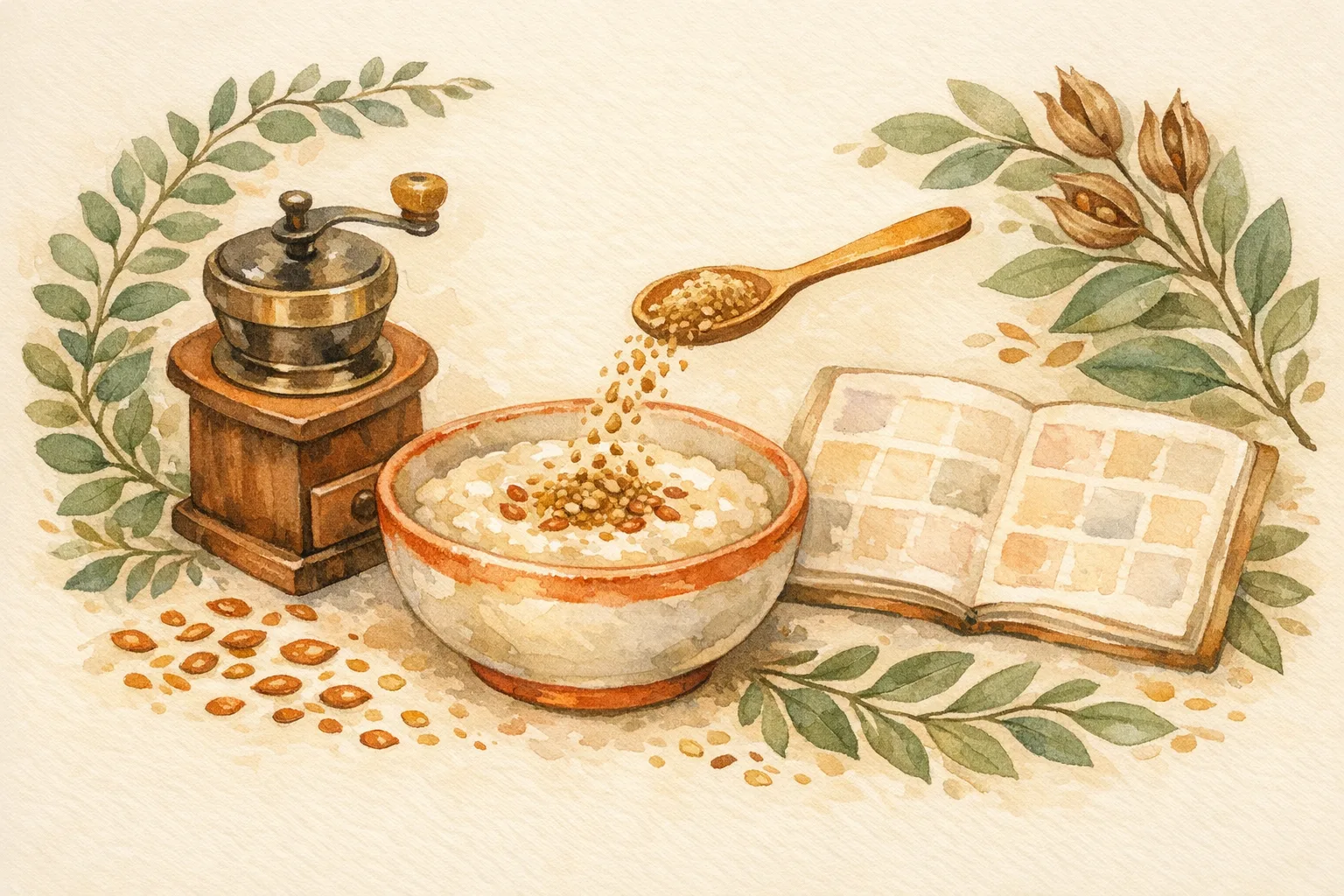
You do not need a prescription to start. You need four seeds, a coffee grinder, and a calendar.
Step 1 - Know your cycle phase. If your period started in the last 14 days, you are in the follicular phase. If your period was more than 14 days ago, you are likely in the luteal phase. If your cycles are irregular, start on day 1 of your next period.
Step 2 - Buy the seeds. Look for organic, raw seeds. Pre-ground seeds lose nutrients quickly. Buy whole seeds and grind them yourself in small batches.
Step 3 - Follicular phase protocol (days 1-14). Each day, eat 1 tablespoon of ground flaxseed and 1 tablespoon of ground pumpkin seed. Add them to smoothies, oatmeal, yogurt, or salads.
Step 4 - Luteal phase protocol (days 15-28). Each day, eat 1 tablespoon of ground sunflower seed and 1 tablespoon of ground sesame seed.
Step 5 - Track your cycle. Write down when your period comes, how long each phase is, any changes in symptoms. Give it at least three full cycles before evaluating results. The PMC case study saw significant changes at 6 months.
Step 6 - Do not do this alone. Seed cycling works best inside a bigger picture. What you eat, how you sleep, how much stress your body is carrying, what your home environment feels like - all of it feeds into your fertility. This is what the Omioni program addresses in full.
When to Consider Each Path
Start with seed cycling if you have irregular cycles, suspected hormonal imbalance, PCOS, mild symptoms, or you simply want to support your body naturally before considering procedures. It is safe, cheap, and backed by emerging research.
Consider a full natural fertility protocol if you have been trying for 6 months or more, your cycles are unpredictable, or you want a structured, in-depth approach that covers diet, lifestyle, stress, and environment together. This is what the Omioni program was built for.
Consider IVF if both tubes are blocked, sperm count is extremely low, or you have exhausted natural options and your doctor has given clear medical reasons why IVF is the right path. Some people need it. That is a fact.
What is not acceptable is being pushed toward a $20,000 procedure before anyone has asked you what you eat, how you sleep, or how much stress you carry.
A Note on Limitations
Most seed cycling studies are small. Many are case studies or observational. The systematic review in Cureus was clear that larger, randomized controlled trials are still needed. Seed cycling is not a proven medical treatment in the clinical sense.
But the individual nutrients in these seeds - lignans, zinc, vitamin E, omega-3 fatty acids - each have strong independent research behind them for reproductive health. The practice is safe. The cost is negligible. The downside of trying it is essentially zero.
Ready to Go Deeper
If you are ready to talk about what a full natural fertility program looks like for your specific situation, call Omioni at 972-282-3930. The program is in-home, intensive, and built around you. People travel to Las Vegas for this. Some move here.
The call is free. The conversation is honest.
Call 972-282-3930 or visit omioni.com to learn more.
Also read: Natural Approaches to PCOS and Fertility | Low AMH - What the Research Actually Says | The Ayurvedic Diet for Fertility
Medical Disclaimer: This article is for educational purposes only and does not constitute medical advice. Seed cycling and Ayurvedic approaches are complementary practices and are not a substitute for medical diagnosis or treatment. Always consult a qualified healthcare provider regarding any fertility concerns or before starting a new health protocol. Individual results vary. No specific medical outcomes are promised or guaranteed.