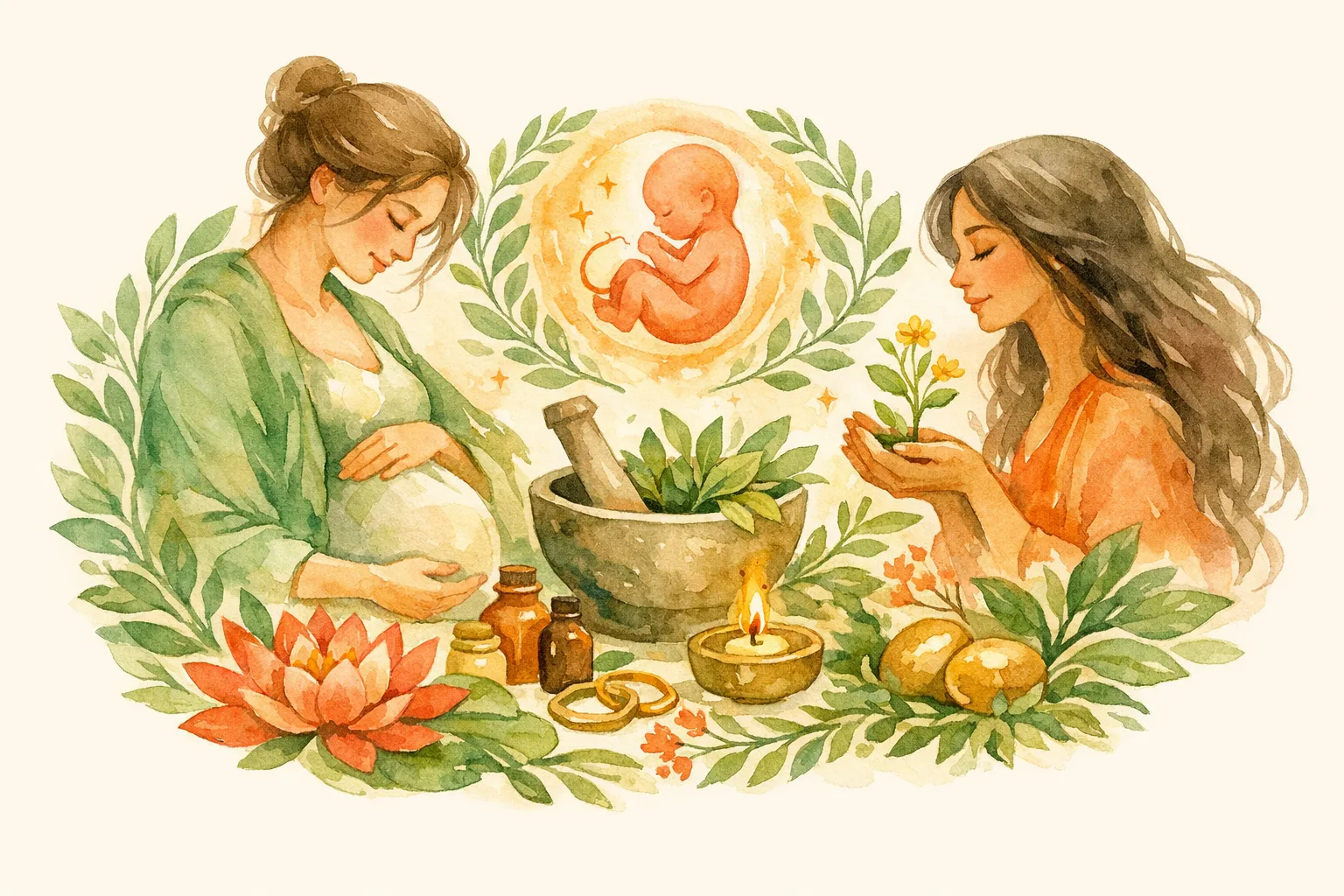
The Study Nobody Talks About
A clown walked into an IVF clinic. A study of 229 Israeli women undergoing IVF found that a 15-minute visit from a trained medical clown immediately after embryo transfer increased the chance of pregnancy to 36%, compared with 20% for women whose transfer was comedy-free. The researcher was Dr. Shevach Friedler. The journal was Fertility and Sterility. The finding is what matters.
Laughter - one of humanity's oldest rituals - changed a clinical outcome.
This article is about fertility rituals. Ancient ones and modern ones. And what the science actually says about why they work - or don't.
What Is a Fertility Ritual
A fertility ritual is any repeated, intentional act performed to improve the chances of conception. It can be religious, physical, dietary, or something that shapes the relationship between partners.
The word "ritual" trips people up. It sounds like superstition. But rituals have a structure that maps almost perfectly onto what modern medicine calls a protocol - a set sequence of actions performed at specific times for a specific outcome.
The oldest ones we know of go back tens of thousands of years. In Ayurveda, according to Sushruta, the essential factors for conception are Ritu (the reproductive period), Kshetra (the female reproductive tract), Ambu (nutritional factors), and Beeja (sperm and ovum). That framework - timing, environment, nutrition, cell quality - is nearly identical to what reproductive endocrinologists assess today.

The Garbhadhana Samskara - Ayurveda's Preconception Protocol
Garbhadhana is the first of the 16 samskaras - sacraments or rites of passage - in Hinduism. It is a composite word of Garbha (womb) and Adhana (process of receiving), meaning literally "receiving pregnancy."
Garbhadhana samskara is a structured protocol designed to prepare prospective parents physically, emotionally, and spiritually for the journey of parenthood. It has four measurable components.
The four factors are Ritu (fertile period), Kshetra (health of the uterus), Ambu (nutrients from food), and Beeja (health of sperm and ovum). Each one is addressed with a specific practice before conception is attempted.
The ritual is performed from the 5th day until the 16th day from the start of the woman's menstrual period - which is, in fact, the actual fertile window for most women. Ancient texts mapped the fertile window correctly. That is not coincidence. It is observation accumulated over thousands of years.
According to the Grhya Sutras, the husband recited Vedic verses with similes of natural creation and invocations, while the wife prepared herself for conception. The state of mind of both partners was considered as important as the physical timing.
What the Research Shows
Does Ayurvedic fertility ritual have clinical backing? Some of it does. Some of it does not yet.
A systematic review published on PubMed (PMC11073818) examined Ayurvedic treatment for infertility across multiple studies. The Ayurvedic treatment of shodhana (purification) and shamana (balancing) therapies assists in eliminating blockages in channels, pacifying imbalanced doshas, and facilitating the optimal formation of healthy semen and ovum - which in turn promotes the chances of conception by creating a conducive environment for fertilization.
Ayurvedic management provides a promising, cost-effective option for addressing infertility and enhances the success rates of IVF, especially after previous unsuccessful attempts.
The Stress-Fertility Connection
Every ancient fertility ritual includes stress reduction. That is not an accident.
A prospective cohort study by Dr. Germaine Buck Louis at the National Institutes of Health (NIH) followed 274 women aged 18 to 40 who were trying to conceive. Alpha-amylase - a stress marker - was negatively associated with conception. Women with salivary concentrations in the upper quartiles had statistically significant reductions in the probability of conception across the fertile window.
In plain English: the more stressed your body was, the lower your chance of getting pregnant that cycle.
A broader systematic review published in Frontiers in Endocrinology confirmed the pattern. The delicate hormonal balance in reproductive processes is thought to be affected by prolonged exposure to elevated cortisol levels, which may affect fertility. Based on existing literature, in both genders, prolonged stress has been associated with diminished reproductive functions.
The science is not yet settled on the exact mechanism. Proving a direct cause-and-effect relationship between cortisol and fertility is challenging and requires more research. But the association is consistent enough to take seriously.
Chanting and meditation help the couple attain a positive frame of mind and help relieve stress and anxiety. That is the ritual. The mechanism behind it is cortisol reduction and hormonal stabilization.
Laughter After Embryo Transfer - PubMed 21211796
Back to the clown study. It was published in Fertility and Sterility by Dr. Shevach Friedler and colleagues at Assaf Harofeh Medical Center in Israel.
This experimental prospective quasi-randomized study found that the pregnancy rate in the intervention group was 36.4%, compared with 20.2% in the control group, with an adjusted odds ratio of 2.67. Women who received the laughter intervention were 2.67 times more likely to get pregnant.
The authors suggest that laughter and humor may reduce negative stress changes and, in that manner, aid in implantation of embryos by keeping stress levels stable.
This is a small study. One center. One clown. The result has not been replicated at scale. But the direction of the finding fits everything else the stress literature shows.
Acupuncture - The Most Studied Fertility Ritual
Acupuncture is the most research-tested fertility ritual in modern medicine. The results are mixed.
A meta-analysis published in the Archives of Gynecology and Obstetrics included 25 randomized controlled trials and 4,757 participants. The pooled clinical pregnancy rate across acupuncture groups was 43.6% versus 33.2% in control groups, and the pooled live birth rate was 38.0% in acupuncture groups versus 28.7% in control groups.
That is a meaningful difference. But a separate systematic review using Cochrane methods found a more complicated picture. A positive correlation was demonstrated between acupuncture and clinical pregnancy rate compared to a blank control group. However, this advantage does not hold when compared to sham acupuncture.
What that means: acupuncture may work partly through ritual itself - through the experience of being cared for, of lying still, of intention. When you control for that effect using fake needles, the difference shrinks.
There is also a safety flag. A significantly higher early miscarriage rate was observed in acupuncture groups, with a relative risk of 1.51. Anyone considering acupuncture during fertility treatment should discuss it with their doctor.

Ayurvedic Fertility Protocol - What Each Practice Does
The Garbhadhana preconception protocol from Ayurveda includes six distinct practices. Each one has a proposed mechanism, not just a spiritual one.
1. Purification through Panchakarma
Shodhana aims to eliminate the root cause of disease by removing toxins from the body. Virechana (therapeutic purgation) and vamana (therapeutic vomiting) address systemic toxic load, while basti (therapeutic enema) is directed more specifically at reproductive channel health. The proposed mechanism is clearing inflammatory load and rebalancing the hormonal environment before conception.
2. Cycle-Aligned Timing (Ritukala)
The fertile window is identified and honored. Cycle tracking in the ancient protocol used direct body observation rather than an app, but the underlying practice is identical to what modern cycle-tracking tools do.
3. Dietary Regulation (Ambu)
Fertility levels are lower among overweight women, and women with a higher energy intake from unsaturated fat instead of carbohydrates have a 73% increased risk of infertility. Ayurveda prescribed seasonal vegetables, moong dal, and protein-rich foods. The science on diet and fertility supports the general direction of this approach.
4. Meditation and Mental Preparation
Meditation and spiritual practices prepare couples emotionally and mentally for parenthood, fostering balance. In modern terms, this maps to the stress-reduction mechanisms discussed above.
5. Sleep Regulation
Ayurvedic fertility practice prescribes waking before sunrise and sleeping by 10:30pm. This is circadian rhythm alignment. Disrupted sleep raises cortisol. Cortisol disrupts the hormonal axis that drives ovulation.
6. Mantra and Intention
This act should be done by the couple in a cheerful and happy state of mind. That is a behavioral instruction designed to reduce anxiety at the moment of conception attempt. Modern research supports the direction of this guidance.

Modern TTC Rituals - What the Evidence Shows
The modern trying-to-conceive community has developed its own set of rituals. Most are folk traditions. A few have science behind them.
| Ritual | Claimed Benefit | Evidence Status |
|---|---|---|
| Pineapple core (bromelain) | Supports uterine lining | No clinical trials confirm effect on pregnancy rate |
| Warm socks after transfer | Blood flow to uterus | No evidence sock temperature affects uterine blood flow |
| Laughter / comedy after transfer | Reduces stress, aids implantation | One study (n=229): 36.4% vs 20.2% pregnancy rate (PubMed 21211796) |
| Acupuncture during IVF | Improves implantation | Mixed evidence; some meta-analyses show benefit, one shows possible miscarriage risk increase |
| Pomegranate juice | Antioxidant support for implantation | Some research suggests possible reproductive benefit; no conclusive trials |
| Meditation / affirmations | Reduces cortisol, improves outcomes | Cortisol-fertility link established; direct outcome trials limited |
IVF vs Natural Approaches - The Numbers
| Factor | IVF (Low AMH Patients) | Ayurvedic Approach |
|---|---|---|
| Per-cycle success rate | 9.5-20.5% | 84% conceived within 12 cycles (Inito study) |
| Cumulative success (5-6 cycles) | ~20% (PLOS One, 769 cycles) | Data limited to smaller studies |
| Cost per cycle | $19,000-$30,000 | Call 972-282-3930 |
| Insurance coverage | 85% out of pocket; only 25% of Americans have any IVF coverage | N/A |
| Dropout rate | 35% quit due to emotional and physical stress | Not tracked at scale |
| Side effects | OHSS, mood disruption from hormones, physical invasiveness | Lifestyle-based; generally low risk when guided |
IVF is not a sure thing even at significant cost. For many patients, the evidence supports trying a structured natural approach first - particularly for unexplained infertility or low egg reserve with no structural blockages.
IVF is clearly the right choice for certain conditions: blocked tubes, severe male factor, certain genetic situations. The question is which approach fits your specific diagnosis.
A Personal Note
My wife Kate and I talk about this kind of thing constantly. Every conversation we have ends up being about the mechanisms behind what works and why. We approach everything - fertility included - the same way we approach business: with data, with intention, and with daily commitment to the process. The rituals that work are the ones you actually do every day, not the ones you try once and abandon. That is true whether the ritual is Vedic or clinical.
What You Can Do Today
Track your cycle precisely. Ritukala - fertile period awareness - is the oldest fertility ritual and the most consistently validated intervention in conception research. Know your window. Use it.
Reduce your daily stress load. The NIH study by Dr. Buck Louis showed that even low-grade stress markers in saliva reduced conception probability within the fertile window. Meditation, yoga, and breath work all reduce these markers.
Look at your sleep. Cortisol rises when sleep is disrupted. Ayurveda has prescribed sleep before 10:30pm for thousands of years. Modern sleep science agrees.
Laugh more. The clown study was small. But humor can be beneficial in stressful situations, helping to reduce symptoms of anxiety and depression. You do not need a clown. A comedy show works.
If you are doing IVF, consider integrating ritual into the process. The data on stress reduction is consistent. Structure your transfer day with intention. Rest. Laugh. Reduce urgency where you can.
Limitations - What We Do Not Know Yet
Future research should aim at conducting large-scale, randomized controlled trials to establish standardized, evidence-based Ayurvedic treatment protocols for infertility.
Most Ayurvedic fertility studies are small. Many lack control groups. The 84% conception rate cited for low-AMH patients comes from a targeted study and has not been replicated across populations at scale.
The acupuncture literature is contradictory. Some meta-analyses show benefit. Some show no effect compared to sham. One shows a possible miscarriage risk increase.
The stress-cortisol-fertility link is real. But proving that ritual reduces cortisol enough to change conception probability requires more rigorous prospective studies.
We report what the data shows. We do not fill the gaps with faith in either direction.
When to Consider Each Path
Try a structured natural approach first if: You have unexplained infertility. You have low egg reserve with no structural blockage. You have not yet tried a full 90-day lifestyle reset. You are under 38. You have had one or more failed IVF cycles with no clear structural reason for failure.
Move to IVF sooner if: You have blocked fallopian tubes. You have severe male factor infertility. You are over 40 with declining reserve. You have a diagnosed condition that requires assisted reproduction. You have tried natural approaches for 12 months without success.
These are general guidelines. Every case is different. For more on natural conception approaches, see our article at omioni.com/blog/low-amh-natural-treatment.
FAQs
What is a fertility ritual?
Any repeated, intentional act designed to improve the chance of conception. Ancient examples include the Garbhadhana samskara from Ayurveda. Modern examples include cycle tracking, meditation before intercourse, and stress reduction protocols during IVF.
Do fertility rituals actually work?
Some do. The NIH study by Dr. Buck Louis showed that stress biomarkers reduce conception probability within the fertile window. The Friedler study in Fertility and Sterility showed that laughter after embryo transfer nearly doubled pregnancy rates. Cycle timing - the core of Garbhadhana - is validated by modern reproductive science. Not all rituals work. But the category is not meaningless.
What is Garbhadhana?
Garbhadhana samskara is the first of the 16 life ceremonies described in Ayurveda, designed to prepare prospective parents physically, emotionally, and spiritually for the journey of parenthood. It includes fertile window timing, body purification, dietary protocols, and mental preparation. It predates modern fertility medicine by thousands of years and shares several of its core principles.
Does acupuncture help with IVF?
The evidence is mixed. A large meta-analysis of 25 trials showed higher clinical pregnancy and live birth rates in acupuncture groups. But when studies use sham acupuncture as the control, the benefit shrinks. There is also a signal for higher early miscarriage rates in some acupuncture groups. Discuss with your reproductive endocrinologist before adding acupuncture to your IVF protocol.
How does stress affect fertility?
The hormonal balance in reproductive processes is thought to be affected by prolonged exposure to elevated cortisol levels. Based on existing literature, prolonged stress has been associated with diminished reproductive functions in both genders. The exact mechanism is still being studied. But the association is consistent enough that stress reduction is a medically supported part of any fertility plan.
Is there a scientific basis for Ayurvedic fertility treatment?
A systematic review published in PMC emphasizes the promising potential of Ayurvedic treatments for infertility, highlighting positive outcomes in sperm quality, conception rates, and overall reproductive health through traditional Indian medicine practices. However, most trials are small. Larger, randomized controlled trials are needed before strong clinical conclusions can be drawn.
Can I do fertility rituals alongside IVF?
Yes - with some caution. Stress reduction, sleep regulation, dietary improvements, and cycle awareness are safe additions to any fertility protocol. Acupuncture should be discussed with your doctor due to the mixed evidence. Always tell your fertility clinic about any supplements or Ayurvedic herbs you are taking, as some can interact with fertility medications.
For a full look at natural fertility programs and how they compare to IVF for specific conditions, visit omioni.com/blog/natural-ivf-alternatives or call 972-282-3930 to speak with our team.
Medical Disclaimer: This article is for informational purposes only. It is not medical advice. Always consult a licensed healthcare provider before starting or changing any fertility treatment. Alex Berman is not a doctor.