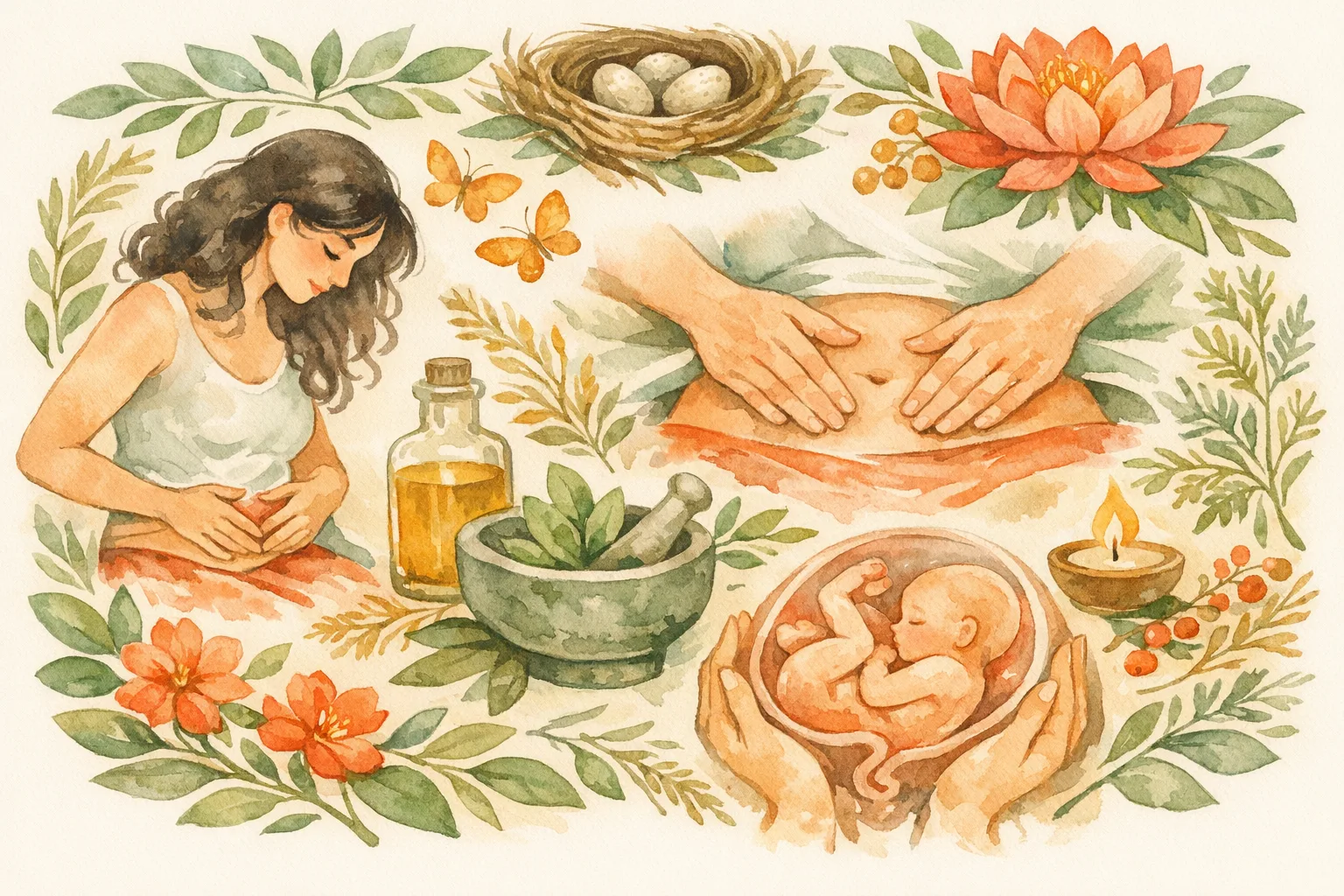
You have probably spent more time crying in clinic waiting rooms than you care to count. You have paid for tests, watched your hopes go up in one appointment and crashed down in the next. Maybe someone already told you that your uterus is tilted, your eggs are low, or your cycle is unpredictable - and then sent you home with a pamphlet about IVF. That is exactly where fertility journeys stall - at a door that costs tens of thousands of dollars to walk through.
Something exists that most clinics will not mention. A technique that Mayan healers have used for centuries. It is called maya abdominal massage. And if you are trying to conceive, you need to understand what it does - and what the research actually says.
What Is Maya Abdominal Massage
Maya abdominal massage is a non-invasive, external technique applied to the abdomen, lower back, and sacrum. It works by gently repositioning internal organs - especially the uterus - that have shifted out of place and are restricting blood flow, lymph drainage, and nerve function.
The technique comes from the Maya people of Belize, Guatemala, and southern Mexico. In the modern world, it is best known through the Arvigo Techniques of Maya Abdominal Therapy, developed by Dr. Rosita Arvigo after a ten-year apprenticeship with Don Elijio Panti, a celebrated Maya shaman from Belize.
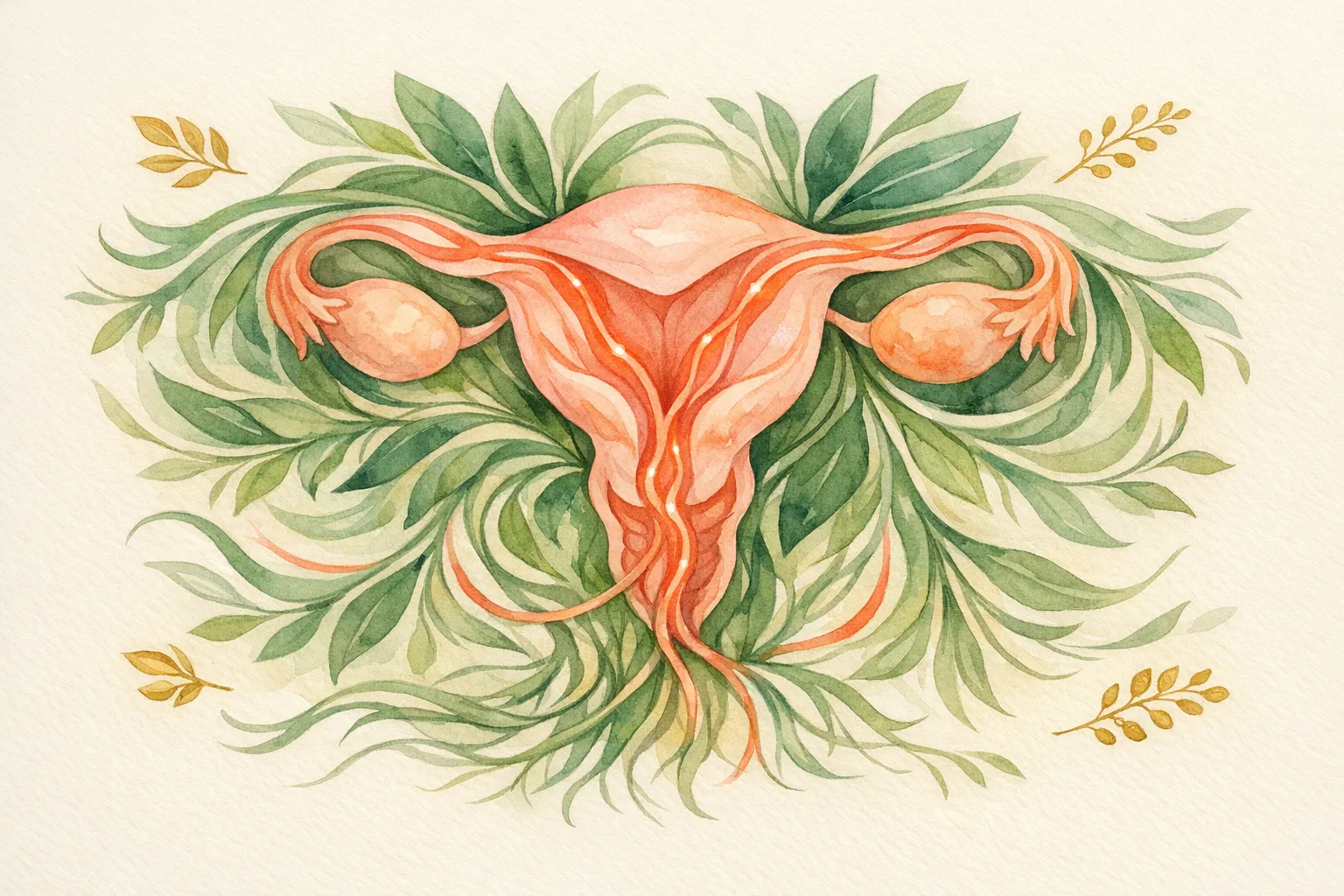
The uterus is held in place by more than ten ligaments. Those ligaments stretch, weaken, and shift over a lifetime. Falls, car accidents, poor posture, high-impact exercise, past surgeries, and previous pregnancies can all push the uterus out of its optimal position. When that happens, blood flow gets restricted, hormonal function gets disrupted, and conception becomes harder than it should be.
Practitioners work to restore flow across five systems: arterial blood, venous blood, lymph, nerve, and energetic flow. When all five are working correctly, the reproductive organs receive the oxygen and nutrients they need to function.
What the Research Shows
The research has real gaps. Maya abdominal massage itself has not yet been studied in large-scale fertility trials. A review published in PMC noted that direct research on fertility massage is limited and that more evidence is needed before practitioners can make objective clinical claims about specific outcomes.
But the research picture is not empty.
First, the mechanism. A study published in a PMC-indexed journal (PMC9259337) found that pelvic floor muscle massage improves clinical pregnancy rates by increasing intra-abdominal pressure, accelerating pelvic blood flow, reducing uterine artery resistance, and increasing blood perfusion to the endometrium. The study documented improved endometrial thickness and uterine hormone function in participants. Research published through the National Institutes of Health has consistently identified adequate uterine blood flow as one of the foundational requirements for successful implantation.
Second, the ETSU thesis. Tabitha S. Burchett at East Tennessee State University studied the Arvigo Techniques of Maya Abdominal Therapy on women with painful periods. Her study (ETSU Honors Theses, Paper 109) showed measurable reduction in the menstrual pain that often signals the uterine congestion and displacement that affects fertility.
Third, the Mercier Therapy data. Mercier Therapy is a related pelvic visceral manipulation technique developed by Dr. Jennifer Mercier. A four-year study published in Midwifery Today (Spring 2013, Issue 105) reported an 83 percent pregnancy rate among infertile women who completed the protocol. A subsequent five-year study published in the Winter 2018 edition reported an 87.7 percent success rate when therapy was completed before IVF stimulation began. These are clinical case studies, not double-blind randomized trials. But 83 percent is a number worth knowing before you spend $15,000 on your first IVF cycle.
Conventional vs Natural - An Honest Comparison
IVF is real medicine. Some people need it. But you deserve honest numbers before you commit.
A study published in PMC (PMC8312305) analyzing 543 IVF cycles in women with low egg reserve markers found a live birth rate per embryo transfer of 19.4 percent. A separate analysis of 448 IVF cycles (PMC4870438) found clinical pregnancy rates ranging from 10.2 to 31 percent depending on age.
A single IVF cycle costs between $12,000 and $17,000, and women often need two, three, or four cycles before anything sticks.
Maya abdominal massage and related pelvic therapy carry no medications, no needles, and no procedures. Arvigo Institute practitioner data suggests a 30 to 40 percent pregnancy rate when women adhere to a daily self-care protocol. Mercier Therapy published data shows 83 percent. Fertility clinics will never bring these numbers up.
| Factor | IVF | Maya Abdominal Massage |
|---|---|---|
| Invasive | Yes - needles, retrieval, procedures | No - fully external, hands only |
| Medications | Heavy hormone stimulation drugs | None required |
| Side effects | Bloating, hyperstimulation risk, mood changes | Minimal - occasional temporary soreness |
| Protocol length | One cycle is 4-6 weeks; often repeated multiple times | 3-month protocol with daily home self-care |
| Reported success (clinical data) | 19-31% live births per transfer for low egg reserve patients (PMC studies) | 83% natural conception (Mercier, Midwifery Today); 87.7% alongside IVF |
| Combines with IVF | N/A | Yes - data shows improved IVF outcomes when done first |
The Ayurvedic Approach - What Your Body Has Always Known
Ayurveda calls the uterus Garbhashaya - the home of the embryo. For conception to occur, Ayurveda identifies four conditions that must be met: a healthy uterus, the right fertile timing, adequate nourishment through food and fluids, and strong egg and sperm. If any one of these is weak, conception may not happen regardless of what drug is administered.
Growing up in Himachal Pradesh, I watched my great-grandmother serve as the health consultant for our entire village. Among all my relatives, no one struggled to conceive. It was not luck. It was daily practice - oil, warmth, movement, food, and quiet attention to the body. I tell that story because I have seen what happens when women treat their bodies as fertile ground instead of broken machinery - and the difference is real.
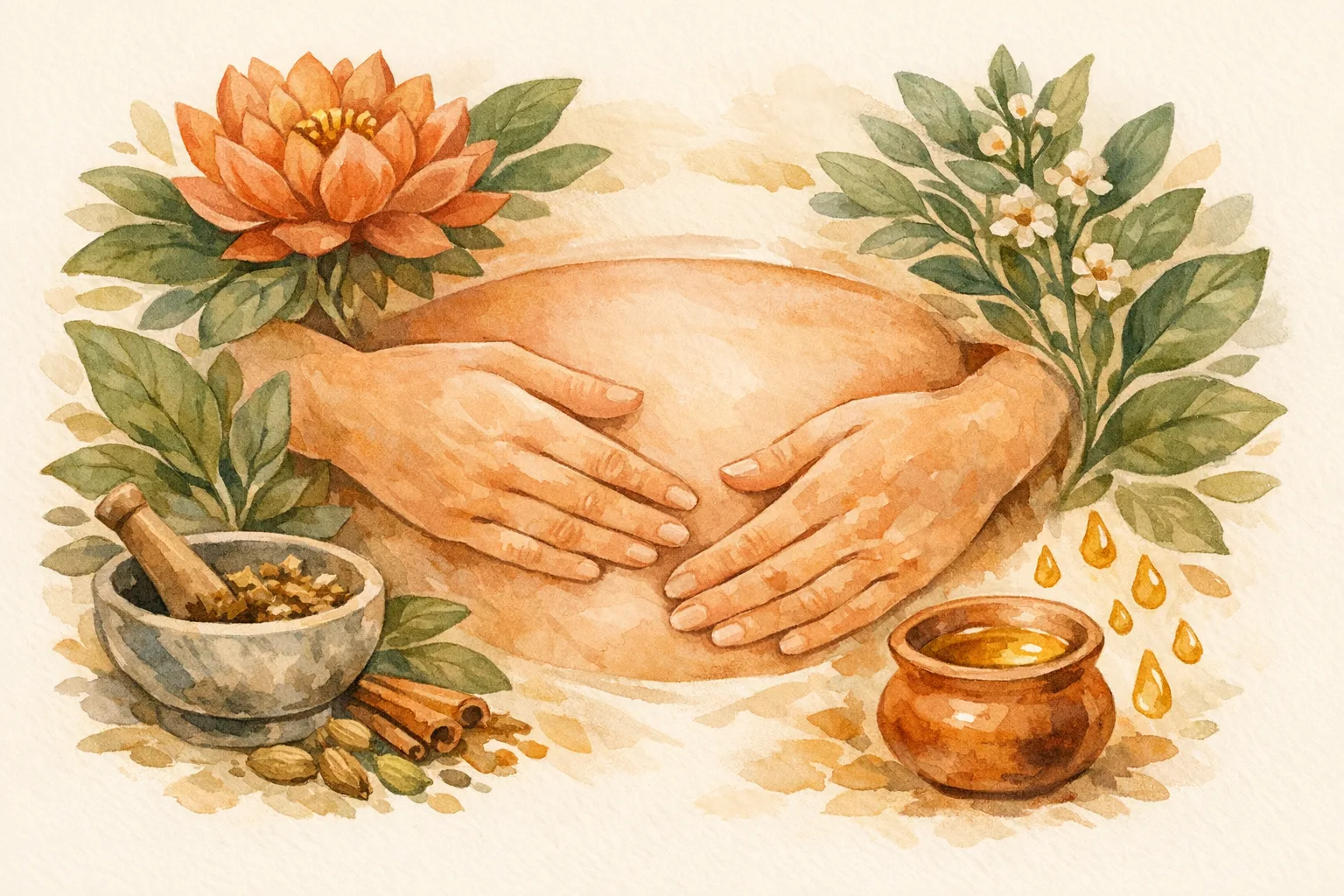
The Ayurvedic approach to uterine health focuses on cleansing, nourishing, and repositioning the womb through specific treatments, warm oil application, herbal support, and dietary care. Abhyanga - daily warm oil self-massage - is one of its cornerstones. These two traditions, developed on opposite sides of the world, arrived at the same answer: free circulation, correct organ position, and a warm, receptive internal environment.
Stress is not separate from fertility in Ayurveda - it is a direct cause. Published NIH research confirmed that psychological stress increases cortisol, which suppresses estrogen production and can suppress ovulation entirely. When the body is in chronic stress, the reproductive system goes quiet first. Maya abdominal massage addresses this directly through touch, warmth, and the parasympathetic relaxation response.
What the Massage Actually Does
A professional session begins with a full health history review. The practitioner then works externally on the abdomen from the pubic bone to the ribcage, and on the back from the sacrum upward. Sessions typically run 60 to 90 minutes.
The technique gently guides displaced organs back toward their optimal position and works through tight layers of connective tissue and scar tissue that restrict movement. When those restrictions release, circulation improves, nerve function normalizes, and lymph drainage increases. Scar tissue from past surgeries, C-sections, or endometriosis responds to sustained, gentle external pressure in a way that medication cannot replicate.
Practitioners teach a self-care version at the end of each session. Daily home massage is considered the most important part of the protocol.
For women trying to conceive, the ideal window for abdominal massage is after the period ends and before ovulation. It should be avoided after ovulation in case conception has occurred, and during menstruation. It is also not appropriate if an IUD is in place, or within six weeks of any abdominal surgery.
What You Can Do Today
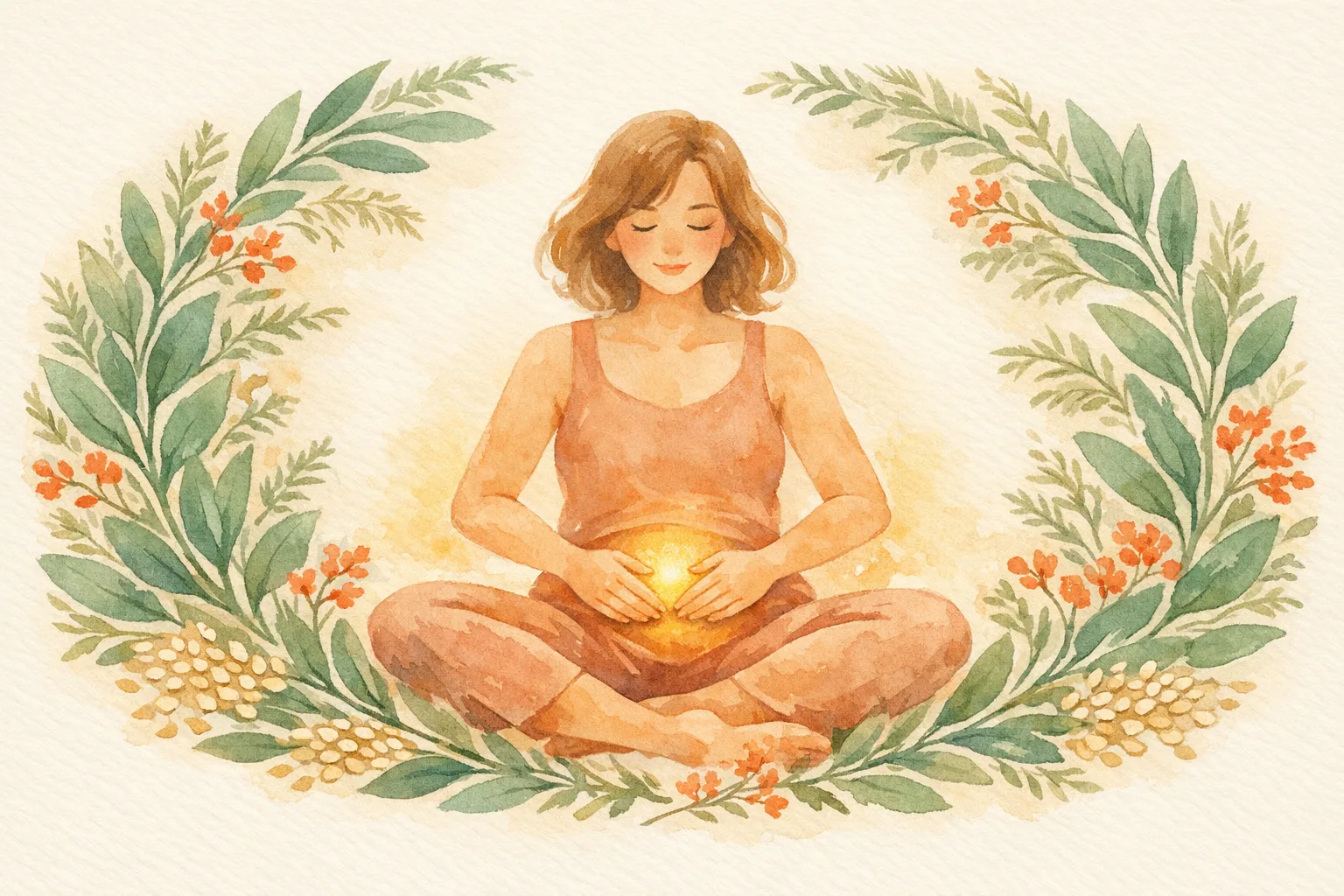
Start daily abdominal self-massage. Use warm sesame oil. Place both hands on your lower abdomen just above the pubic bone. Apply gentle, slow, inward circular pressure. Spend five minutes daily before ovulation each cycle.
Track your cycle carefully. Know when your period ends and when you ovulate. This determines when massage is safe, identifies your fertile window, and tells you whether your cycle is regular.
Address stress as a fertility issue. Whatever raises your cortisol - screens before bed, a draining relationship, overtraining, poor sleep - treat it as a direct threat to your fertility. According to published NIH research, it is.
Remove heat restriction from your pelvis. Tight waistbands, synthetic clothing, and prolonged sitting all reduce pelvic circulation.
Find a trained practitioner. The Arvigo Institute trains and certifies practitioners worldwide. For women with fibroids, endometriosis, a tilted uterus, scar tissue, or unexplained infertility, in-person professional work is worth prioritizing.
Consider the full protocol before any procedure. Mercier Therapy data shows an 87.7 percent success rate when pelvic massage is completed before IVF stimulation. Even if you plan to pursue IVF, adding three months of abdominal therapy first may meaningfully improve your chances.
When to Consider Each Path
Maya abdominal massage makes most sense as a first step - or a parallel step - for women with unexplained infertility, a tilted or displaced uterus, endometriosis, painful or irregular periods, scar tissue from surgeries or C-sections, and for anyone wanting to prepare the body before IVF.
IVF remains important for blocked fallopian tubes, severe male factor infertility, complete absence of ovulation unresponsive to other treatments, and women who have already completed a thorough natural protocol without success. Everyone deserves the gentler path first - especially when published data suggests it may work more often.
At Omioni, we build a complete in-home fertility program around your specific body and life. Diet, movement, environment, stress, relationships, digital habits, and physical care - all restructured around conception. The principles behind maya abdominal massage are woven into this work, alongside the Ayurvedic practices that my family has relied on for generations. We come to you, wherever you are. If you want to find out whether this program is right for you, call 972-282-3930.
Medical disclaimer: This article is for informational purposes only and does not constitute medical advice. Maya abdominal massage is a complementary modality and is not a replacement for diagnosis or treatment by a licensed medical provider. Always consult your healthcare provider before beginning any new health practice, especially if you have a diagnosed medical condition or are currently undergoing fertility treatment.