You Have Been Trying. You Are Exhausted. This Is For You.
You have probably spent months - maybe years - doing everything right. Tracking your cycle. Cutting sugar. Taking supplements you read about at midnight, sitting in waiting rooms where no one explains anything.
And still, the diagnosis sits there: polycystic ovary syndrome, or PCOS. The most common hormone disorder in women of reproductive age. The leading cause of a condition where the ovaries stop releasing eggs. And for too many women, the beginning of a very expensive, very confusing medical journey.
Real information exists - clinical trials, natural remedies with actual data behind them. You deserve to know what they are and what they actually showed.
What PCOS Is and Why It Matters So Much
PCOS affects between 5 and 20 percent of women of reproductive age, according to a meta-analysis published in the Journal of Clinical Endocrinology and Metabolism by Dr. Carrie Riestenberg of UCLA. The World Health Organization puts it at 10 to 13 percent globally. Either way, that is tens of millions of women.
Up to 70 percent of them remain undiagnosed.
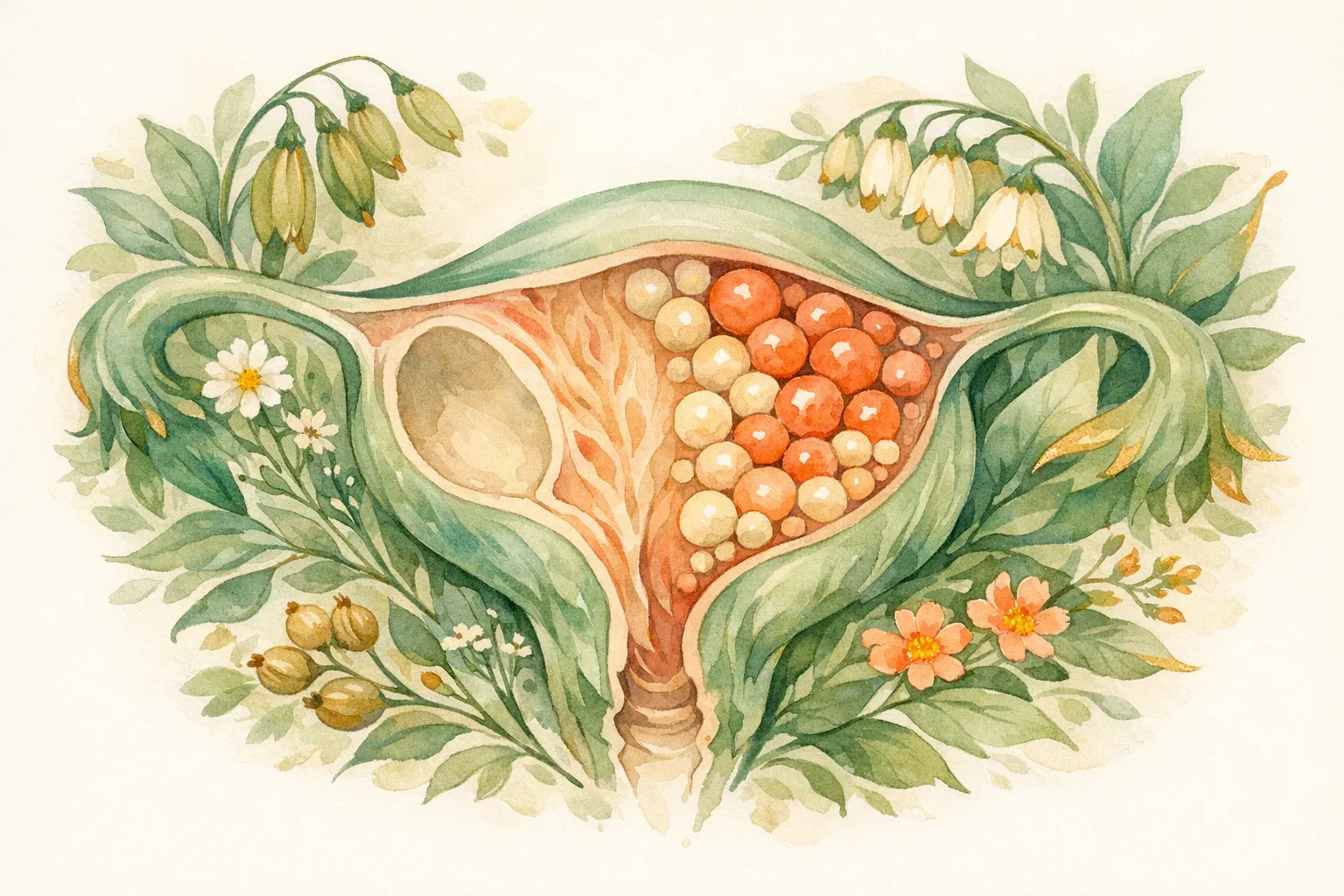
The ovaries are producing too much testosterone. The hormone system that controls egg release - the relationship between the brain, the pituitary gland, and the ovaries - is out of balance. For many women, insulin resistance makes it worse. High insulin tells the ovaries to produce even more testosterone, and the whole cycle continues.
The result: irregular periods, cysts on the ovaries, difficulty getting pregnant, unwanted hair growth, acne, and weight gain that does not respond to normal dieting. Not every woman has every symptom. That is part of what makes it so hard to diagnose.
PCOS costs the United States $8 billion every year in direct healthcare spending. That includes infertility care, menstrual treatment, diabetes care, and stroke treatment - all conditions that PCOS makes more likely.
What Conventional Medicine Offers
When you walk into a standard clinic with a PCOS diagnosis, the options are usually the same.
Birth control pills to regulate your cycle. Metformin, a diabetes drug, to manage insulin resistance. Letrozole or Clomid, which trigger ovulation if you are trying to conceive. Spironolactone if your main concern is hair or acne. And eventually, if none of those work, IVF.
These treatments address real symptoms and some women need exactly that. The root cause goes unaddressed, and the side effects are real. Metformin causes nausea and gut problems significant enough that many women stop taking it. Birth control pills do not help you get pregnant - they prevent pregnancy. Letrozole, now the preferred ovulation drug per a 2014 trial published in the New England Journal of Medicine by Dr. Richard Legro, achieved a 27.5 percent live-birth rate per cycle, compared to 19.1 percent for Clomid. That is better. It is still under 30 percent.
IVF cycles cost between $15,000 and $30,000 including medications. Women with PCOS face a higher risk of dangerous ovarian over-stimulation during IVF, requiring modified protocols and closer monitoring.
What the Research Shows
Myo-Inositol vs. Metformin
Myo-inositol is a naturally occurring compound - sometimes called vitamin B8 - that acts as an insulin sensitizer. In women with PCOS, the insulin signaling system is broken in a specific way, and myo-inositol helps repair it.
A randomized controlled trial by Mohapatra, Mishra, and Pattanaik published in the Student's Journal of Health Research Africa compared 100 women on myo-inositol to 100 women on metformin. The myo-inositol group had better ovulation rates and better pregnancy outcomes.
A separate trial published in Gynecology and Endocrinology followed 120 women trying to conceive. Women who took myo-inositol had a 65 percent ovulation rate and a 30 percent pregnancy rate. Women who took metformin had a 50 percent ovulation rate and an 18 percent pregnancy rate. That is a meaningful difference - achieved without the gut side effects that cause so many women to stop taking metformin.
A meta-analysis of nine randomized controlled trials published in Frontiers in Endocrinology confirmed that myo-inositol, alone or combined with d-chiro-inositol, significantly reduces fasting insulin and improves metabolic markers in women with PCOS. The Society of Obstetricians and Gynaecologists of Canada found myo-inositol superior to metformin for restoring regular menstrual cycles, with an odds ratio of 2.84.
Spearmint Tea and Testosterone
High testosterone causes unwanted hair growth, acne, and disrupted cycles. Spironolactone, the conventional go-to for these symptoms, is contraindicated in pregnancy - which rules it out for women actively trying to conceive.
A randomized controlled trial published in Phytotherapy Research by Dr. Paul Grant tested spearmint tea against a placebo herbal tea in 42 women with PCOS over 30 days. Two cups of spearmint tea per day produced a significant reduction in free and total testosterone levels. Levels of reproductive hormones that support egg development also increased significantly.
Women in the spearmint group reported significant improvement in their perceived level of unwanted hair growth. The objective clinical score did not change significantly over 30 days - the researchers noted the study needed to be longer to see physical hair changes, since hair growth responds slowly to hormonal shifts.
The hormonal shift itself is real and measurable. And spearmint tea costs a few dollars a week at any grocery store.
Shatavari - The Ayurvedic Queen
Shatavari is the Ayurvedic name for Asparagus racemosus, a root herb used in Indian medicine for women's reproductive health for thousands of years.
A 12-week double-blind, placebo-controlled trial published in Frontiers in Endocrinology by researchers at Dr. D.Y. Patil Medical College in India enrolled 70 women with PCOS. Thirty-five received standardized Shatavari root extract. Thirty-five received a placebo.
The results: the Shatavari group showed a significant reduction in follicular count - meaning the ovaries were less polycystic. Endometrial thickness, which is critical for implantation, increased significantly. And perceived psychological stress dropped by 6.64 points on a validated scale. Stress and cortisol disruption is one of the ways PCOS gets worse in modern life.
A second clinical study, published in Food and Nutrition Research by Kondamudi et al., used a standardized Asparagus racemosus extract in 60 women with PCOS over 84 days. The researchers concluded the extract showed reproductive, hormonal, and metabolic benefits with excellent tolerability.
Shatavari's active compounds - called shatavarins - are steroidal saponins that appear to work on estrogen receptors and support the hormone system that controls egg development. It also contains phytoestrogens, flavonoids, and antioxidants that reduce the inflammation associated with PCOS.
My great-grandmother lived to around 115 years old. No pharmaceuticals. No hospital. In her village in Chamba, Himachal Pradesh, she was the woman other women came to for health consultations. Shatavari was one of the roots that was always in the home. The science now is confirming what those women already knew.
Berberine
Berberine is a plant compound found in several herbs including goldenseal and barberry. It activates the same cellular pathway as metformin - a pathway called AMPK that controls how the body handles blood sugar.
A randomized controlled trial compared berberine combined with a standard hormone drug to metformin combined with the same drug in 89 women with PCOS. The berberine group showed greater improvement in waist circumference, cholesterol levels, and sex hormone binding globulin - a protein that controls how much free testosterone circulates in the blood.
Important note: berberine should not be taken continuously long-term. Cycling on and off is generally recommended. Talk to a practitioner before starting.
NAC - N-Acetylcysteine
NAC is an antioxidant and amino acid precursor. In PCOS, oxidative stress interferes with egg quality and hormone production. NAC addresses this directly.
A meta-analysis of 22 studies involving 2,515 women found that NAC produced statistically significant increases in progesterone and endometrial thickness compared to placebo. It also reduced total testosterone and enhanced the secretion of the hormone that triggers egg development.
NAC is inexpensive and widely available over the counter. It addresses oxidative stress - a mechanism most pharmaceutical treatments for PCOS ignore entirely.
Cinnamon
In the subset of PCOS patients with significant insulin resistance, cinnamon acts as a mild blood sugar regulator.
A pilot study published in the American Journal of Obstetrics and Gynecology found that cinnamon for eight weeks produced significant reductions in fasting glucose and insulin resistance in women with PCOS. A meta-analysis confirmed cinnamon can reduce the excess insulin that drives androgen overproduction in PCOS.
Half a teaspoon in warm water every morning. That is where to start.
Vitamin D
Women with PCOS are far more likely to be deficient in vitamin D. A study published in PMC found that women with PCOS had more than twice the odds of vitamin D deficiency compared to women without the condition.
A review published in Frontiers in Nutrition found that vitamin D supplementation in deficient PCOS patients improved menstrual cycles, increased the rate of follicle development, and decreased blood testosterone levels. In one analysis, irregular cycles improved in over 41 percent of vitamin D-deficient PCOS patients after supplementation.
Get your vitamin D level tested. If you are deficient - and statistically, you probably are - fixing that alone can shift your hormones significantly.
The Ayurvedic Approach to PCOS
Ayurveda sees PCOS as a problem of the whole body - specifically, a breakdown in metabolic fire, an accumulation of toxins in the tissues, and a disruption of the system that governs reproduction.
A clinical case report published in PubMed Central documented a 23-year-old woman with confirmed PCOS treated with a classical Ayurvedic protocol for 60 days. The protocol included Kaklarakshak Yog - a formulation containing Ashwagandha, Guduchi, Kanchanar, and Guggul - alongside Trikatu Churna and Triphala. After two months, her weight dropped from 63 to 60 kilograms. An ultrasound that had previously shown polycystic changes in the left ovary returned a normal result. Her menstrual cycles normalized. Her thyroid profile normalized.
Each herb in that formula has a known mechanism. Kanchanar reduces inflammation and insulin resistance. Ashwagandha regulates stress hormones and supports insulin sensitivity. Guduchi contains berberine alkaloids that improve how the body handles glucose. Guggul is anti-inflammatory. Trikatu - a combination of black pepper, ginger, and long pepper - activates digestion and improves absorption of all the other compounds.
Ayurveda also recognizes that lifestyle is medicine. The concept of Dinacharya - daily routine - and Rutumaticharya - menstrual rhythm regulation - reflects what modern research is now confirming: PCOS is heavily driven by modern lifestyle disruption, and lifestyle change is one of the most powerful interventions available.
Conventional vs Natural - An Honest Comparison
| Approach | What It Does | Ovulation or Pregnancy Rate | Key Side Effects | Approximate Monthly Cost |
|---|---|---|---|---|
| Metformin | Improves insulin sensitivity | ~50% ovulation rate (RCT data) | Nausea, diarrhea, B12 depletion - significant dropout rates | $10-30 generic |
| Letrozole (ovulation drug) | Triggers egg release | 27.5% live birth per cycle (NEJM, Legro et al.) | Low risk; preferred in PCOS | $10-40 per cycle |
| Clomiphene (Clomid) | Triggers egg release | 19.1% live birth per cycle (NEJM, Legro et al.) | Ovarian hyperstimulation risk | $30-130 per cycle |
| IVF | Fertilization outside the body | Variable by age and protocol | OHSS risk higher in PCOS, emotional burden, financial burden | $15,000-30,000 per cycle |
| Myo-Inositol | Repairs insulin signaling in ovaries | 65% ovulation, 30% pregnancy (Gynecology and Endocrinology RCT) | Well tolerated; minor GI effects rarely reported | $15-40 |
| Shatavari | Reduces follicular count, increases endometrial thickness, lowers stress | Significant improvements in 12-week RCT (Frontiers in Endocrinology) | Adverse events not significantly different from placebo | $15-40 |
| Spearmint Tea | Reduces testosterone | Significant hormone shifts in 30-day RCT (Phytotherapy Research) | None known; safe as food | $5-15 |
| NAC | Antioxidant, improves egg quality and hormone levels | Significant increases in progesterone and endometrial thickness (meta-analysis, 22 studies) | Generally well tolerated | $10-25 |
| Cinnamon | Lowers blood sugar and insulin | Significant glucose reduction in pilot study (Am. J. Obstetrics and Gynecology) | None at culinary doses | Under $5 |
What You Can Do Today
1. Start spearmint tea. Two cups a day. Buy it at any grocery store. The trial by Dr. Paul Grant in Phytotherapy Research showed measurable testosterone reduction in 30 days. It costs almost nothing and has no side effects.
2. Add myo-inositol. The standard dose used in clinical trials is 4 grams per day, usually with folic acid. Talk to your doctor, but the safety profile is excellent.
3. Get your vitamin D tested. Not estimated. Tested. If you are low, supplementing is one of the simplest things you can do to support your hormone balance.
4. Eat cinnamon every morning. Half a teaspoon in warm water or in your breakfast. For the insulin-resistant pattern of PCOS, it is a daily tool with clinical support behind it.
5. Consider Shatavari. The 12-week double-blind trial published in Frontiers in Endocrinology showed real improvements in ovarian morphology, endometrial thickness, and stress levels. Give it at least three months before judging.
6. Reduce cortisol deliberately. High cortisol disrupts the hormone system that controls egg release. Sleep, food timing, phone habits, and your environment all affect cortisol. This is something we work on specifically with our clients at Omioni.
7. Look at your whole life, not just your supplements. What you eat. When you sleep. What you see first thing in the morning. Who you spend time with. These are the inputs that your hormone system responds to every single day. At Omioni, we restructure all of it - because that is what actually works.
When to Consider Each Path
Natural approaches work best when there is time and when the underlying cause is lifestyle-related disruption - which, for most women with PCOS, it is. If you are under 35 and have been trying to conceive for less than a year, a structured natural protocol is a reasonable first step.
Conventional medicine becomes more important if you have a structural issue - like severely blocked tubes, or a partner with very low sperm count. It also makes sense if natural approaches have been properly implemented for six to twelve months without result. The key word is properly - meaning diet, sleep, stress, and herbs all addressed together, not just one supplement added to an otherwise unchanged life.
Nobody should spend $20,000 on a 27 percent chance before trying a structured natural protocol. That is not an argument against IVF. It is an argument for sequencing things in a way that makes sense for your body and your life.
FAQs
Can PCOS be reversed naturally?
PCOS cannot be cured in the sense of removing the genetic predisposition. But its symptoms - irregular cycles, anovulation, high testosterone, insulin resistance - can be significantly improved with lifestyle and natural interventions. Clinical trials on myo-inositol, Shatavari, spearmint, and dietary changes all show measurable improvements in the markers that matter most for fertility.
How long does myo-inositol take to work for PCOS?
Most clinical trials showing significant results ran for 12 to 24 weeks. The randomized controlled trial in Gynecology and Endocrinology that showed a 65 percent ovulation rate was at the 12-week mark. Give it at least three months before drawing conclusions.
Is Shatavari safe to take if I have PCOS?
The 12-week double-blind, placebo-controlled trial published in Frontiers in Endocrinology found that adverse events in the Shatavari group were not significantly different from the placebo group. The Food and Nutrition Research clinical study also reported excellent tolerability. Always talk to a practitioner before starting any herb, especially if you are on medications.
Does spearmint tea really lower testosterone?
Yes. The randomized controlled trial by Dr. Paul Grant, published in Phytotherapy Research, found that two cups of spearmint tea per day for 30 days produced a significant reduction in free and total testosterone in women with PCOS. It is not a replacement for medical treatment in severe cases, but as a daily habit it has real hormonal effects.
What is the best diet for PCOS?
No single diet has been definitively proven best. But the evidence points consistently toward reducing refined carbohydrates and sugar, eating enough protein at each meal, prioritizing whole foods, and keeping eating windows consistent. For the insulin-resistant pattern of PCOS, blood sugar stability is the goal. Anti-inflammatory foods are also relevant because PCOS involves chronic low-level inflammation.
Should I try natural remedies before seeing a doctor?
See a doctor for diagnosis and to rule out other conditions. After that, many women benefit from starting with lifestyle and natural approaches before moving to pharmaceuticals - especially if they prefer to avoid side effects or are sensitive to medications. The important thing is making an informed choice with all options on the table.
What does Omioni actually do for PCOS?
Omioni is a natural fertility program based in Las Vegas. We come to your home and restructure your entire life around conception. That means diet, movement, vitamins, sleep, environment, stress reduction, digital habits, and relational clarity - all of it, done with you, not handed to you on a pamphlet. PCOS responds to total-environment change. That is exactly what we provide. Call 972-282-3930 to learn more.
The Next Step
Start with the simplest steps today. Spearmint tea and myo-inositol cost almost nothing and have real trial data behind them. Track your cycle. Get your vitamin D tested.
And if you want a complete program - someone who will actually come to your home and rebuild the conditions your body needs to conceive - that is what Omioni is. Call us at 972-282-3930. We work with women who have been told it will not happen. We have seen what changes when everything changes at once.
Learn more about our approach on our Ayurvedic fertility herbs guide and our article on natural support for low AMH.
Medical Disclaimer: This article is for informational purposes only and does not constitute medical advice. PCOS is a medical condition that should be diagnosed and monitored by a qualified healthcare provider. Natural remedies referenced here have varying levels of clinical evidence. Results vary by individual. Always consult your doctor before starting any supplement, herb, or lifestyle protocol, especially if you are pregnant, breastfeeding, or taking prescription medications. Omioni does not diagnose or treat any medical condition.